
From Pamphlets to Participation: The Maturation of Digital Democracy in Norway
Genres of Participation in Social Networking Systems: A Study of the 2013 Norwegian Parliamentary Election
This study examines the evolution of online campaigning by Norwegian political parties between the 2001 and 2013 elections, focusing on Social Networking Systems (SNS). By applying genre theory, the research demonstrates how political communication shifted from experimental digital "pamphlets" to a matured "Politics 2.0" framework characterized by two-way dialogue and interactive engagement.
TL;DR
Is social media actually changing democracy, or is it just a new megaphone for old politicians? By comparing the 2009 and 2013 Norwegian parliamentary elections, researcher Marius Rohde Johannessen reveals a significant shift: political parties have moved from "broadcasting" information to engaging in a matured Genre System. We are witnessing the birth of Politics 2.0, where interactivity, collective intelligence, and personal narratives replace the rigid, formal scripts of the past.
The "Broken" Dialogue: Motivation for the Study
For decades, democracy in Western nations has faced a crisis of engagement. Party memberships are down, and voters are increasingly flighty, choosing candidates based on fleeting issues rather than long-term loyalty.
The author notes that while Norwegian parties flocked to Facebook and Twitter as early as 2009, they initially failed the "Social" test. Citizens expected a conversation but were met with digital silence. This "non-responsiveness" created a gap between the potential of the medium and the reality of the practice. The 2013 study was designed to see if politicians finally learned how to talk with people, rather than at them.
Methodology: The Lens of Genre Theory
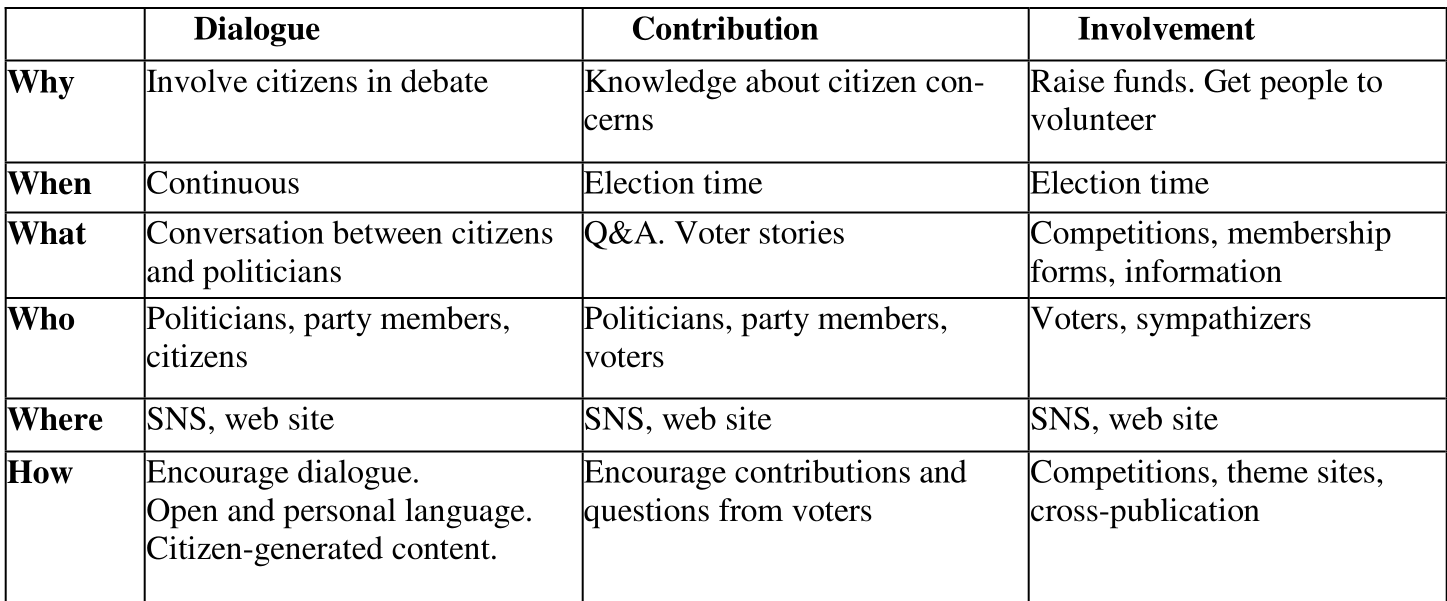
To understand this evolution, the study employs Genre Theory. Instead of looking at the technology (the "How"), the researcher looks at the social action being performed. Using the 5W1H framework, the study categorizes communication by:
- Purpose (Why): Is it for fund-raising or debate?
- Participants (Who): Are citizens leading the talk, or the party?
- Content (What): Is it a policy critique or a simple greeting?
Evolutionary Table: 2009 vs 2013
The research identifies how "genres" of communication expanded. In 2009, the system was "emerging"; by 2013, it was "established."
Key Findings: The Explosion of the "Follower"
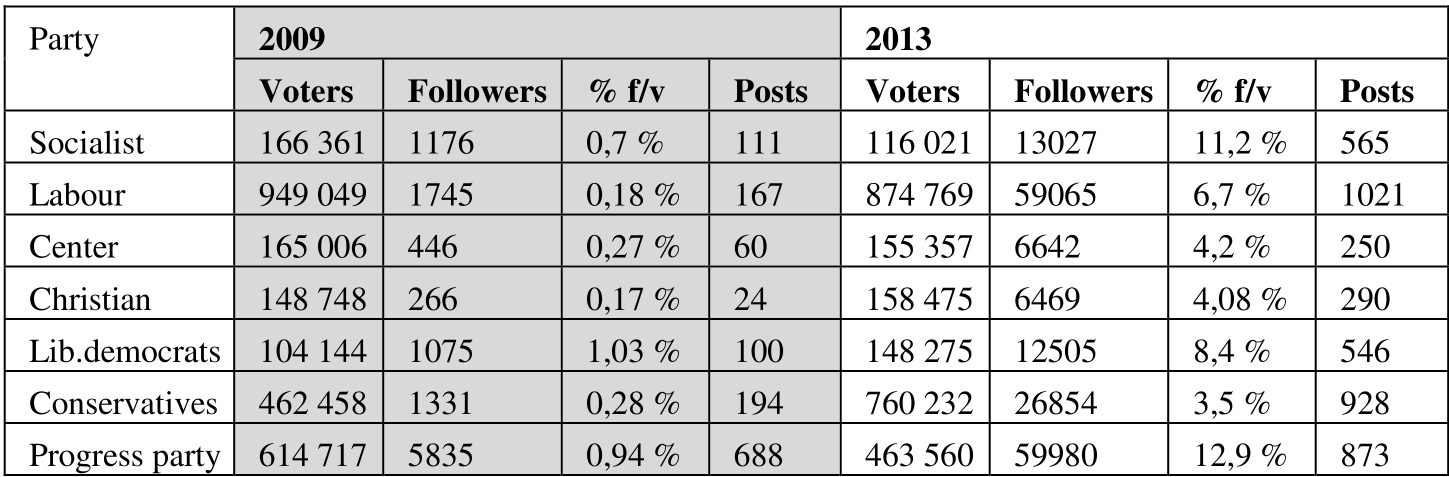
One of the most striking results is the sheer scale of adoption. In 2009, followers represented less than 1% of a party's voters. By 2013, these numbers exploded.
- The Progress Party saw its Facebook following reach 12.9% of its voter base.
- The Labour Party followers grew from a mere 1,745 to over 59,000.
Crucially, the study finds that personalization is the engine of this growth. Prime Minister Jens Stoltenberg’s "taxi driver" video—where he chauffeured citizens to talk politics—garnered 1.6 million hits, demonstrating that a "rich user experience" and a personal touch are now mandatory for digital success.
Methodology Shift: New Genres in 2013
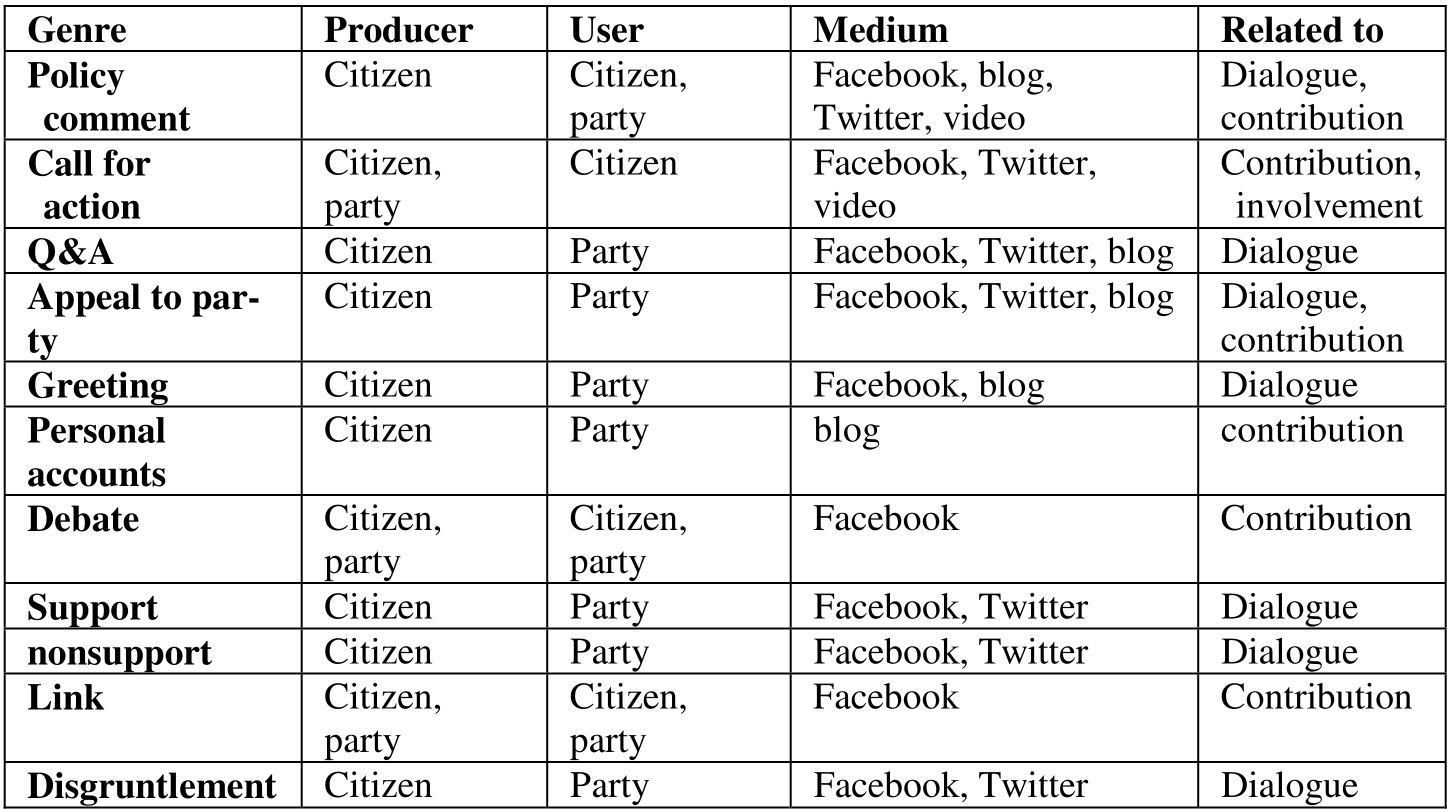
The 2013 election introduced several "conflict" and "interactivity" genres that were absent or rare in 2009:
- Debate: Genuine back-and-forth between citizens and party reps.
- Disgruntlement: Sarcastic or unhappy comments that parties now have to navigate.
- Support/Non-support: Quick, low-threshold signals of voter sentiment.
Deep Insight: Is this Politics 2.0?
The author concludes that we are indeed approaching Politics 2.0. Parties have embraced "perpetual experimentalism"—responding to media events in real-time and using SNS as a platform for collective intelligence.
However, a challenge remains: Language Consolidation. The clash between formal political jargon and the informal, typo-ridden language of the "internet citizen" creates a friction point. How do politicians weigh a misspelled Facebook rant against a formal policy brief?
Conclusion
The study proves that SNS has moved from a "campaign tool box" extra to the center of the political stage. While the 2009 election was about being present, 2013 was about being responsive. For future researchers and practitioners, the takeaway is clear: the digital voter doesn't want a pamphlet; they want a participant.
Limitations: The study notes that while online engagement is up, it doesn't always correlate with votes (as seen with the Progress Party, which had the most followers but lost votes). The "Social Media Echo Chamber" effect and its impact on voter turnout remains a critical frontier for future work.