
Deciphering Identity: Geometric 3D Facial Gender Classification via Riemannian Curves
Geometric based 3D facial gender classification
This paper presents a geometric framework for 3D facial gender classification by representing facial surfaces as collections of radial and iso-level curves. By utilizing Riemannian geometry and the Square-Root Velocity Function (SRVF), it calculates shape similarities against templates, achieving a peak classification rate of 84.98% using AdaBoost on the FRGCv2 dataset.
TL;DR
This research moves beyond 2D pixels to explore the "depth" of gender identity. By decomposing 3D faces into radial and iso-level curves, the authors use Riemannian geometry to measure the subtle elastic differences between male and female faces. Testing on the FRGCv2 dataset, the framework achieved an 84.98% accuracy, pinpointing the nose and brow as the most critical geometric indicators of gender.
Problem & Motivation
Most facial analysis systems are 2D-centric, making them vulnerable to shadows, makeup, and camera angles. While we know that 3D facial structure (like the prominence of a jawline or the bridge of a nose) is a powerful biometric, the challenge lies in how to represent these shapes mathematically.
Existing 3D methods often treat the face as a rigid global object, losing the fine-grained details. The authors argue that the face should be treated as a collection of elastic curves, where the "distance" between a male and female curve can be quantified on a curved mathematical space (a manifold) rather than just simple Euclidean distance.
Methodology: The Geometry of a Face
The core innovation lies in the Square-Root Velocity Function (SRVF). Instead of looking at coordinates, the system analyzes the velocity of the curves that wrap around the face.
1. Curve Extraction
The face is simplified into two types of "skeletons":
- Radial Curves: Striking out from the tip of the nose (useful for capturing the forehead and cheeks).
- Iso-level Curves: Horizontal slices of the face (useful for capturing the projection of the nose and chin).
2. The Shape Space
The curves are mapped to a Riemannian Manifold. In this space, the distance between two curves is the "Geodesic" (the shortest path on a curved surface). This allows the model to be invariant to rotation and scale—meaning a face tilted slightly sideways still looks the same to the algorithm.
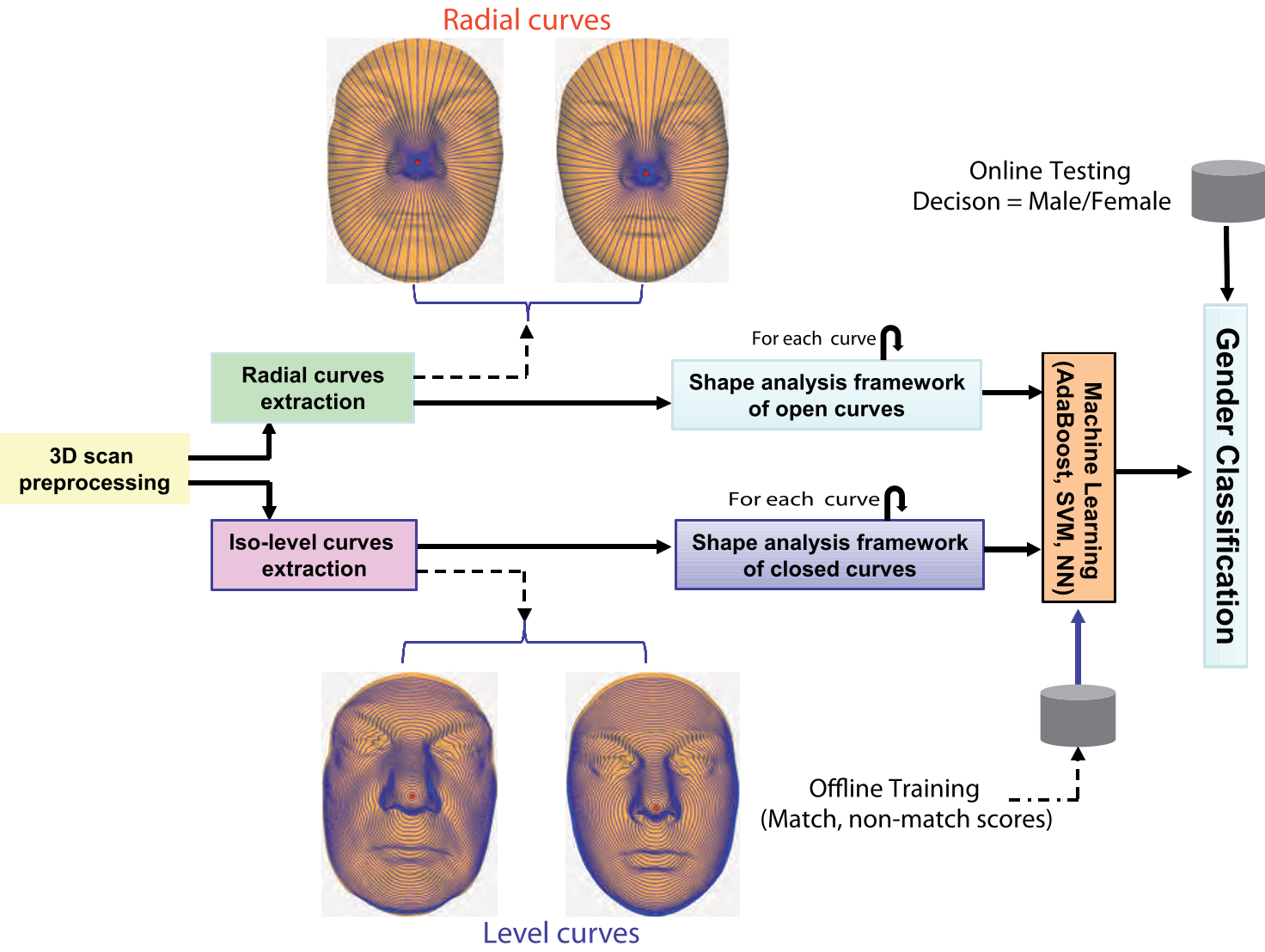 Fig 1: The workflow from 3D scan to geometric comparison.
3. Classification via Boosting
The authors compared three Machine Learning heavyweights:
- AdaBoost: Iteratively selects the most "telling" curves.
- SVM: Finds the optimal hyperplane in the feature space.
- Neural Networks: Modeled the non-linear relationships of the distances.
Experiments & Results
Utilizing the FRGCv2 dataset (a standard benchmark containing 466 subjects), the researchers found that not all parts of the face are created equal when it comes to gender.
| Method | Accuracy |
|---|---|
| AdaBoost | 84.98% |
| Neural Network | 84.33% |
| SVM | 83.69% |
Where does Gender "Hide"?
The AdaBoost algorithm acted as a feature selector, revealing the "hotspots" for gender discrimination:
- The Central Stripe: Iso-level curves passing through the nose were primary discriminators. As noted in the paper, male noses generally possess more volume and a different protuberance compared to female noses.
- The Upper Face: Radial curves passing through the brow and upper cheekbones were selected consistently, highlighting the ridge-depth differences in male vs. female skulls.
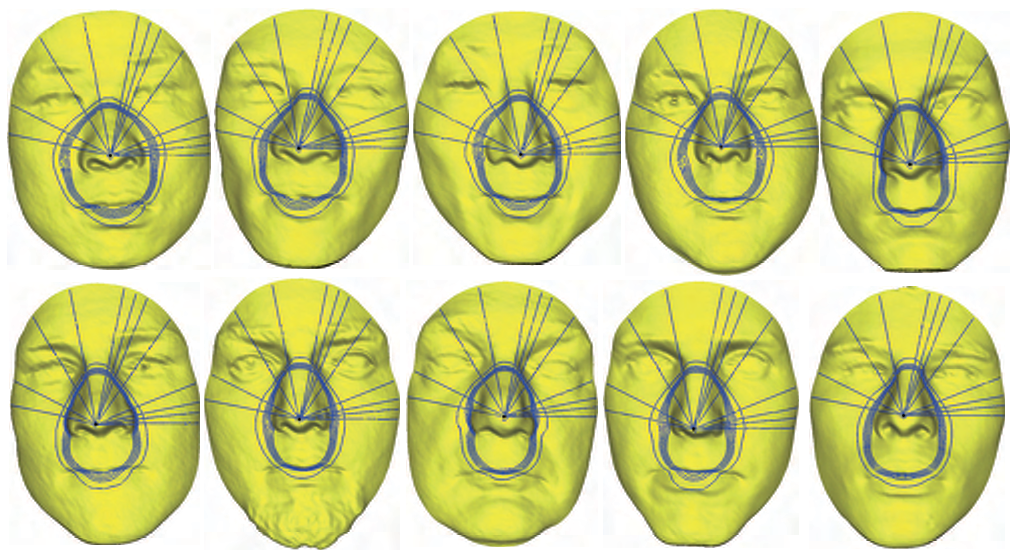 Fig 2: Heatmap of relevant curves selected by the algorithm on male faces.
Critical Analysis & Conclusion
Takeaway
The paper successfully proves that 3D shape analysis is a robust alternative to 2D image processing. By using a Riemannian framework, the authors provide a mathematically rigorous way to handle "elastic" deformations (like different facial expressions) while still identifying the underlying gender.
Limitations
While 85% is a strong result for pure 3D geometry, it still lags slightly behind the highest-performing multi-modal systems (which combine 2D texture and 3D shape). Furthermore, the reliance on a "template" face suggests the method might be sensitive to how a "Standard Male" or "Standard Female" is defined.
Future Outlook
The ability to identify the "average" shape of a gender using Intrinsic Means (a statistical average on a manifold) opens doors for more than just classification. It could lead to better facial reconstruction in forensics or more realistic gender-customization in digital human synthesis (CGI).
Subject Area: Computer Vision / Biometrics Key Terms: Riemannian Geometry, SRVF, 3D Facial Shape, AdaBoost.