
Beyond Pairwise Links: Hypergraph GDL for Social Network Intelligence
Exploiting Relational Information in Social Networks using Geometric Deep Learning on Hypergraphs
2018-06-05
Summary
Problem
Method
Results
Takeaways
Abstract
This paper introduces a geometric deep learning framework that generalizes Graph Convolutional Networks (GCNs) to hypergraphs for social network analysis. By representing multi-modal entities and complex interactions (like tags, groups, and users) as hyperedges, the method enables effective multi-task learning for classification and recommendation.
## TL;DR
Researchers from the University of Amsterdam have unveiled a generic framework that uses **Geometric Deep Learning (GDL) on Hypergraphs** to predict missing information in social networks. Unlike traditional graphs that only see pairs, this model captures "communities" of data, outperforming standard Graph Convolutional Networks (GCNs) in tasks like image classification and recommendation by a significant margin.
## The Problem: The "Pairwise" Blind Spot
Most social network algorithms treat relationships as simple lines between two points (e.g., User A follows User B). However, real-world social data is **higher-order**:
* **Authorship**: A paper with three authors isn't three separate pairs; it's one collaborative group.
* **Flickr Metadata**: An image shared by a user, containing multiple tags and belonging to several groups, forms a complex relational cluster.
When we force these "hyper-relations" into a standard graph, we lose the **Scale-Free** and **Community** properties that define social networks. The authors argue that this information loss is why current recommendation systems often feel "hit or miss."
## Methodology: Hypergraphs + Matrix Completion
The researchers propose a three-stage solution:
### 1. Representing Data as an Incidence Matrix
Instead of an adjacency matrix (which is $N imes N$), they use an **Incidence Matrix ($H$)**. This matrix handles any number of vertices per edge, requiring less storage-space than traditional graphs to represent the same volume of data and naturally capturing higher-order structures.
### 2. Multi-Graph CNNs (The "How")
They leverage the **Normalized Hypergraph Laplacian** to perform spectral convolutions. This allows the model to learn from the "shape" of the network without needing any content-specific features (like image pixels or text embeddings).
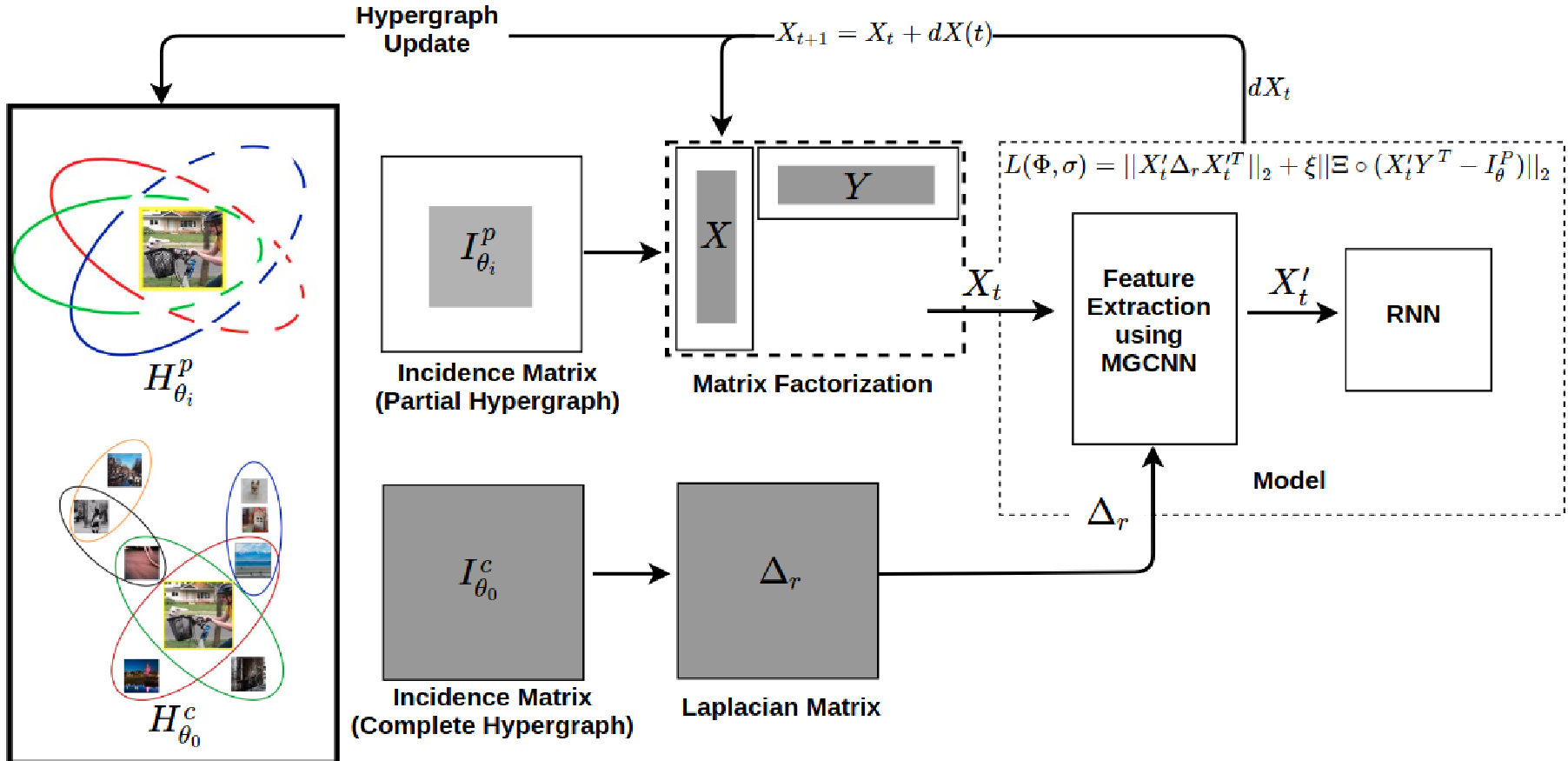
*Figure 1: The model updates the hypergraph incrementally by processing incidence matrices through GDL layers.*
### 3. RNN Incremental Updates
Because predicting a full social network at once is computationally heavy, the authors use a **Recurrent Neural Network (RNN)** to predict small, incremental changes ($dX$) to the incidence matrix, ensuring a smooth and accurate convergence.
## Experiments & Benchmarks
The framework was tested on the **CLEF Flickr dataset** against state-of-the-art baselines.
* **Tasks**: Multi-label Image Classification, Link Prediction (User-Image), Group Recommendation, and Tag Recommendation.
* **Finding 1 (Performance)**: The Hypergraph GDL model consistently achieved higher ROC AUC scores compared to `LPSF` (Link Prediction using Social Features) and `MRH` (Music Recommendation by Hypergraph).
* **Finding 2 (Efficiency)**: As shown in Figure 2, the hypergraph representation ($H$) converges to a high accuracy much faster than weighted graphs ($wG$) or simple graphs ($G$).
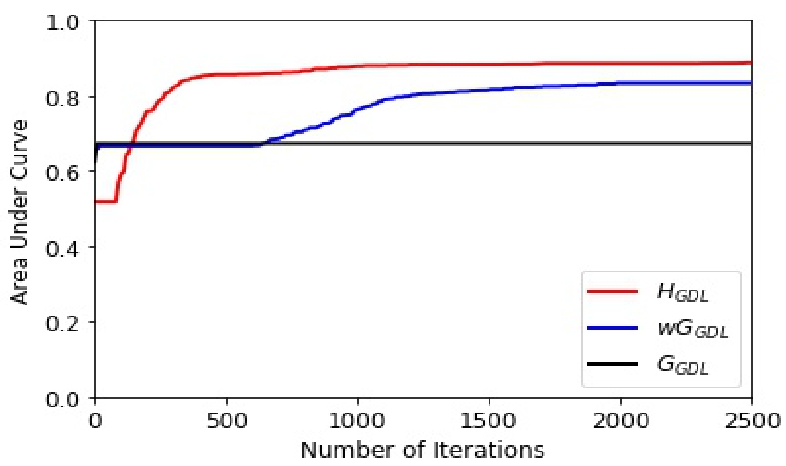
*Figure 2: Convergence rates across different relational representations (Hypergraph vs. Weighted vs. Simple).*
## Critical Analysis & Takeaways
The genius of this approach lies in its **Inductive Bias**: it assumes that the structure of the network itself (who shares what with whom) is expressive enough to predict missing content.
**Strengths**:
* **Content-Independent**: Works even if you don't have access to the actual image pixels or text.
* **Scalability**: Hypergraph incidence matrices are more efficient for sparse social data.
**Limitations**:
The paper focuses on static snapshots of metadata. In real-world social networks, relations change every second. Future work would need to integrate **Temporal Hypergraphs** to capture the evolution of communities over time.
## Conclusion
By moving from "lines" to "sets," this paper provides a robust blueprint for the next generation of recommendation engines and social classifiers. It proves that in the world of social data, the group is often more informative than the individual.