
The Rise of the New Terroir: Bibliometric Trends in BRIC Viticulture Research
Global trends in scientific production in enology and viticulture in selected emerging economies (BRIC)
This study presents a comprehensive bibliometric analysis of scientific productivity in enology and viticulture among BRIC countries (Brazil, Russia, India, and China) from 1993 to 2012. Utilizing the Science Citation Index Expanded (SCIE), it identifies China and Brazil as the dominant emerging leaders, with a total output of 1,067 research articles and a growth rate significantly outpacing other scientific sectors.
TL;DR
A 20-year longitudinal study (1993–2012) reveals that BRIC countries—particularly China and Brazil—have seen a 1,200% explosion in viticulture and enology research. While still reliant on Western collaboration, these nations are rapidly specializing in food science and biotechnology, signaling a shift in the global center of gravity for wine innovation.
Background: Beyond the Bottle
The acronym BRIC (Brazil, Russia, India, and China) was originally an economic forecast, but by the mid-2000s, it transitioned into a scientific reality. In the world of wine, these countries represent both massive future markets and expanding production zones. This study asks: Does scientific output follow economic potential? By analyzing the Science Citation Index Expanded (SCIE), the authors provide a data-driven map of how the "New World" is building its academic foundation.
Problem & Motivation: The Research Gap
Historically, viticulture research was the domain of the "Old World" elite. Emerging economies were seen as technology adopters rather than creators. The authors identify a critical need to quantify this transition, noting that existing metrics often ignore domestic journals or fail to visualize the complex web of institutional collaborations that allow emerging nations to "catch up" with established wine powers.
Methodology: Mapping the Scientific Network
The researchers didn't just count papers; they mapped influence. Using a combination of keywords, institutional affiliations, and specific journal lists, they filtered 1,067 core articles.
- SNA (Social Network Analysis): Used to visualize how universities interact.
- Indicator Normalization: Crucially, the authors adjusted absolute paper counts against GDP and population to determine "true" research intensity.
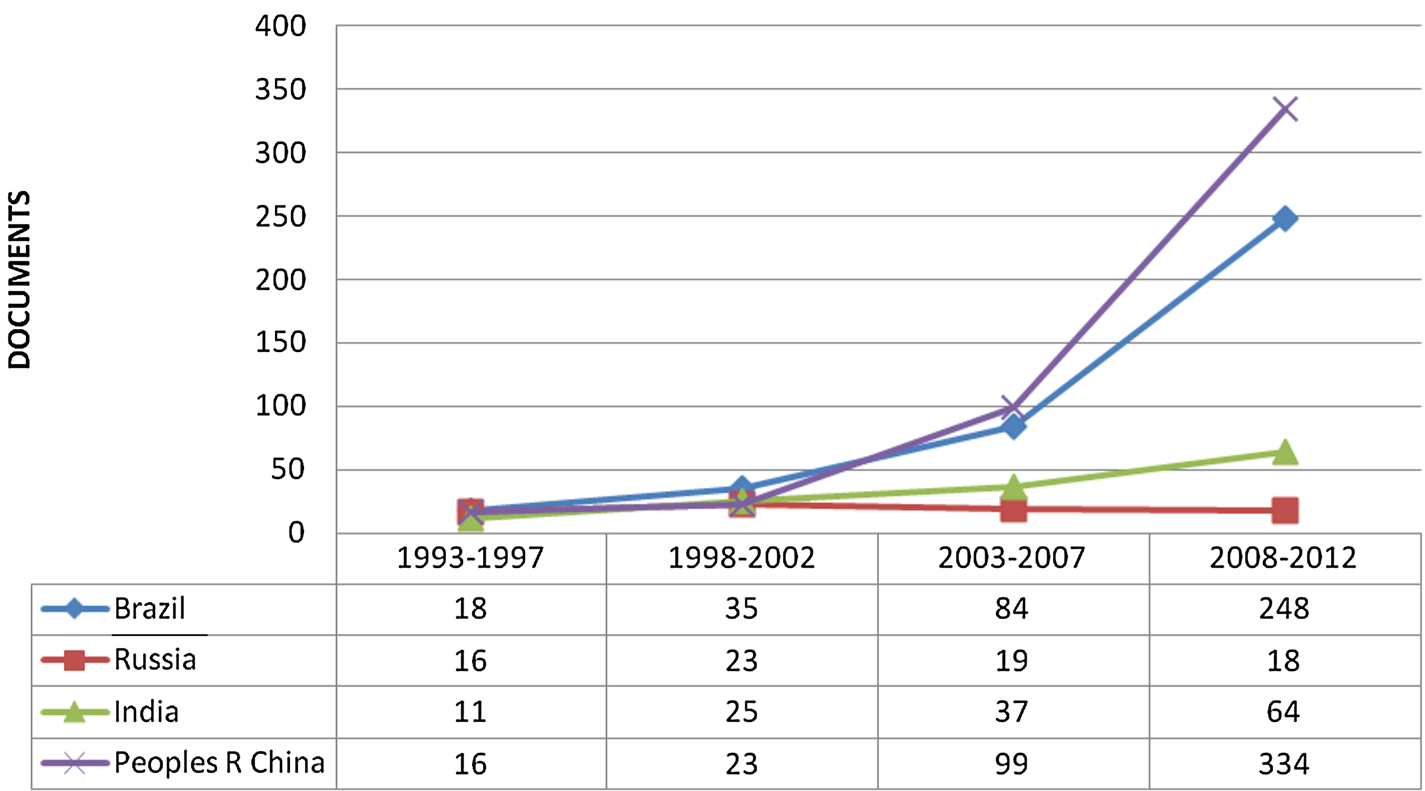 Figure 1: The exponential growth of publications, showing the dramatic surge post-2003.
Key Results: China Leads, Brazil Excels
The data reveals a two-tiered hierarchy within the BRIC group:
- China (The Volume Leader): China Agricultural University leads the pack with 106 articles. Their research is heavily focused on Food Science and Technology.
- Brazil (The Efficiency Leader): When adjusted for GDP, Brazil is the most productive. The Revista Brasileira de Fruticultura emerged as the top journal for the sector within BRIC.
- India & Russia: Occupy a second tier, with Russia focusing more on analytical chemistry and electronic sensors (electronic tongues), and India on horticulture.
Collaboration Paradox
One of the most striking findings is the lack of intra-BRIC cooperation. Despite being grouped economically, Brazilian researchers are more likely to collaborate with French or American peers than with Chinese ones. This reflects a "hub-and-spoke" model where emerging nations still look to the traditional scientific elite for validation and methodology.
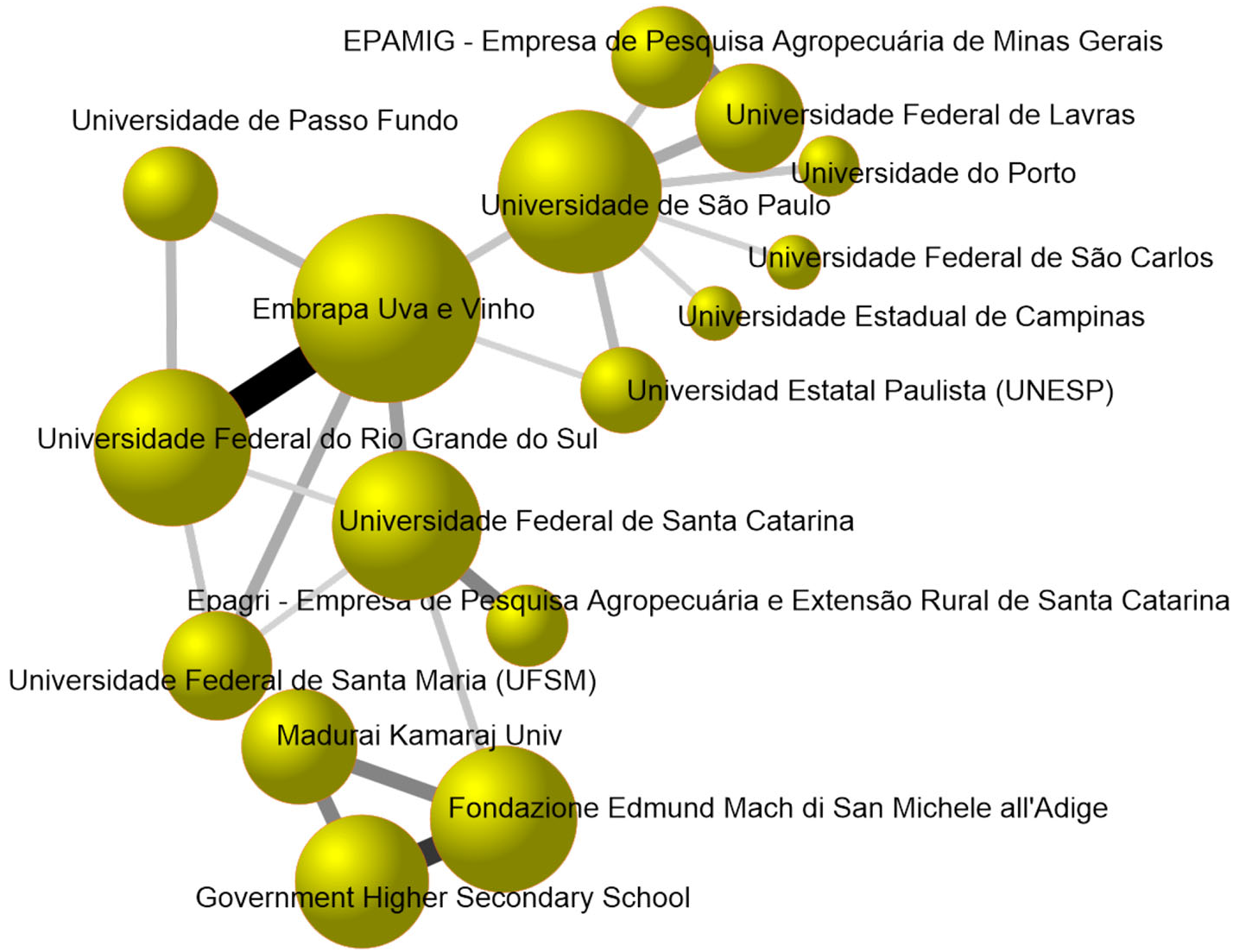 Figure 2: The Brazilian network shows strong internal cohesion among institutions like USP and Embrapa.
Deep Insight: Why Does This Matter?
The study proves that viticulture research in BRIC countries is growing twice as fast as their scientific output in other fields. This suggests a strategic "specialization" where these countries are leveraging their diverse climates and biodiversity—from the high-altitude vineyards of China to the tropical viticulture of Brazil—to create unique intellectual property.
The highly cited work of Hanqing Yu (China) on winery wastewater and Minussi (Brazil) on phenolic compounds shows that BRIC research isn't just about growing grapes; it's about solving environmental and health-related challenges associated with the industry.
Conclusion & Future Outlook
While the 1993–2012 period established the "academic arrival" of BRIC, several challenges remain:
- Geographic Fragmentation: Distance remains a barrier to collaboration between these emerging giants.
- Language & Visibility: A significant portion of Brazil's work is in domestic journals. While this builds local capacity, it may limit global citation impact.
- Future Trajectory: As these nations refine their "innovation strategies," expect a shift from general agriculture toward high-tech "precision viticulture" and genomic research.
Takeaway: If the 20th century belonged to the European terroir, the 21st-century's scientific frontier is increasingly being written in Portuguese and Mandarin.