
The Good, the Bad and the Ugly: Navigating the Competitive Maze of TopCoder
The Good, the Bad and the Ugly: An Onboard Journey in Software Crowdsourcing Competitive Model
This paper investigates the onboarding experiences of newcomers on TopCoder, a leading software crowdsourcing (SW CS) platform. Through a qualitative study of graduate students, it characterizes the tension between the platform's competitive model and the participants' need for collaboration and feedback.
TL;DR
Software Crowdsourcing (SW CS) is often championed as the future of on-demand IT labor, but for the uninitiated, it can be a daunting "Black Box." This study explores the first-time experience of developers on TopCoder, revealing that while the freedom to choose tasks is "The Good," the lack of collaboration is "The Bad," and a total absence of constructive feedback is "The Ugly."
Background: A New Frontier for Software Engineering
Just as Distributed Software Development revolutionized the industry 15 years ago, Crowdsourcing is shifting how companies build products. By decomposing complex projects into "micro-tasks" or "competitions," platforms like TopCoder tap into a global talent pool. However, this study suggests that the Competitive Model (where multiple workers build a solution but only the winner gets paid) creates unique psychological and technical barriers for newcomers.
The Friction in Competition: Problem & Motivation
The authors identify a core paradox: Software development is inherently collaborative, yet TopCoder’s competitive structure incentivizes individual silos. Newcomers (onboarders) suffer the most because they are forced to navigate:
- Context Scarcity: Fragmented documentation makes it hard to understand requirements.
- Environment Friction: High effort is required just to set up local development environments for tiny tasks.
- The Information Gap: Newcomers don't know who to trust or where to find help without helping their competitors.
Methodology: Putting Students into the "Crowd"
To gather empirical evidence, researchers embedded 21 graduate students—all experienced developers with an average of 6 years of expertise—into the TopCoder ecosystem. Over 16 weeks, these students selected "First to Finish" (F2F) and "Code" tasks, documented their struggles, and reported their perceptions of the platform's social and technical architecture.
Key Findings: Communication and Coordination
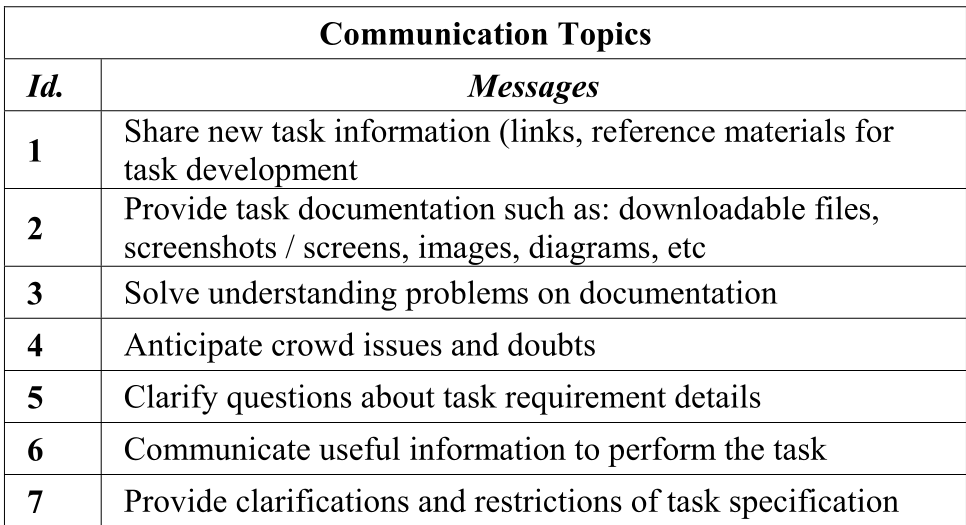
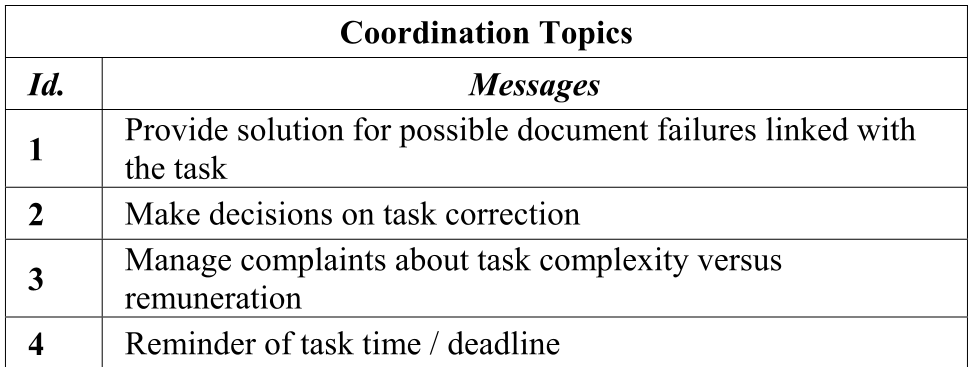
Despite the competitive pressure, the study found that collaboration does happen, primarily through asynchronous forums. The researchers categorized these interactions into two types:
1. Communication & Coordination Topics
The study observed that the "Copilot" (the mediator between the requester and the crowd) plays a vital role in clarifying requirements.
2. The Feedback Vacuum
One of the most critical findings is the lack of "Evaluation Feedback." In traditional software teams, code reviews are learning opportunities. In TopCoder, many students submitted code and received nothing—no score, no critique, just silence. This was labeled the "Ugly" part of the journey, as it fails to promote professional improvement.
Deep Insights: The Future of Crowdsourcing
The paper concludes with a call to action for platform designers. To move from a "Bad" experience to a "Good" one, platforms must:
- Improve Usability: Standardize how task files are located and downloaded.
- Hybridize the Model: Introduce synchronous communication channels (like Slack or Discord integration) to reduce the friction of asynchronous forums.
- Transparency in Reviewing: Ensure that every submission, winning or losing, receives a "breakdown" or progress report.
Final Takeaway
The "Ugly" truth is that competition alone isn't enough to sustain a high-quality developer ecosystem. For software crowdsourcing to reach its true potential, it must bridge the gap between individual competition and collaborative learning. Without better onboarding and feedback, the "Crowd" will remain a revolving door of frustrated talent.