
Graph Analysis: Revolutionizing Q&A Routing in Enterprise Social Networks
Using Graph Analysis Approach to Support Question & Answer on Enterprise Social Network
This paper introduces a graph-based recommendation framework for Question & Answer (Q&A) tasks within Enterprise Social Networks (ESN). By leveraging an "Interest-Relationships Graph" and heuristics like Interest Distance, the system identifies and suggests relevant experts in platforms like KDWeibo, China’s leading ESN.
TL;DR
Knowledge sharing in large companies often hits a bottleneck: who do you ask when your immediate circle doesn't have the answer? This paper presents a graph-based recommender system for KDWeibo that uses "Interest Distance" to find experts. By analyzing who your colleagues follow and interact with, the system expands a small list of potential answerers into a high-quality expert group—no complex natural language processing required.
The Problem: The "Who to Ask" Dilemma
In an Enterprise Social Network (ESN), employees face a paradox. If they post a question publicly, it might be ignored. If they @mention specific people, they risk bothering the same few friends repeatedly or missing out on true subject matter experts (SMEs) hidden in other departments.
Current search engines are keyword-heavy and lack the social context of an organization. The authors argue that your position in the social graph—who you follow and who replies to you—is a more reliable indicator of your professional interests than a static profile.
Methodology: Mapping the Enterprise Interest Graph
The core innovation lies in treating an ESN as an Interest-Relationships Graph.
1. Interest Distance
Instead of analyzing what people say, the authors look at who they are connected to. They define Interest Distance using a symmetric difference formula:
If two people follow the exact same set of specialized colleagues, their distance is 0. If they have zero overlap, it’s 1.
2. Expanding the Expert Pool (ASG & SSG)
The system doesn't just look for "similar" people to the questioner; it looks for people similar to the initial answerers.
- ASG (Aggregate Specialization Graph): A person’s immediate cluster of interest-neighbors.
- SSG (Specialization Sub Graph): By taking the intersection and union of ASGs from several seed experts, the system discovers a "hidden" group of people who share that specific niche interest.
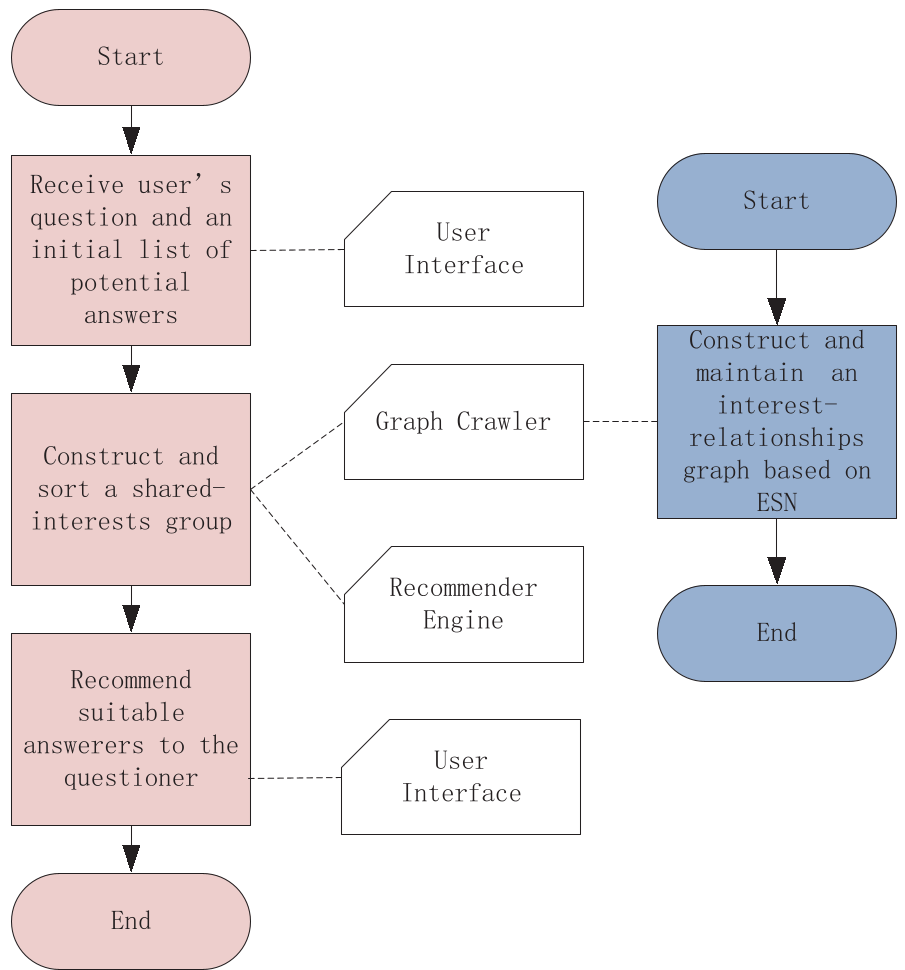 Figure 1: The main components of the Q&A support system, bridge the User Interface and the Recommender Engine.
Experiments & Real-World Implementation
The system was deployed on KDWeibo, a platform used by Kingdee Group with over 10,000 employees.
- User Feedback: Users reported finding "friends-of-friends" who were highly qualified to answer technical questions, expanding their internal network beyond their immediate team.
- Efficiency: Because the search is localized around a seed list, the complexity is linear, avoiding the NP-complete pitfalls of searching for global maximum cliques in large graphs.
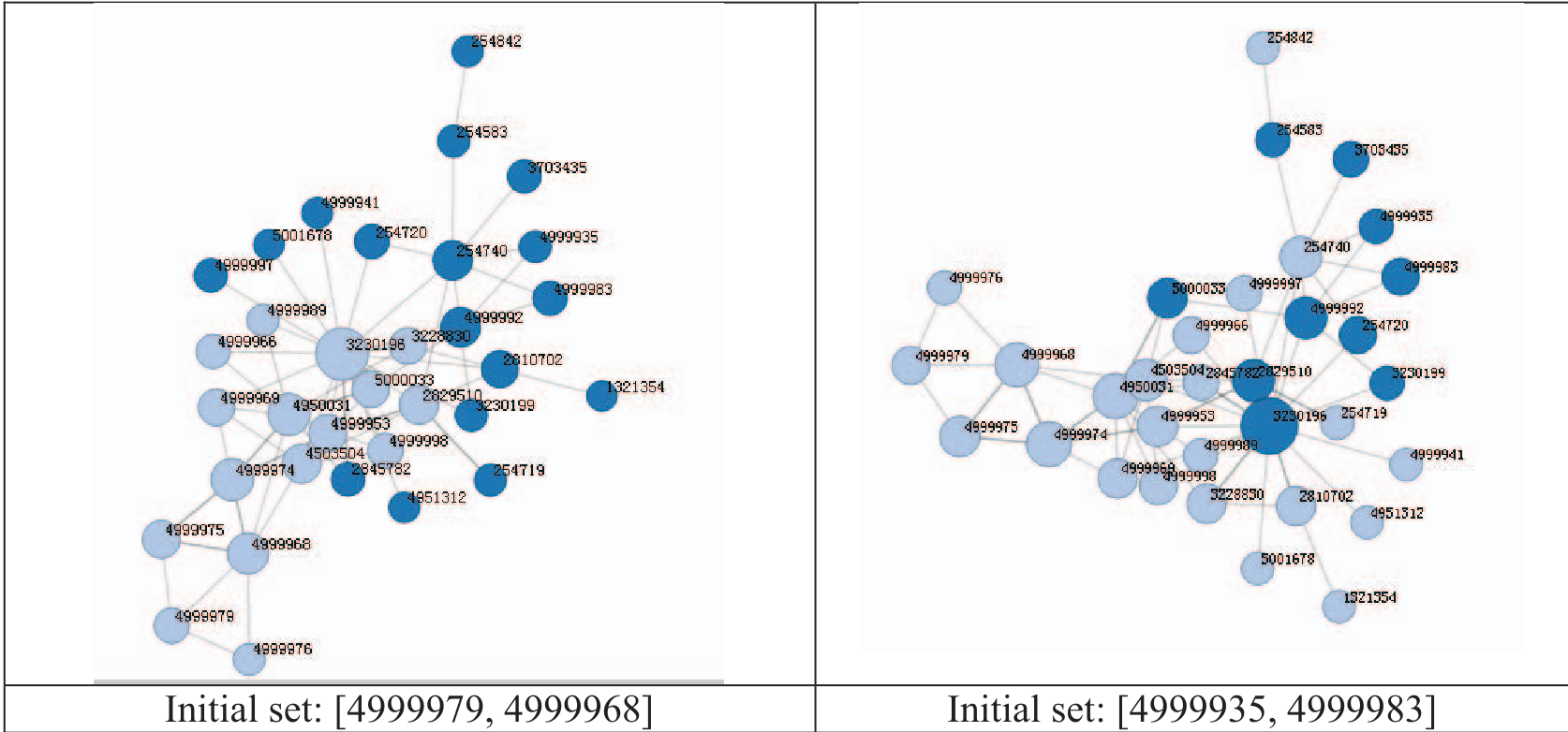 Figure 2: Visualized Specialization Sub Graphs (SSG) showing how interest clusters emerge from seed nodes.
Critical Insights & Future Outlook
The "Following" Trap: The authors noted a critical limitation—"following" relationships can be noisy. Some users follow everyone; some follow no one. To fix this, they suggest moving toward reply-based relationships, which represent active, verified engagement rather than passive following.
Why this matters: As companies move toward "Big Data" for internal management, graph analysis provides a scalable way to unlock tacit knowledge. The future of this work involves integrating Expert Finding (ranking by skill level) and Distributed Computing (Hadoop) to handle millions of nodes in real-time.
Conclusion
This work demonstrates that in the specialized world of an enterprise, who you know defines what you know. By mathematically modeling these "interest distances," organizations can transform a messy social network into a precision-guided knowledge-routing machine.