
GPPS: Balancing Social Network Privacy and Data Utility via Optimized Graph Partitioning
Graph partition based privacy-preserving scheme in social networks
The paper proposes the Graph Partition based Privacy-preserving Scheme (GPPS), an anonymization framework for social networks designed to resist 1-neighborhood attacks. GPPS achieves k-anonymity by integrating modified spectral clustering for node grouping and a maximum weight bipartite matching algorithm for privacy-preserving graph modification.
TL;DR
Social network data is a goldmine for research but a minefield for privacy. The paper introduces GPPS (Graph Partition based Privacy-preserving Scheme), a sophisticated framework designed to thwart "1-neighborhood attacks"—where an attacker knows your immediate friend circle and the links between them. By combining modified spectral clustering (enhanced by graph entropy) and bipartite graph matching, GPPS makes users indistinguishable within groups of size while keeping the overall network structure largely intact.
The "1-Neighborhood" Threat: Why Simple Anonymization Fails
Removing names from a social graph (Naïve Anonymization) isn't enough. If an attacker knows that Alice has three friends who also know each other in a specific triangular pattern, they can often find that unique structure in the "anonymous" graph and re-identify Alice. This is known as a 1-neighborhood attack.
Prior works attempted to solve this by making everyone's neighborhood looks identical (isomorphism), but this often "breaks" the graph's usefulness for data mining, such as identifying influential users or calculating shortest paths.
Methodology: The GPPS Two-Step
The authors argue that the key to maintaining utility is grouping the right nodes together.
1. Entropy-Enhanced Node Clustering
Standard spectral clustering uses simple similarity metrics. GPPS introduces Degree-Based Graph Entropy to measure network heterogeneity.
- The Intuition: Nodes with similar "roles" in the network (highly connected vs. peripheral) should be clustered. Entropy provides a more granular signature of a node's structural importance than simple degree counts.
- The Process: It builds a similarity graph and uses a RatioCut-based spectral clustering algorithm to ensure clusters are balanced in size ( to ).
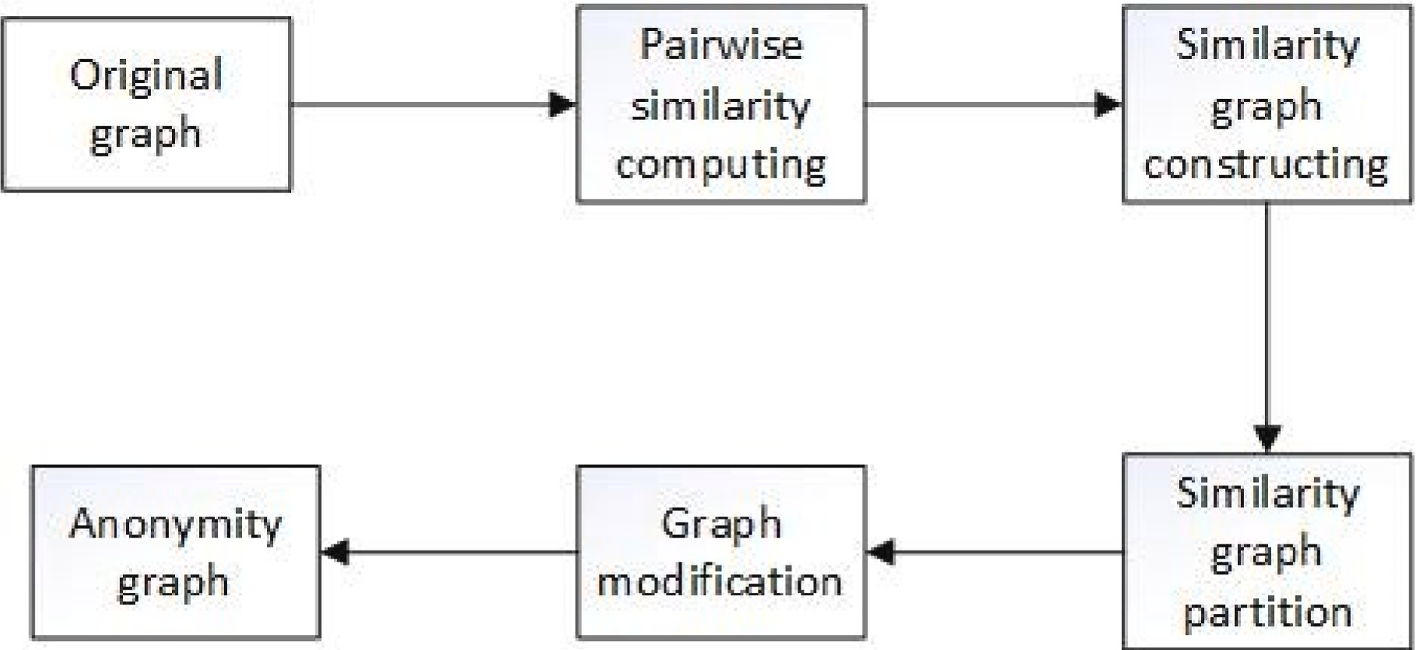 Fig 1: The GPPS Workflow involving Node Clustering and Graph Anonymization.
2. Intelligent Graph Modification
Once nodes are clustered, GPPS turns the problem into a "matching" game.
- Seed Selection: It finds a "seed" node in each cluster that requires the least modification cost to match its neighbors.
- Maximum Weight Bipartite Matching: Using this mathematical tool, the algorithm calculates the optimal (cheapest) way to add or delete edges to make all neighborhood graphs in a cluster look "indistinguishable" to an observer.
- Strategic Modification: It prioritizes adding or deleting edges that have low Betweenness Centrality (BC) to ensure that the vital "highways" of the network are not destroyed.
Experimental Results: Privacy Without the Pain
The researchers tested GPPS on real-world datasets like Facebook, HepTh (arXiv collaborations), and Enron (emails).
Key Findings:
- Utility Retention: GPPS kept the "Top Influential Nodes" (TIN) at a 95% retention rate, meaning marketers or researchers can still find the key players in the anonymized graph.
- Information Loss: As increases (more privacy), information loss naturally rises. However, by using the RatioCut method, GPPS keeps the Average Shortest Path Length (APL) variation much lower than previous methods like HIGA.
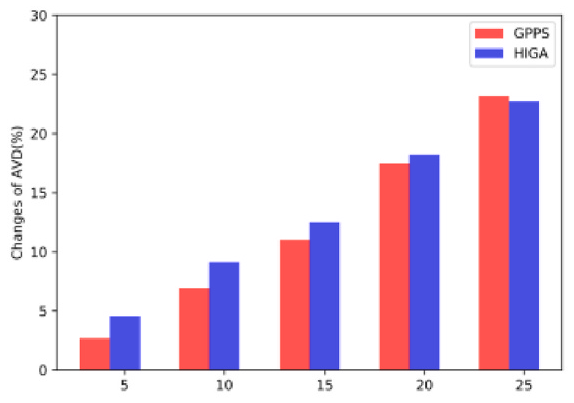 Fig 2: Performance metrics including AVD, ACC, and APL across different datasets. Note the stability in influential node retention.
Critical Insight & Conclusion
The brilliance of GPPS lies in its admission that we don't need perfect isomorphism to achieve -anonymity; we need probabilistic indistinguishability. By focusing on structural entropy during clustering, the scheme groups nodes that are "naturally" similar, requiring fewer "surgical" changes to the graph to hide identities.
Limitations and Future Work
While GPPS excels against 1-neighborhood attacks, modern attackers might use subgraph attacks (knowing multi-hop connections). The authors suggest that integrating uncertain graph methods—where edges carry existence probabilities—could be the next frontier in robust social network privacy.
Takeaway: GPPS proves that with the right mathematical lens (Entropy + Matching), we can share social data that is both private and powerful.