
Beyond Utility: The Emotional Gravity of “The New Shiny Thing”
532_Gravitating to "The New Shiny Thing"- Meaning, Emo
This study investigates the subjective User Experience (UX) of tablet computing, specifically focusing on the iPad as a paradigmatic case. Using a qualitative hermeneutic analysis of 32 blogposts, the authors explore how users assign emotional value and meaning to these devices, achieving a shift from utilitarian tools to "irresistible" lifestyle artifacts.
TL;DR
Why do we love our tablets even when our laptops are objectively more powerful? This paper explores the "Meaning Making" process behind the iPad revolution. By analyzing raw user narratives from the early 2010s, the researchers demonstrate that the tablet's success isn't about what it does (functionality), but how it feels (sensual and emotional threads). The study reveals a shift where IT artifacts become "mistresses" and "toys" rather than just tools.
Background Positioning
Writing in 2013, the authors catch a pivotal moment in tech history: the transition of the tablet from a niche business slate to a mass-market phenomenon. This isn't just a product review; it is a deep dive into the Phenomenology of UX, situating itself as a qualitative bridge between cognitive psychology and industrial design.
Problem & Motivation: The Failure of Pure Utility
Before the iPad, tablets existed for years but failed to gain traction. Why? Because the industry viewed them through a Utilitarian Lens. The authors argue that existing literature missed the "Subjective User Experience." The motivation for this study was to understand the emotional appraisal of technology—why users "gravitate" to a device that many critics at the time called an "undeniably inessential toy."
Methodology: The Hermeneutic Circle
The researchers analyzed 32 blogposts from a diverse set of users (mostly high-level managers and tech-savvy professionals). Using Hermeneutics, they looked for the "intended meaning" in these texts.
They utilized several key frameworks to map these experiences:
- The Four Threads of Experience: Spatiotemporal, Sensual, Emotional, and Compositional.
- Core Affect Theory: Mapping emotions on a grid of Pleasure vs. Activation.
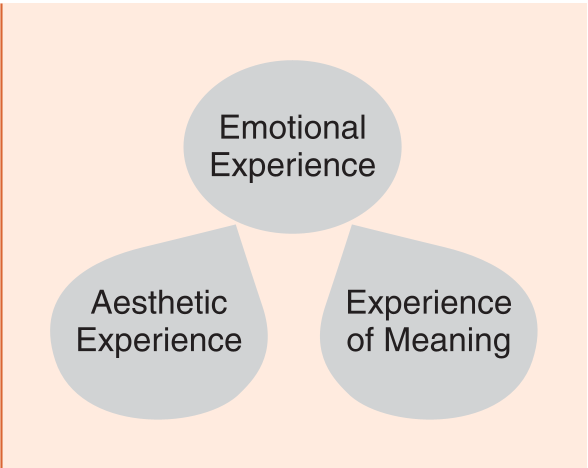 Fig 1: The combined UX framework integrating various emotional and aesthetic threads.
Key Insights: From Work Tool to "Significant Other"
The analysis revealed three distinct "states" of tablet meaning:
1. The Office-on-the-Move (Utilitarian)
For professionals, the iPad provided "liberation" from heavy laptop bags. Interestingly, this pragmatic productivity didn't lead to high-energy excitement but to Pleasure-Calmness. The "meaning" here was efficiency and mobility.
2. The Communal Multimedia Station (Social)
Users found the iPad "surprisingly non-geek." Unlike a laptop (which requires hovering over a shoulder) or a phone (which is too personal), the tablet became a shared space. Showing photos to an 80-year-old mother or reading to a child evoked Pleasure-Activation.
3. The "Mistress" and the "Toy" (Intimate/Aesthetic)
This is the paper’s most provocative finding. Users developed an attachment resembling Sternberg’s Theory of Love.
- Sensual Attraction: Describing the device as "sexy," "eye candy," and "shiny."
- Intimacy: Requiring "private time" with the device.
- Passion: Choosing the device over computationally superior ones because of the "superior experience."
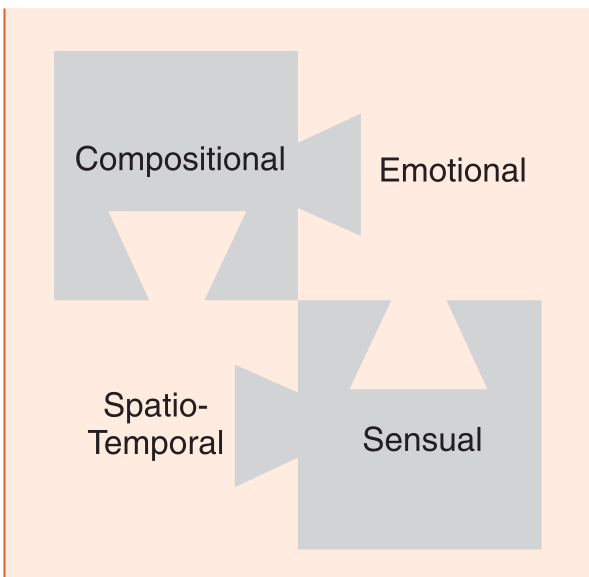 Fig 2: The four threads of experience used to categorize user blog narratives.
Experiments & Results: Quantitative vs. Qualitative
The study provided a breakdown of 32 distinct bloggers, showing that even top-tier CTOs and Strategy Consultants (see Table I) succumbed to the "aesthetic experience" over "pragmatic characteristics."
- Result 1: Users who tried to use the tablet as a 1:1 laptop replacement often felt displeasure/disappointment.
- Result 2: Users who embraced it as a "toy" or "content consumption station" reported bliss and freedom.
- Result 3: Aesthetics (Glossy metal/glass) act as a "universal desire" that differentiates the product in a saturated market.
Critical Analysis & Conclusion
Takeaway
The paper proves that as technology reaches a "functional plateau" (where most devices are "good enough" for average tasks), UX becomes the primary battleground. The tablet is "irresistible" because it satisfies the sensual and emotional threads of human experience that a traditional PC ignores.
Limitations
The study is heavily skewed toward "upper-level managerial" males (Table I show a high concentration of Male/Executive roles). The findings might differ for students or users in developing economies where utilitarian value remains the primary driver.
Future Outlook
This work lays the groundwork for understanding "Emotional AI" and "Spacial Computing" (like the Vision Pro). If we gravitate to "The New Shiny Thing" primarily for its aesthetic and intuitive "magic," the future of tech lies in industrial design and psychological resonance, not just Moore's Law.