
Sustainable Synergies: How Cloud, Green IT, and Data Science are Decarbonizing Healthcare
Research into Making Healthcare Green with Cloud, Green IT, and Data Science to Reduce Healthcare Costs and Combat Climate Change
This research paper explores the integration of Green IT, Cloud Computing, and Data Science to reduce the carbon footprint and operational costs of the healthcare sector. It proposes a transition from "treatment-based" to "outcome-based" practices through virtualization, big data analytics, and energy-efficient IT management.
Executive Summary
As the global community faces an intensifying climate crisis, the healthcare sector—traditionally focused on human health—is increasingly under scrutiny for its own environmental impact. This paper, authored by Nina S. Godbole and Dr. John Lamb, serves as a strategic roadmap for the "Greening" of healthcare.
TL;DR: By leveraging Cloud Computing, Virtualization, and Big Data Analytics, healthcare providers can simultaneously reduce their massive carbon footprint (8% of US emissions) and slash operating costs. The core transition involves moving from inefficient physical infrastructures to intelligent, data-driven virtual environments.
The Motivation: A Sector at a Crossroads
The healthcare industry is inherently complex, characterized by massive data generation—projected to reach 25,000 petabytes by 2020. This complexity leads to significant energy waste. Prior work identifies that most hospital servers run at a mere 5% to 15% CPU utilization, meaning they consume up to 40% of their peak power while essentially sitting idle.
The authors identify a "Triple Challenge" for modern healthcare: Cost, Quality, and Reach. The insight here is that environmental sustainability (Green IT) is the missing link that helps solve all three by optimizing resource allocation and reducing unnecessary physical interventions.
Methodology: The "Green" Tech Stack
The paper outlines a hierarchical approach to sustainability, rooted in both hardware efficiency and software intelligence.
1. The Power of Virtualization
The first and most critical step is virtualization. By decoupling software from physical hardware, hospitals can consolidate multiple "underutilized" servers into single, high-efficiency physical machines.
- Server Virtualization: Moving to Unix Logical Partitions (LPARS) allows for dynamic resource allocation.
- Desktop Virtualization: Replacing 350-watt PCs with 5-60 watt "Thin Clients."
2. Analytical Intelligence (Data Science)
Data Science acts as the "glue" for Big Data and Cloud environments. The authors suggest using a modified Six Sigma (Define, Measure, Analyze, Improve, Control) framework to manage energy efficiency.
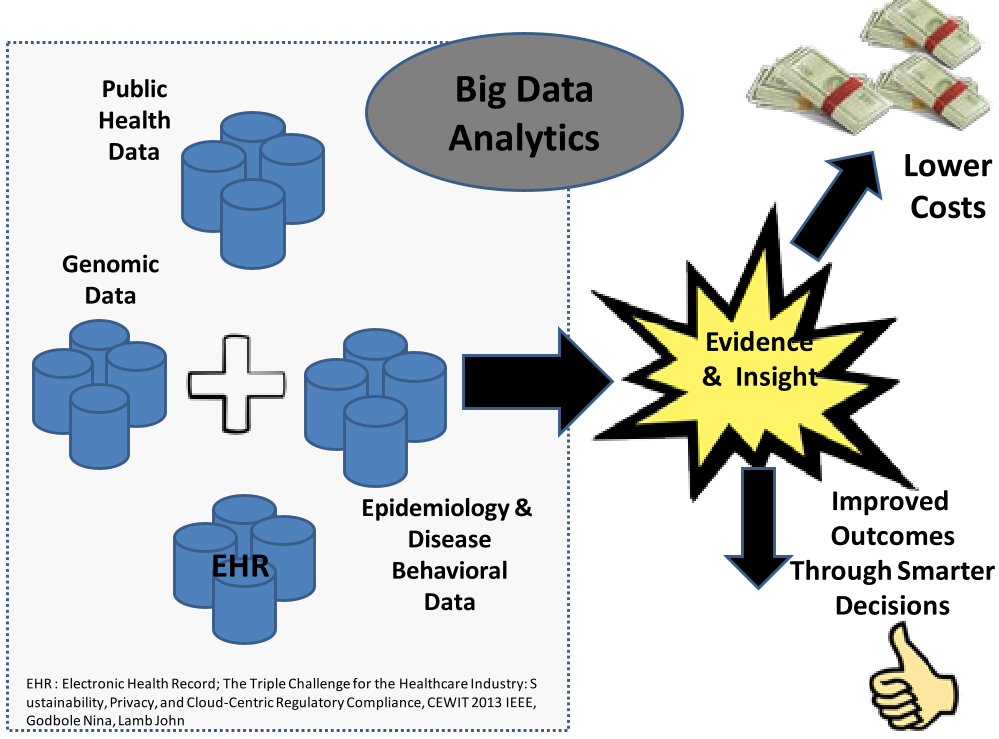
- Evidence-Based Medicine (EBM): Transitioning from opinion-based to data-driven medicine reduces diagnostic errors and redundant testing, indirectly saving energy.
- Deduplication: Eliminating redundant data instances to reduce storage hardware requirements by ratios of up to 10:1.
Experiments & Results: Quantifiable Impact
The paper provides concrete figures to support the transition to Green IT. The most striking data points include the functional distribution of energy use in hospitals:
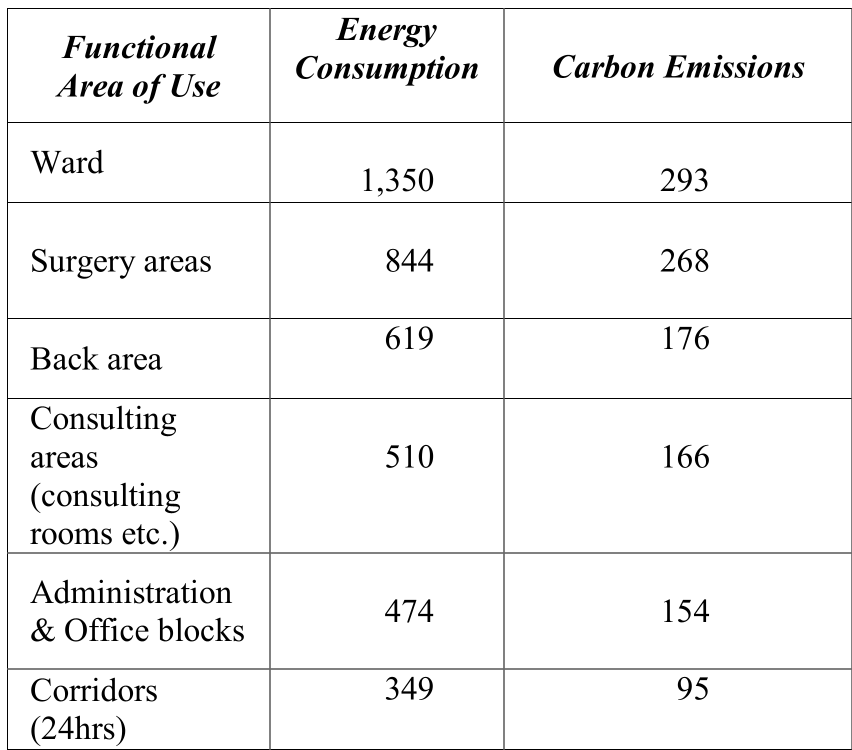
Key findings from the analysis:
- Virtualization Savings: Each server virtualized saves approximately 400 watts and $380 per year.
- EMR Impact: Implementing Electronic Medical Records avoids 1,044 tons of paper annually in the US.
- Application Tuning: The authors share a case where optimizing a data warehouse search reduced processing time from 8 hours to 8 minutes, leading to a massive drop in server energy load.
Deep Insight & Conclusion
Takeaway
The true value of this research lies in its holistic view. Green IT is not merely about "turning off lights"; it is about the digital transformation of medical logic. By moving toward Outcome-Based Practices, we reduce the physical footprint of the entire medical cycle—fewer unnecessary visits, shorter hospital stays, and more efficient data storage.
Limitations & Future Work
While the paper provides a robust framework, it acknowledges the hurdle of Protected Health Information (PHI) and privacy regulations. The "Green" transition must happen without compromising security. Future research should look into the energy costs of keeping healthcare data encrypted and the potential of decentralized "Edge" green computing to further reduce the energy used in long-distance data transmission.
In conclusion, the future of a healthy world depends on a healthy planet. "Green Healthcare" is no longer an optional ethical choice—it is a technical necessity for the 21st-century hospital.