
The Ghost in the Machine: Why Social Networks Dictate IS Project Success
A grounded theory research investigation into the importance of social relationships and networks within corporate Information Systems projects
This research employs Grounded Theory to investigate how social relationships and networks influence Information Systems (IS) project success within a South African financial institution. The study introduces the Socio-Technical Constituencies (STC) framework to map the impact of informal networks, asserting that project success is as much a social phenomenon as a technical one.
TL;DR
Despite decades of perfecting project management methodologies, Information Systems (IS) projects still fail at a staggering rate. This research argues that the missing link isn't better code or stricter Gantt charts, but the social capital and informal networks within IT teams. Using Grounded Theory, the study proves that "who you know" and "how you interact" are often more predictive of success than the methodology itself.
The "Procedure Paradox"
In the world of corporate IT, there is a prevailing myth: if you follow the methodology (Agile, Waterfall, etc.) and gather perfect requirements, the project will succeed. Yet, the literature remains bleak.
The author points out a fundamental flaw in current thinking: methods are not enough. IS projects are inherently political and social. When procedures fail or "stumbling blocks" appear, team members don't just stop; they pivot to their informal social networks to find workarounds. If these networks are weak, the project stalls.
Methodology: Digging into the "Grounded" Truth
The study focused on a large South African bank, analyzing real-world project documentation and surveying a cross-section of roles—from Architects to Testers. By applying Grounded Theory, the researcher identified five core categories that define the "social life" of a project:
- Leadership Influence: Not just management, but social guidance.
- Project Culture: The "driving force" influenced by divisional norms.
- Internal Social Relationships: The ties between team members.
- External Networks: The use of outside experts to gain leverage.
- External Influences: Market shifts and new tech.
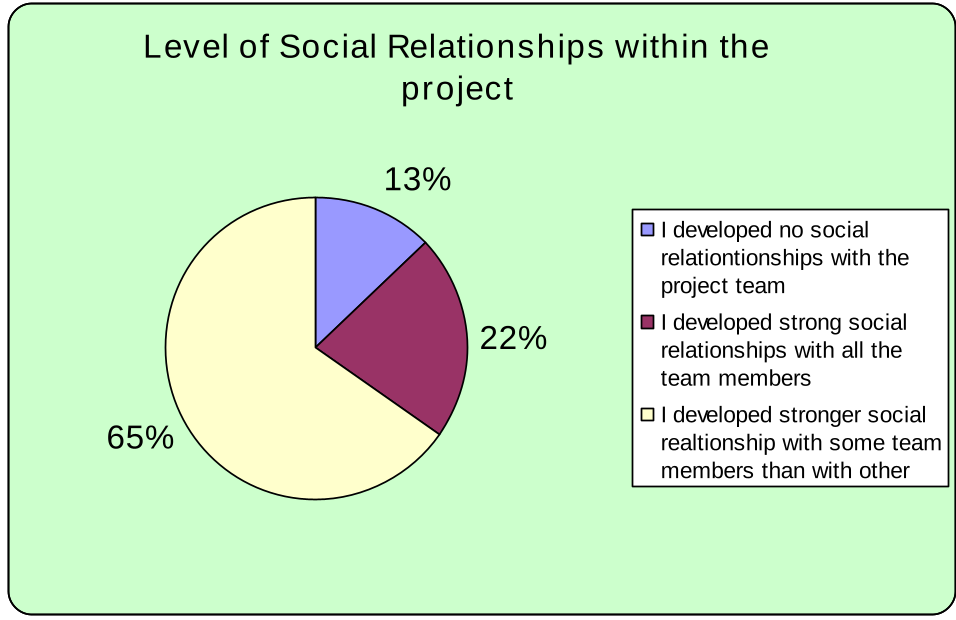 Figure 1: Data shows that the vast majority of team members develop nuanced social ties that go beyond formal roles.
Key Insights: Breaking the Hierarchy
The research highlights two critical "Socio-Technical" realities:
1. Social Overrides Procedure
A striking 74% of respondents prioritized leadership over strict procedures. More importantly, social relationships act as a "problem-solving lubricant." When official channels are blocked, team members use their social capital to bypass bureaucracy.
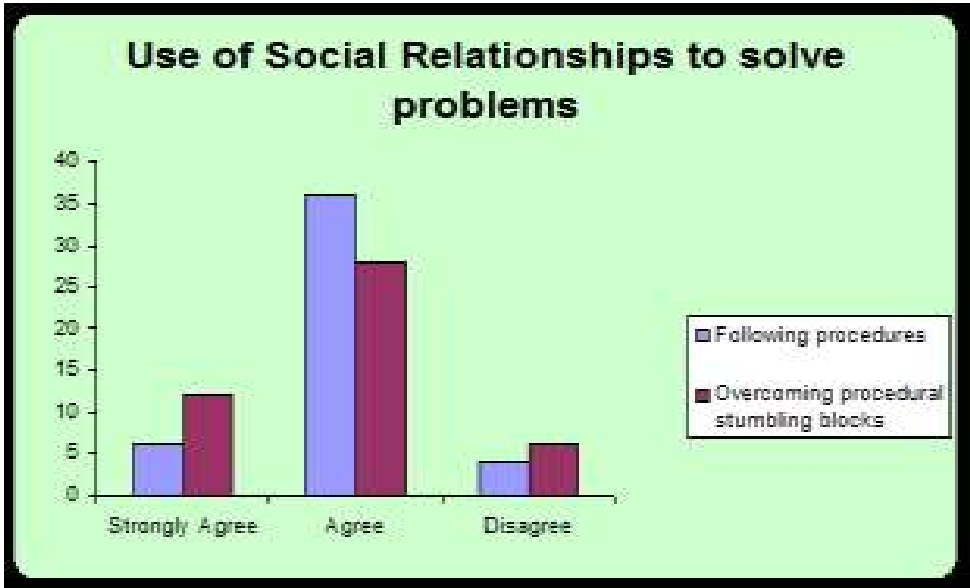 Figure 2: Social networks are used both alongside and in place of formal procedures to resolve technical bottlenecks.
2. The Power of External Social Capital
The study found that about half of the participants leveraged external social networks (people outside the organization) to bring in knowledge that allowed them to influence the project's direction. This suggests that a project team’s boundaries are much more porous than an organizational chart suggests.
Critical Analysis & Conclusion
This paper serves as a vital reminder that an IS project team is a Socio-Technical Constituency. The primary limitation of the study is its specific focus on the financial sector; however, the core takeaway is universal: Social capital is a tangible project asset.
Takeaways for Leaders:
- Monitor the Network: Don't just track tasks; track the "health" of communication frequencies within the team.
- Hire for Culture Fit: External consultants must align with the project's social fabric, or they risk becoming "organ rejects."
- Value Informal Problem Solving: Acknowledge that unofficial networks are often more efficient than formal reporting lines for technical troubleshooting.
In the era of remote work and automated pipelines, the "human factor" remains the most complex—and most powerful—variable in the technology stack.