
The Power of the Crowd: Optimizing Group Buying Thresholds in Social E-Commerce
Group buying and consumer referral on a social network
The paper investigates the design of an optimal group buying strategy on social E-commerce platforms, specifically focusing on the "group buying threshold." It proposes a mathematical framework to evaluate how social network attributes—structure, referral costs, and network externalities—influence pricing and threshold settings to maximize platform profit.
TL;DR
In the world of social E-commerce (think Pinduoduo), the "minimum number of buyers" isn't just a logistical requirement—it's a psychological lever. This paper provides a rigorous analytical framework showing that a carefully chosen group buying threshold can induce focal consumers to become unpaid "sales agents," even when referral costs are high.
Motivation: Why do we "Share" a Deal?
Traditional E-commerce relies on mass advertising. Social E-commerce flips this by leveraging your friends. However, referring a product isn't free; it costs time, social capital, and effort (Referral Cost, ). Conversely, buying with friends provides a psychological "Network Externality" (). The friction between these two determines if a user clicks "Share" or "Buy Alone."
Current platforms often default to massive discounts to drive volume. But is there a more surgical way to use the threshold () to drive behavior without eroding margins?
Methodology: The Utility Tussle
The authors categorize users into:
- Focal Consumers: High-desire buyers who act as the link between the firm and the network.
- Common Consumers: Friends who receive the referral and decide based on the value and the collective network effect.
The Core Equation
The focal consumer’s utility is defined as: Where:
- : Basic purchase utility.
- : The positive boost from having friends join.
- : The total cost of referring friends.
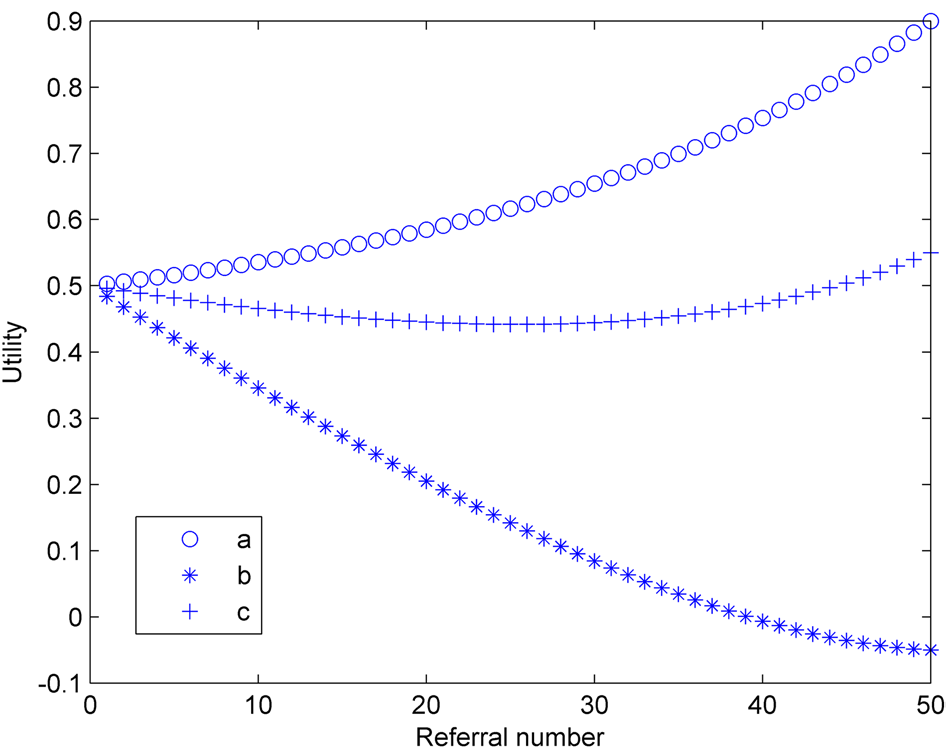
The paper identifies three scenarios for focal consumers:
- Scenario A: Low price/High Externality. No threshold needed; users share naturally.
- Scenario B: High Referral Cost. Users avoid sharing unless forced by a threshold.
- Scenario C: Hybrid. Sharing is only worth it if the "crowd" reaches a critical mass.
Deep Insight: When High Prices and High Thresholds Win
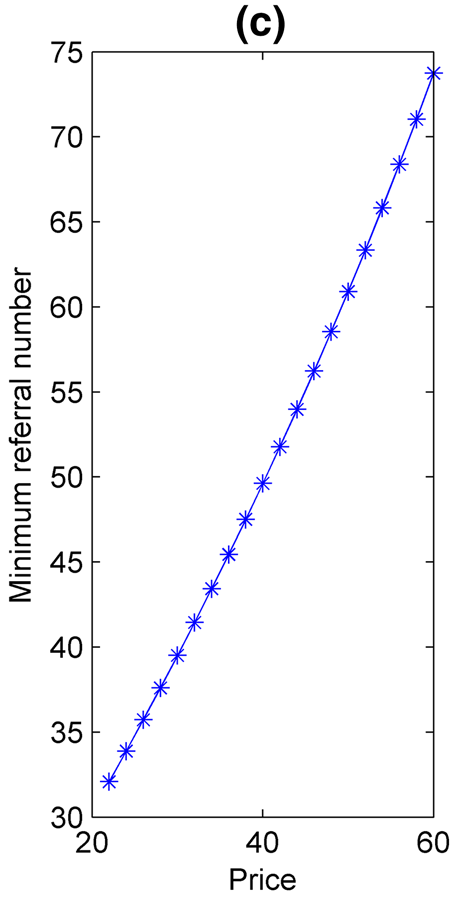
Counter-intuitively, the study finds that if referral costs are high and the price is high, the platform should set a higher threshold, not a lower one.
The Logic: A higher threshold filters for focal consumers who have enough "connectivity" to actually complete a group. If the threshold is too low, the focal consumer has no incentive to reach out to their broader network, resulting in fewer "common consumers" being brought into the ecosystem.
Comparison: Group Buying vs. Referral Rewards
The paper compares this Threshold Strategy with the Referral Reward Strategy (paying users for each successful sign-up).
- Group Buying wins when the network has a "heavy tail" (some users have many friends) or when the psychological benefit of "buying together" is large.
- Referral Rewards are better when the network is uniform and the platform has little data on user connectivity.
Critical Analysis & Conclusion
This work provides a mathematical backbone to the success of social commerce giants. It proves that the "Threshold" is a legitimate induction tool that creates value out of thin air by aligning consumer utility with platform growth.
Limitations
- Single Channel: The model assumes users don't have a choice between platforms.
- Information Symmetry: It assumes consumers know exactly how many friends will successfully join.
Takeaway for Product Managers
If you are launching a group-buy feature for a high-reputation or premium product, don't be afraid of a higher threshold. It transforms your most loyal users into a motivated sales force, provided the "network effect" of owning the product with friends is sufficiently high.