
Automating the Social Circle: Group ID Issuing via Temporal Co-Movement
Group ID Issuing Model Using Temporal Explicit Movement in Social Life Logging
2015-01-01
Summary
Problem
Method
Results
Takeaways
Abstract
This paper introduces a model for automatic social group identification by analyzing "temporal explicit movement" captured via life-logging cameras. By categorizing behaviors into interaction and private modes, the researchers successfully extracted 17 and 20 unique group IDs respectively using a co-movement synchronization algorithm.
## TL;DR
In an era of digital exhaustion, can our physical movements automatically build our social networks? This research presents a model that identifies "co-movement" patterns in daily life logging to issue automated Group IDs. By differentiating between active interaction and private digital usage, the study reveals how our physical "rhythm" with others can define our social boundaries without pressing a single "Follow" button.
## The Motivation: Moving Beyond Manual Socializing
Building relationships online currently requires high "social friction"—users must manually tag, follow, or interact to establish a digital bond. The authors argue that this can be perceived as a burden. Their insight is elegant: **social connection is a physical phenomenon.** When people are "together" in a meaningful way, their explicit physical movements (captured via video) exhibit a specific type of temporal synchrony.
## Methodology: The Logic of Synchrony
The researchers filmed subjects in two distinct behavioral modes:
1. **Interaction Mode**: Group members communicating and engaging.
2. **Private Mode**: Individuals using smartphones while in proximity.
The core technical challenge was identifying when two individuals are "together" versus just "nearby." The authors used a **Standard Deviation (SD)** approach for signal analysis.
- **Co-movement Logic**: If Subject A's movement SD is $A$, Subject B's is $B$, and their combined SD is $C$, then co-movement is confirmed if $C < A$ and $C < B$. This indicates that their movements are more stable/synchronized together than they are individually.
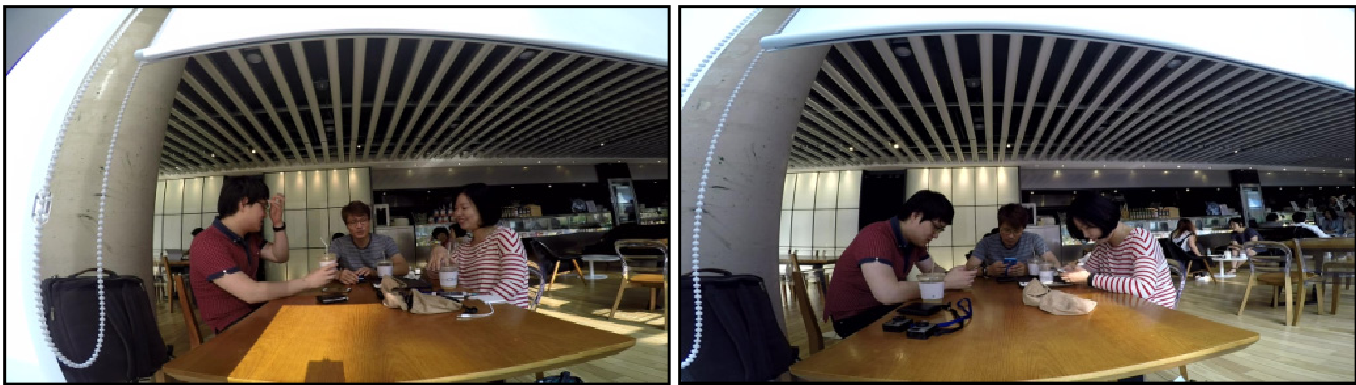
*Fig 1. Visualizing Interaction vs Private Modes for signal extraction.*
To prevent "Group ID spamming" (issuing IDs for every 1-second accidental movement), they calculated a **Reference Duration of 19.4 seconds**. Only synchronized movements exceeding this threshold triggered a formal Group ID.
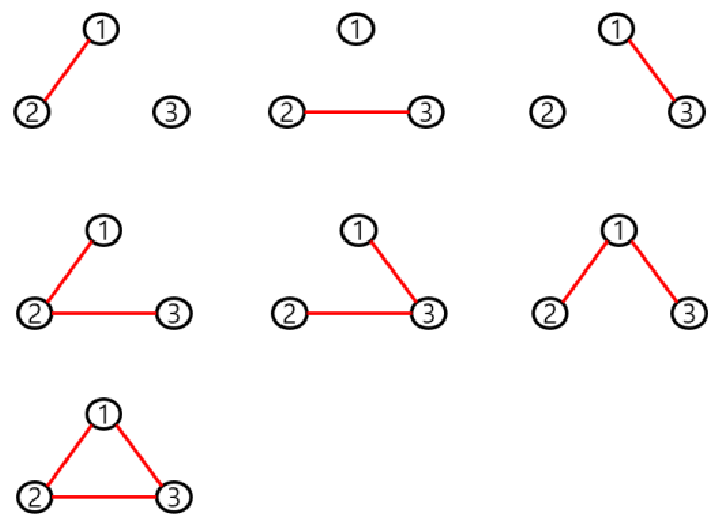
*Fig 2. The workflow from raw movement to Group ID issuance.*
## Experimental Results & Insights
The findings revealed a fascinating disparity between how we interact and how we "lone-surf" in groups:
- **Interaction Mode**: Produced **17 Group IDs**. The co-movements were longer and more stable (Mean: 26.4 sec).
- **Private Mode**: Produced **20 Group IDs**. Movements were more frequent but shorter (Mean: 11.2 sec).
This suggests that even when we are not talking (Private Mode), we still exhibit synchronized behavior, but these connections are much more fragile and frequently interrupted compared to active conversation.
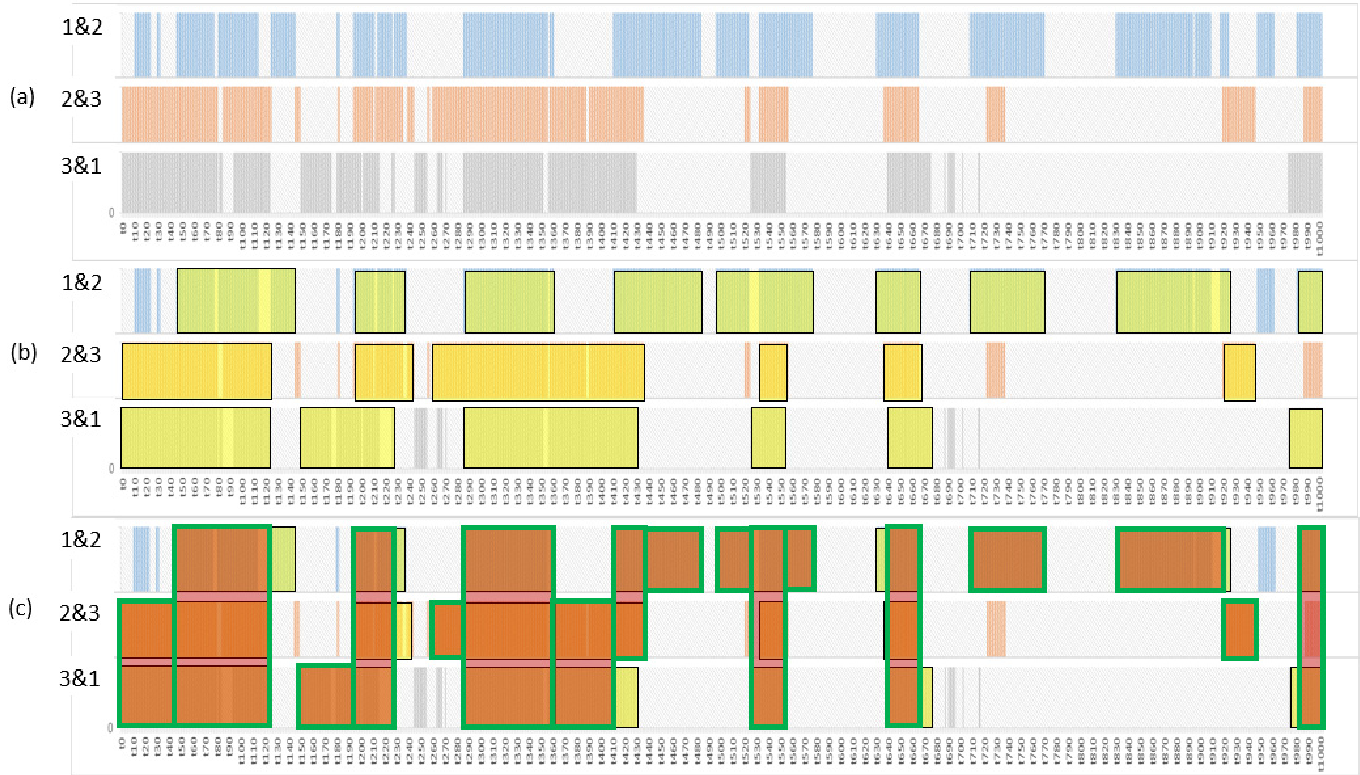
*Fig 3. Data pipeline showing raw data (a), grouped data (b), and the final 17 Group IDs (c) for Interaction Mode.*
## Critical Analysis & Future Outlook
While the study successfully automates group detection, it relies on a small sample size (3 subjects). However, the **Inductive Bias** here is strong: the use of temporal movement as a proxy for social intent is a powerful alternative to invasive data mining.
**Key Takeaway:** The more "private" our behavior becomes (e.g., browsing phones in a group), the more fragmented our social IDs become. For developers of life-logging tech and AR/VR spaces, this model provides a blueprint for "passive networking"—where the system understands your social structure simply by how you move in sync with the world around you.
**Future Work:** The authors advocate for adding more factors (like bio-signals) and weighting them to create a "Social Trend" prediction engine.