
Tweeting with Motion: How Haptics are Bringing "Physical Presence" to Social Media
Haptics in a social network service: Tweeting with motion for sharing physical experiences
This paper introduces a novel haptic communication framework for Social Network Services (SNS) that converts 3-axis hand gestures into force feedback. Using a linear acceleration-to-force conversion algorithm and the PHANTOM® Omni™ interface, it enables users to "tweet" physical experiences that followers can kinesthetically replay.
TL;DR
Social media has long been a domain of sight and sound, but the sense of touch has remained noticeably absent. This paper presents a breakthrough in Mediated Touch, allowing users to capture hand gestures via their smartphones and share them as "physical tweets." By converting 3D acceleration data into force vectors, followers can literally feel the sender's movement through a haptic device, achieving a high recognition accuracy of nearly 89%.
The Missing Link: Why Text and Video Aren't Enough
While we can share our thoughts via Twitter or our faces via Zoom, these modalities lack the visceral communication found in physical interactions. A shrug, a wave, or a rhythmic tap carries emotional weight that text often fails to convey. Previous attempts at haptic communication were often limited to "abstract mappings"—patterns of vibrations that didn't feel like the original movement. The authors of this paper aimed to bridge this gap by treating physical gestures as a primary social medium, much like a status update.
Methodology: From Acceleration to Kinesthetic Force
The core technical challenge lies in reconstruction. How do you take the noisy data from a smartphone's accelerometer and turn it into a force that feels "correct" to another user?
1. Capturing the Gesture
Users record their motion using a standard 3-axis accelerometer. The system samples data at 50Hz, sufficient for human hand movement.
2. The Conversion Algorithm
To render this at the professional haptic standard of 1kHz, the system interpolates the data and applies a linear conversion. The researchers specifically focused on removing the gravity bias (mean acceleration) to ensure the haptic arm doesn't pull down or drift unintentionally.
Where is the force gain. This formula transforms the intent of the motion into a force vector that pulls the follower's hand along a similar trajectory.
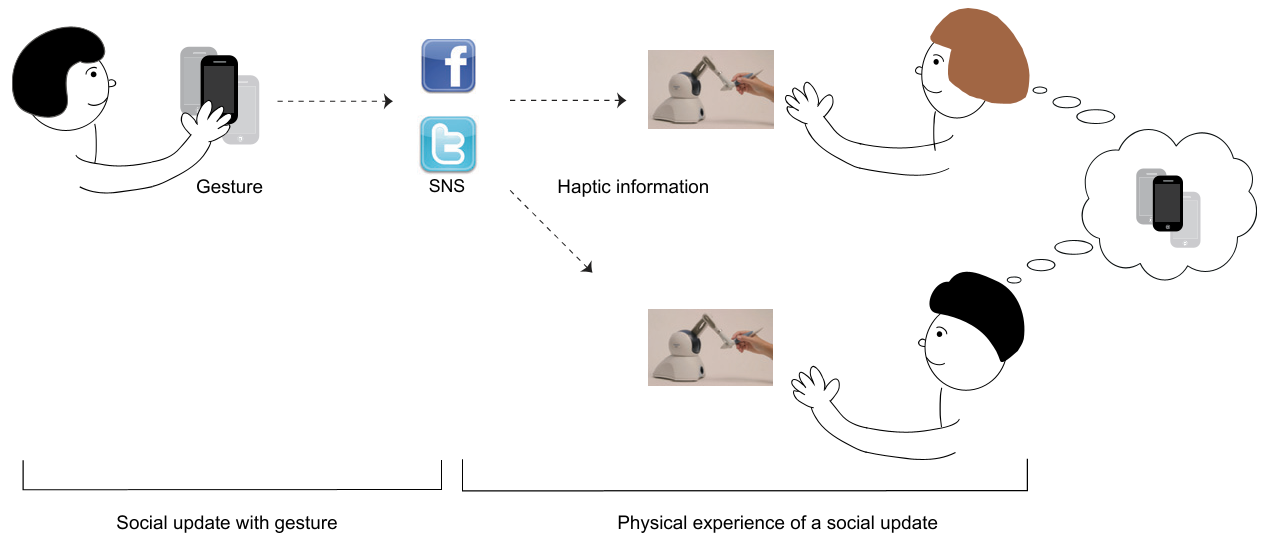 Figure 1: The proposed architecture shows the flow from capturing gesture on a mobile device to rendering it via a haptic arm.
Experimental Evidence: Can You Feel a "Star"?
In the evaluation phase, subjects experienced rendered versions of five distinct shapes (like a G-clef, a star, and a heart). The results were impressive:
- Recognition Rate: Overall accuracy reached 88.75%.
- The Paradox of Force: Interestingly, lower force gains resulted in better recognition. High force (3.30N) tended to "blur" the details of the motion, whereas a more moderate pull (2.45N) allowed users to sense the nuances of the trajectory.
- Dimensionality Insight: Through PCA (Principal Component Analysis), the researchers found that most human gestures are actually "flat," occurring mainly on a 2D plane within 3D space.
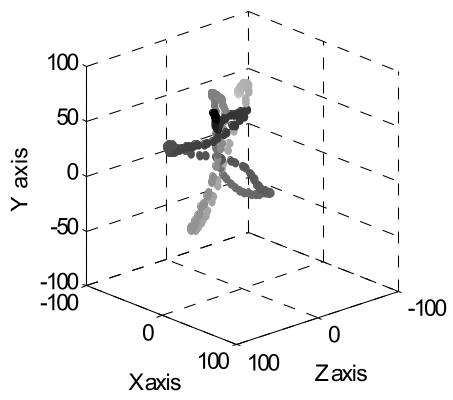 Figure 2: Visualizations of the trajectories generated by the haptic device. Despite being a 'passive' experience, subjects could clearly identify the shapes.
Critical Analysis & Future Outlook
This paper successfully demonstrates that physical logging is a viable social medium. However, there are two major hurdles for mass adoption:
- Hardware Constraint: Currently, the system requires a PHANTOM® Omni™ (a specialized force-feedback arm). To truly go mainstream, this needs to be translated into the vibrotactile actuators found in standard iPhones or Android devices.
- Recognition vs. Understanding: As the authors note, "understanding" an emotion is different from "recognizing" a shape. Future work should investigate if these physical tweets actually increase perceived empathy between users.
Conclusion
By treating movement as a "gift" or a "status update," this research paves the way for a more tactile internet. It moves haptics beyond simple buzzes and clicks into the realm of shared physical experiences.
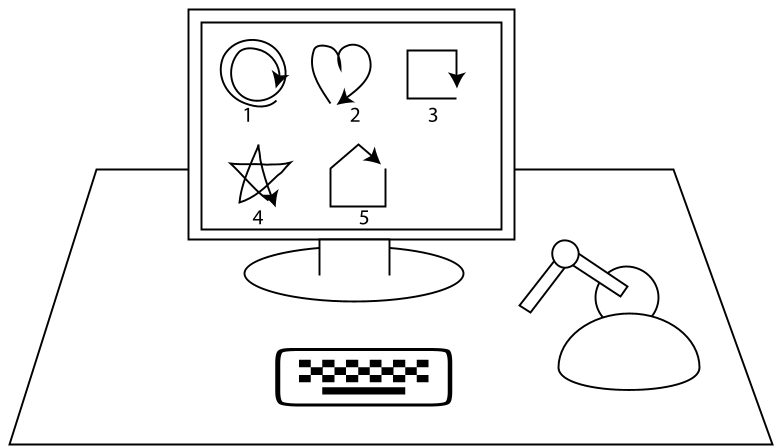 Figure 3: The experimental setup where subjects "felt" the shared social updates.