
Hashtag Burnout: Why Viral Tags Might Be Killing Your News Engagement
13697_Hashtag Burnout A Control Experiment Investigating How Political Hashtags Shape Reactions to News Content.
This research article presents a randomized control experiment (n=1979) investigating how political hashtags like #MeToo and #BlackLivesMatter influence public reaction to news content. The study reveals a "hashtag burnout" effect, where the presence of these tags paradoxically decreases the perceived social importance of the news and diminishes the audience's motivation to engage further.
TL;DR
Think twice before adding #MeToo or #BlackLivesMatter to a news headline to "boost" reach. A comprehensive study from UC Irvine reveals that for the general public, these hashtags act as partisan triggers that actually decrease the perceived importance of the social issue and discourage readers from learning more. Instead of a bridge to new audiences, political hashtags are becoming barriers that spark "burnout."
The "Activism" Paradox
For years, the "Slacktivist" narrative suggested that even low-effort engagement like hashtagging helped social movements grow. Journalists jumped on the bandwagon, using viral tags to signal "nowness" and capture trending traffic. However, this study suggests we have been looking at the data through a distorted lens—focusing only on the people who create hashtags while ignoring the silent majority who consume them.
The research asks a critical question: Do these tags broaden the movement, or do they just echo within a polarized bubble?
The Hidden Cost of "Trending"
The authors found a consistent negative correlation between the presence of a political hashtag and a reader's willingness to engage.
Key Insights:
- Reduced Importance: When a hashtag is present, people are less likely to believe the social topic is important.
- The Partisanship Trap: Hashtags signal "Identity Politics." Once a reader sees a tag, they stop looking at the facts and start looking at the "tribe" the post belongs to.
- The Burnout Factor: Frequent social media users (high-intensity Facebook users) are the most susceptible to this, reporting high levels of annoyance and a sense of being "shoved" toward an opinion.
Methodology: The Controlled Test
The researchers didn't just look at Twitter archives; they built a controlled environment using real news from the New York Times and NPR.
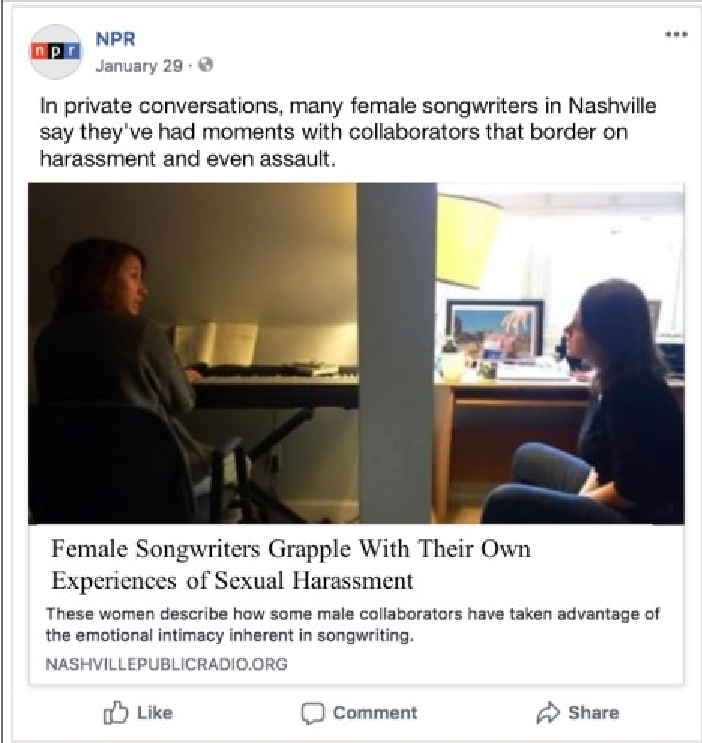 The study compared identical news stories—one version with the hashtag and one without—to isolate the "Hashtag Effect."
Why Does it Backfire? The Mediation Model
The most profound discovery in the paper is why this happens. Using path analysis, the researchers found that:
- The hashtag increases the perception of Partisan Bias.
- The hashtag increases the perception of Topic Controversy.
- These two negative perceptions fully mediate (account for) the drop in social importance and motivation to learn more.
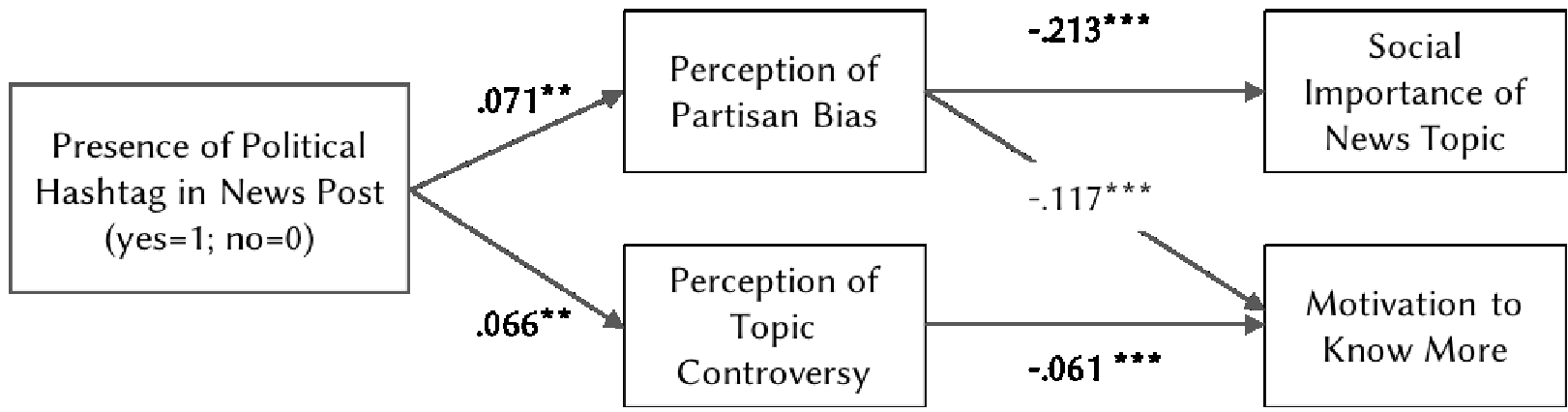 The visual evidence of how hashtags trigger negative filters that block positive engagement.
The "Moderate" Middle: A Silence of Substance
Perhaps the most alarming finding involves political moderates. When shown #MeToo or #BlackLivesMatter, moderates stopped talking about sexual harassment or racial justice in their comments. Instead, they talked about the hashtag itself—calling it a "witch hunt" or "ridiculous."
In contrast, when the same story was presented without the hashtag, these same moderates engaged deeply with the substance, discussing the statistics of harassment and expressing a genuine desire to understand the phenomenon.
Critical Analysis & Professional Takeaway
This study serves as a warning for "Digital Journalism" and "SMM (Social Media Marketing)." The very tools we use to increase visibility—viral hashtags—are now suffering from semantic drift. They have moved from being descriptors of a topic to being labels for a political side.
For Researchers and Practitioners:
- Quality over Volume: Measuring a hashtag's "success" by its tweet volume is a vanity metric that ignores the alienation of the moderate middle.
- Contextual Framing: If the goal is to educate and build broad social empathy, using a polarized tag might be the quickest way to close the reader's mind.
- Future Prospects: We need to explore "Post-Hashtag" strategies that rely on narrative storytelling rather than tribal signaling.
Conclusion
Hashtags were designed to organize information, but in the political arena, they have become tools of tribalization. To foster true civil discourse, we may need to retire the "trending" tag and let the content speak for itself.