
Harmonizing HCI and Mastery Learning: A New Frontier for Chinese Character Instruction
11589_HCI Technology with Mastery Learning Approach for Children Learning Chinese Characters Writing in Hong Kong.
This paper introduces a Human-Computer Interaction (HCI) based learning system designed to help primary school students master Chinese character writing. By integrating "Mastery Learning" principles and self-paced modules on tablet devices, the system enables students to learn correct stroke orders and standard forms through a progressive 3-step scaffolding approach.
TL;DR
Mastering the intricate strokes of Chinese characters is a daunting task for primary students. This study presents an innovative Human-Computer Interaction (HCI) system that leverages Mastery Learning and Self-Paced modules on tablets. By replacing the traditional "one-to-many" classroom model with a personalized, 3-step scaffolding process, the researchers achieved a 41% improvement in student performance while narrowing the achievement gap between learners.
The Problem: The "Stroke Order" Bottleneck
In a typical classroom with 40 students, it is physically impossible for a single teacher to monitor the stroke order of every child simultaneously. While a student might produce a character that looks correct (the "What"), they often follow an incorrect sequence (the "How").
Traditional methods like blackboards and copybooks lack the interactivity and immediate feedback necessary to correct these procedural errors in real-time. This leads to a reliance on rote memorization, which is inefficient and often boring for young learners.
The Solution: Progressive Scaffolding (The Mastery Approach)
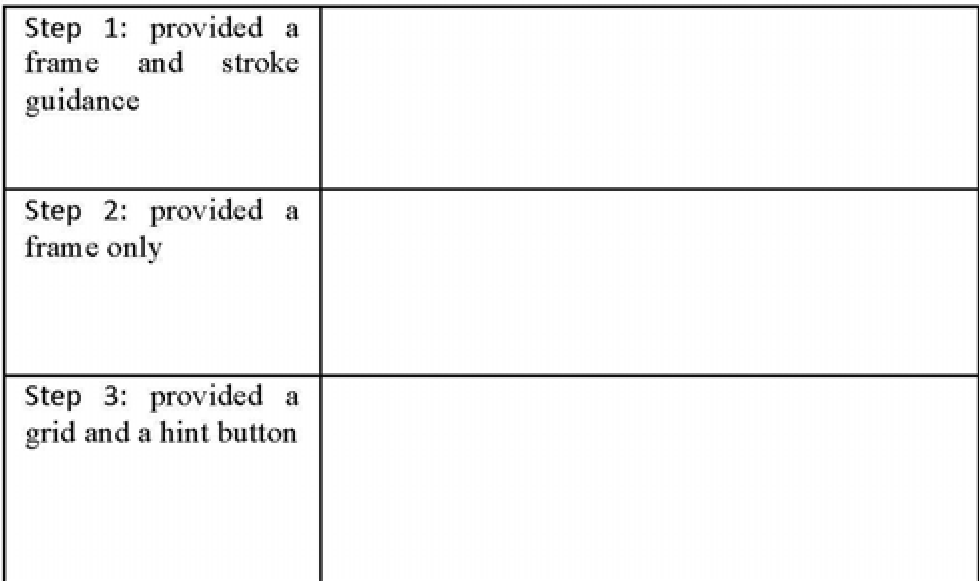
The researchers developed a prototype that breaks down character acquisition into three distinct logical steps, designed to transition the student from "guided" to "independent" mastery:
- Step 1: Full Guidance – The system provides a frame and explicit stroke-by-stroke guidance.
- Step 2: Structural Support – Only the character frame is provided, forcing the student to recall the stroke sequence.
- Step 3: Independent Recall – Only a grid and an on-demand "Hint" button are available, simulating a real writing environment while providing a safety net.
Why It Works: Sensory Integration & Mastery
The pedagogical core of this system is Mastery Learning. Unlike traditional time-bound lessons, this system allows students to stay on a task until they reach a predetermined level of proficiency.
By incorporating multimedia cues—such as Cantonese audio for pronunciation and "cute" animations for feedback—the system maintains high levels of engagement. This sensory integration helps anchor the abstract strokes into the student's long-term memory.
Experimental Results: Closing the Gap
The effectiveness of the tool was validated through a pre-test/post-test analysis. The quantitative data shows not just an increase in scores, but a more uniform distribution of ability.
| Metric | Pre-test | Post-test | Improvement |
|---|---|---|---|
| Mean Score (M) | 3.033 | 4.278 | +1.245 |
| Std. Deviation (SD) | 1.444 | 1.085 | -0.359 (Reduced Gap) |
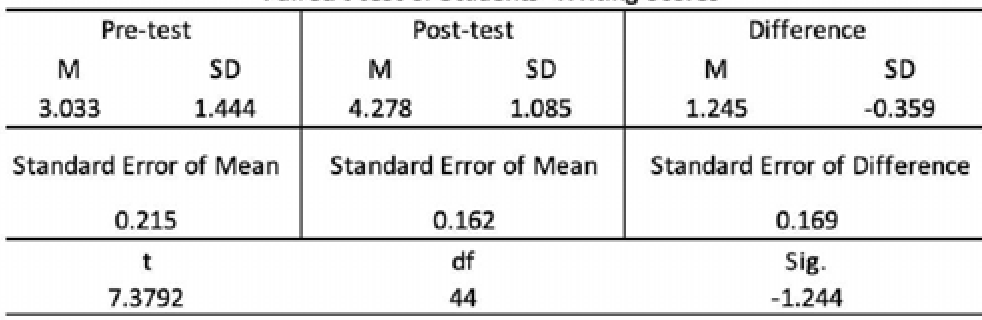
The reduction in Standard Deviation is a critical find. It suggests that the HCI system is particularly effective for students who previously struggled (the "laggards"), thereby promoting educational equity within the classroom.
Stakeholder Insights
- Teachers noted that the "stroke order" function was essential for memory enhancement.
- Parents appreciated the standardization, as many admitted they were no longer sure of the "modern" stroke order standards and felt unequipped to help at home.
- Students found the sound effects and animations "cute" and "attractive," transforming a chore into a game.
Conclusion and Future Outlook
This work demonstrates that HCI is not just about making things "digital," but about restructuring the pedagogical flow. While the initial results are promising, the authors acknowledge the need for larger control groups to further validate the findings.
The future of language learning lies in such Adaptive Systems—tools that act as a personal tutor for every child, ensuring that no stroke is misplaced and no student is left behind due to the constraints of a traditional classroom.