
PST-ACHP: Breaking the Black Box of Healthcare Fraud Detection
The Health Care Fraud Detection Using the Pharmacopoeia Spectrum Tree and Neural Network Analytic Contribution Hierarchy Process
This paper introduces an improved fraud detection framework for healthcare insurance using a multi-layer perceptron (MLP) neural network combined with a novel Pharmacopoeia Spectrum Tree (PST). The core method, PST-ACHP, achieves a state-of-the-art accuracy of 86% in detecting excessive medical treatment fraud.
TL;DR
Researchers from Shandong University have developed a specialized neural network framework that combines clinical pharmacopoeia logic with hierarchical analysis. By implementing a Pharmacopoeia Spectrum Tree (PST) and an Analytic Contribution Hierarchy Process (ACHP), the system achieves 86% accuracy and, crucially, identifies which specific medical items are fraudulent—solving the "black box" problem of standard AI models.
Problem & Motivation: The Complexity of Medical Data
Healthcare fraud, particularly in China, is estimated to account for 7-8% of medical expenses. Detecting this is notoriously difficult because a single patient record might involve over 4,000 potential medical items.
Existing data mining methods face two major hurdles:
- Granularity Issues: Using all items as factors causes over-fitting; using too few causes under-fitting.
- The Interpretability Gap: Standard Neural Networks might tell you a record is "fraudulent," but they cannot explain why or which specific item (e.g., a specific drug or procedure) triggered that decision.
Methodology: Clinical Logic meets Neural Networks
The authors solve this by moving away from pure data-driven clustering to a hybrid approach.
1. The Pharmacopoeia Spectrum Tree (PST)
Instead of clustering items randomly, they build a biological-style "family tree" based on the similarity of medical functions listed in official insurance directories. This ensures that the features fed into the neural network are clinically meaningful.
2. Neural Network ACHP
The paper utilizes a three-layer MLP structure. To break the "black box," they derive a formula to calculate the Contribution Rate (). This measures how much weight each input variable carries toward the final classification.
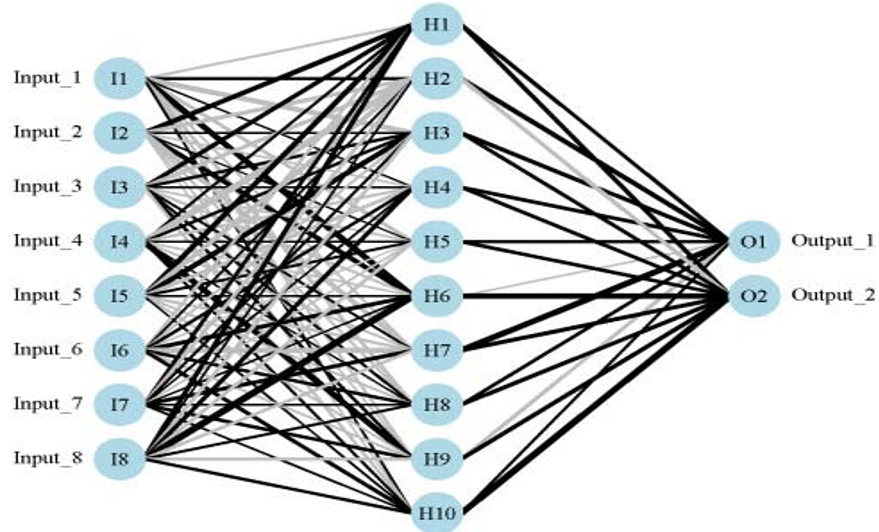 Fig 1: The MLP Architecture used as the foundation for ACHP.
3. Multidimensional Space Distance
By assuming medical data follows a Gaussian distribution, the authors use the space distance from a "benchmark" (a verified non-fraudulent sample) to determine the influence degree () of each item. This mathematical bridge allows the model to pinpoint exactly which medical service was "excessive."
Experiments & Results: Outperforming the Baselines
The study focused on "Excessive Medical Treatment," which accounts for nearly 33% of healthcare fraud cases.
- Baseline Comparison: While K-means and Hierarchical Clustering struggled to surpass 77% and 72% accuracy respectively, the PST-ACHP method reached 86%.
- Convergence: The algorithm converges rapidly, typically within 1 to 5 iterations.
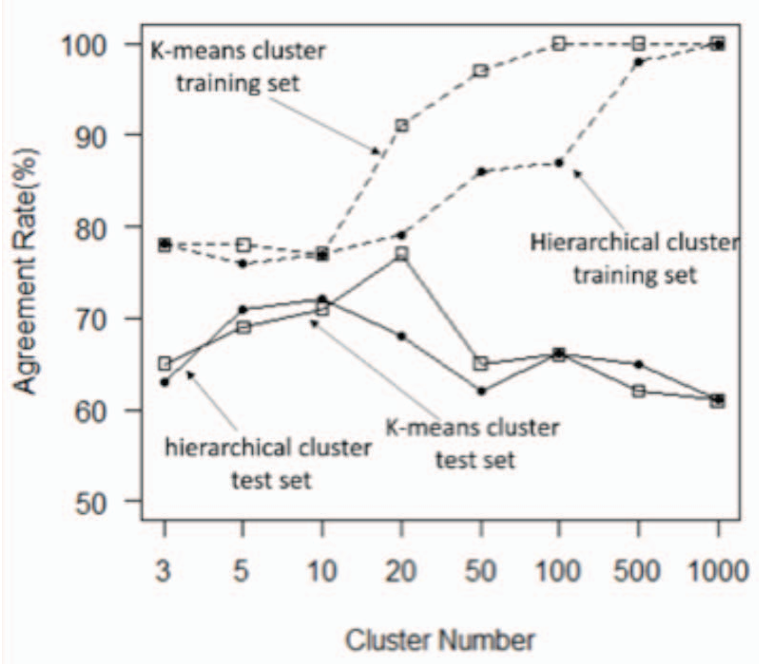 Fig 2: Agreement rate curves showing how PST-ACHP balances the under-fitting/over-fitting trade-off better than traditional unsupervised methods.
Critical Analysis & Conclusion
The true value of this research lies in its Interpretability. In a medical audit, simply flagging a case isn't enough; auditors need evidence. By providing a percentage-based contribution for each item (as seen in Table III of the paper), this method provides actionable insights.
Limitations: The model currently relies on a standard MLP. Future work could benefit from more advanced architectures like Self-Organizing Maps (SOM) or Transformers to handle the sequential nature of medical treatments. Additionally, the Gaussian distribution assumption for the contribution formula requires more rigorous theoretical validation.
Takeaway
For AI to be truly useful in regulated industries like healthcare, it must be "expert-aware." By constraining the AI with a Pharmacopoeia Tree, we gain both higher accuracy and the transparency required for legal and clinical accountability.