
Health Multimedia: Navigating Human Health with Cybernetic Principles
Health Multimedia: Lifestyle Recommendations Based on Diverse Observations
This paper introduces P5 Cybernetic Health (P5C), a framework that transforms health management from reactive medical intervention into a proactive, "navigational" experience. By integrating diverse multimedia data streams (wearables, food images, environment) into a personalized "Objective Self" model, it provides real-time, actionable lifestyle recommendations.
TL;DR
Health is not just what happens in a doctor's office; it's the sum of our daily lifestyle actions. This paper proposes P5 Cybernetic Health (P5C): a framework that treats health management like a GPS navigation system. By fusing multi-modal data (biometric sensors, food photos, environmental logs), P5C predicts your health trajectory and provides precise, persuasive recommendations to keep you on the path to wellness.
The "Broken Compass" of Modern Healthcare
Despite the explosion of health tech, most users are "flying blind." We have apps that count steps (Fitbit) and repositories that store data (HealthKit), but they are descriptive, not prescriptive.
The authors identify three critical gaps:
- Reactive vs. Proactive: We treat diseases after they appear rather than preventing them.
- Populations vs. Individuals: "Evidence-based" medicine uses averages, ignoring your unique genetic and environmental context.
- Actionability Gap: Knowing you walked 5,000 steps doesn't tell you if you should eat a slice of pizza now or how it will affect your blood sugar in two hours.
Methodology: The P5C Framework
The core innovation is the shift from Search to Navigation. In a search paradigm, the user must know what to ask. In a navigation paradigm, the system knows where you are (GPS for health) and where you want to go.
1. The Objective Self (The Map)
By creating a Personicle—a chronological log of life events—the system builds an "Objective Self." It uses deep learning (Clarifai/Google) to turn food photos into nutritional data and "EventShop" to layer in environmental stressors like air quality.
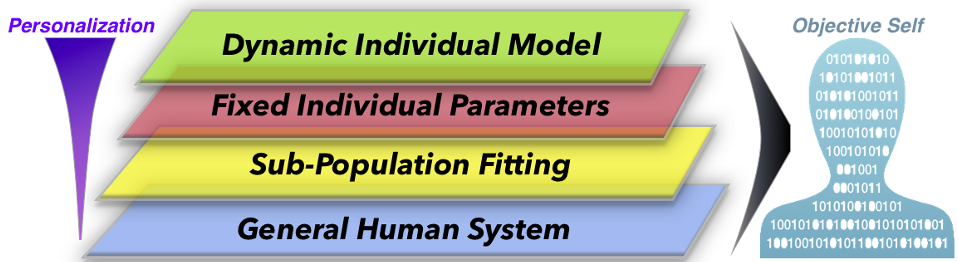 Figure 1: Integrating personalized knowledge layers to build a comprehensive health map.
2. The Five Pillars (P5)
- Personalized: Creating a high-fidelity model of the individual.
- Predictive: Using statistical models to forecast adverse medical events based on current patterns.
- Precise: Filtering recommendations through medical knowledge and individual context.
- Persuasive: Applying Fogg’s Behavior Model (Motivation, Ability, Trigger) to ensure the user actually follows the advice.
- Preventive: Maintaining the body's "homeostasis" via a closed-loop feedback system.
From Theory to Practice: HealthButler
The authors demonstrate P5C through HealthButler, an app designed for Type 2 Diabetics. Instead of manual entry, HealthButler uses "multimedia synchronization." It predicts rising insulin resistance from lifestyle data and prompts the user to take a blood sugar reading or perform a clinical test before a crisis occurs.
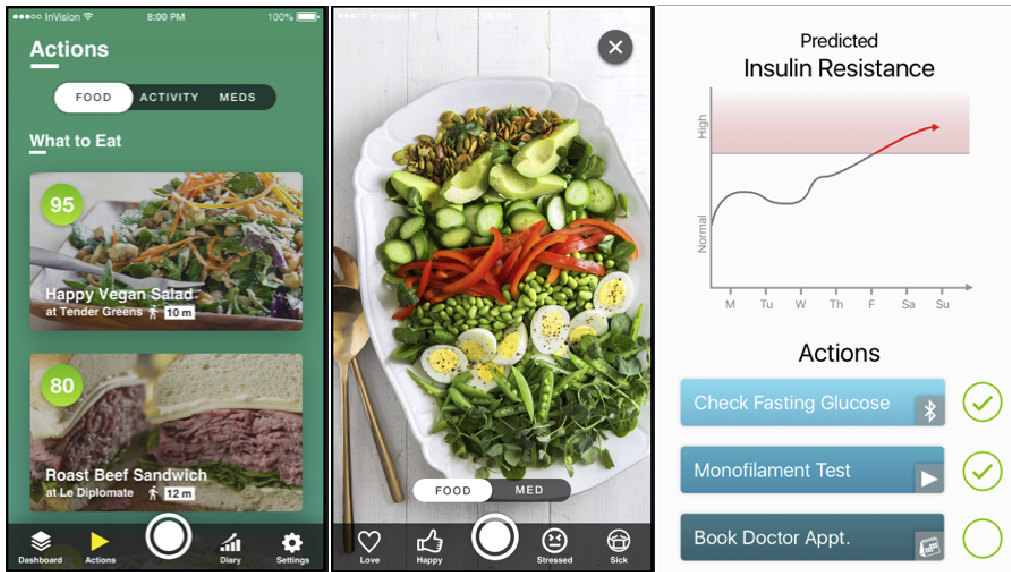 Figure 2: Real-time health status and personalized nutrition guidance based on available resources.
Academic Insight: Why it Works
The "Secret Sauce" is the Cybernetic Loop. By treating the human as an "actuator" in a control system, the paper moves toward Precision Medicine 2.0. The authors emphasize that the "cost" of an action (like jogging vs. eating pizza) is modeled as a slope on a health topography map. The goal is to reach the target node with the least "resistance" relative to user preferences.
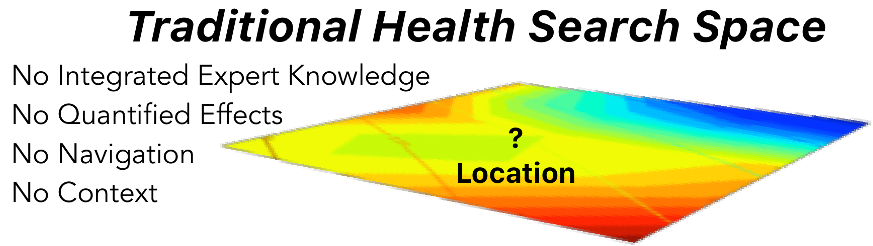 Figure 3: Mapping lifestyle choices to health goals using spatio-temporal dimensionality.
Critical Analysis & Future Outlook
While the P5C framework is visionary, its success hinges on Passive Sensing. The 2017 technology described (manual food photos, constant GPS) still carries a friction cost. However, in the era of modern AI, LLMs can now automate the semantic extraction of "events" from text and video, making the P5C vision more attainable than ever.
Takeaway: This work sets the stage for a "World Health Map," where your digital twin navigates the complexities of biology for you, transforming "patient-centered care" into "person-directed wellness."