
Heterogeneous-Belief Incentives: Solving the Long-Term Participation Puzzle in Crowd Sensing
Heterogeneous-belief based incentive schemes for crowd sensing in mobile social networks
This paper proposes two novel incentive schemes, Debt-Weighted Index (DWI) and Delay Debt-Weighted Index (DDWI), for long-term crowd sensing in Mobile Social Networks (MSNs). By modeling the problem as a Restless Multi-Armed Bandit Process (RMBP) with heterogeneous-belief values, the authors achieve SOTA social welfare maximization while strictly satisfying coverage and real-time throughput constraints.
TL;DR
Crowd sensing leverages the ubiquity of smartphones to build complex maps (noise, traffic, etc.), but its Achilles' heel is long-term user retention. This paper introduces a sophisticated incentive framework using Restless Multi-Armed Bandits (RMBP) and heterogeneous belief values. Unlike traditional models that fail when users move fast or drop out, this approach uses "passive subsidies" and debt-weighted scheduling to maximize social welfare and ensure users stay in the loop for the long haul.
Background & Motivation: Beyond the Instantaneous Trap
Most existing crowd-sensing research treats data collection as a one-off event. In reality, sensing (like monitoring traffic via VTrack) is a continuous process.
The authors identify two fatal flaws in prior SOTA:
- The Starvation Problem: Traditional pricing makes high-value users win too often, while others starve and eventually quit the application.
- The Credibility Gap: Existing reputation systems often fail to distinguish between a "selfish" user who refuses to send data and a "victim" user whose data was lost due to poor channel quality (common in high-speed mobility).
Methodology: The Power of Whittle's Index and Belief States
The core of the paper lies in modeling each user as an "arm" in a Restless Multi-Armed Bandit Process. Unlike a regular bandit, a "restless" arm's state (the probability of providing good data) changes even when it is not selected.
1. Belief State Evolution
The system tracks a belief value for each user. If a user is selected and succeeds (ACK), the belief increases; if they are not selected, the belief evolves based on Markov transition probabilities ( and ).
2. The Sustaining Incentive Condition
A critical innovation is the "Subsidy for Passivity." Even if a user isn't chosen to sense data this round, they may receive a small subsidy to keep them interested. This ensures "Individual Rationality"—users never have a negative utility for staying in the system.
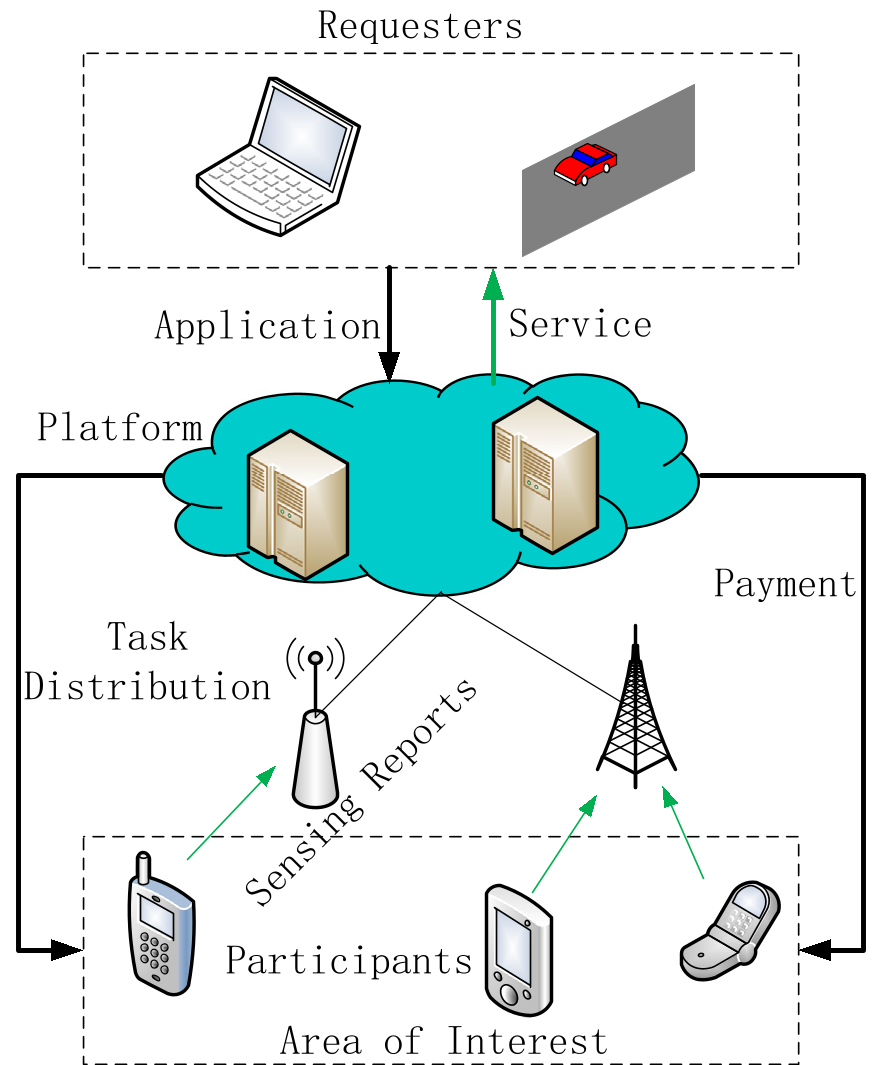 Figure 1: The proposed crowd sensing architecture, where the platform maintains a Social State Table to optimize M-user selection.
3. DWI and DDWI Algorithms
- DWI (Debt-Weighted Index): Prioritizes users based on a combination of their sensing quality (Whittle Index) and the "debt" the system owes them (to ensure throughput fairness).
- DDWI (Delay-DWI): Adds a layer of priority for time-sensitive data (like I-frames in video streaming), ensuring that urgent packets are transmitted before their deadline ().
Experimental Validation
Using a real-world map of Manhattan, the authors simulated 100 users across different speeds (high, middle, low).
Fairness in High-Speed Scenarios
While previous reputation models saw a "social state collapse" for high-speed users (due to transmission errors), the belief-based model remains stable. The system understands that a missed packet at high speed doesn't necessarily mean the user is malicious.
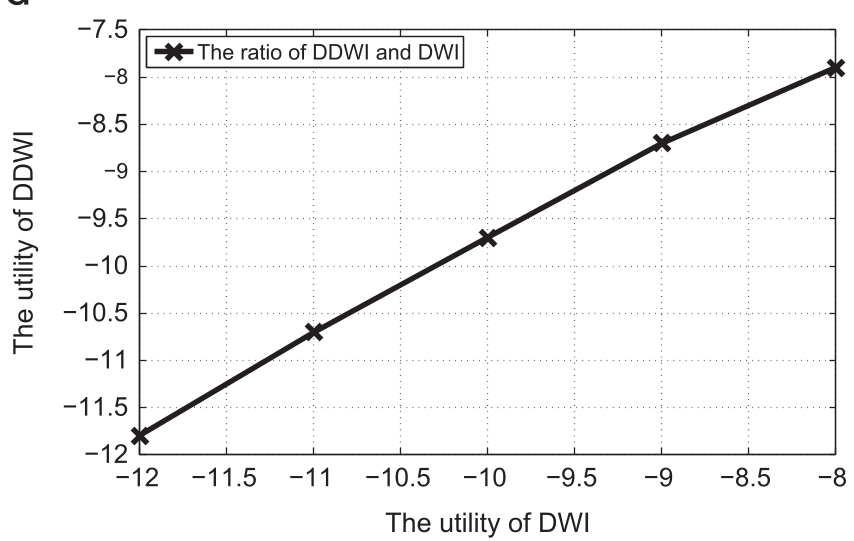 Figure 2: Performance comparison showing our scheme (c) maintaining fair social states across speeds compared to previous reputation schemes (b).
Critical Insights & Takeaways
The brilliance of this work is the marriage of Control Theory (Lyapunov Stability) with Game Theory. By converting "reputation" into a "belief state," the platform becomes resilient to the noise of mobile environments.
Key Takeaways:
- Whittle Indexing is a powerful tool for large-scale user selection ( complexity).
- Truthfulness and Stability can coexist if the system accounts for "delivery debt"—effectively a memory of past service.
- Future Work: The authors suggest moving toward discrete pricing bandits to further refine the financial efficiency of the platform.
Author's Note: This paper effectively transitions crowd sensing from a "simple market" to a "dynamic control system," providing a blueprint for the next generation of sustainable IoT ecosystems.