
HCPS: Boosting Recommendation Precision through Contextual Social Trust
A Heuristic Recommendation Method Based on Contextual Social Network
This paper introduces a heuristic recommendation method based on a Contextual Social Network (CSN) and the HCPS algorithm. By integrating trust, user roles, profile similarity, and preference similarity, the method enhances collaborative filtering to achieve higher precision and time efficiency in sparse data environments.
TL;DR
In the era of "information overload," providing accurate recommendations is hampered by data sparsity. This paper introduces a Heuristic Recommendation Method based on Contextual Social Networks, which moves beyond simple user-item ratings. By modeling a "Comprehensive Trust" relationship that accounts for user roles, profiles, and preferences, and employing a specialized search algorithm (HCPS), the authors significantly improve both recommendation accuracy and computational efficiency.
Problem & Motivation: The Sparsity Trap
Standard Collaborative Filtering (CF) relies on overlapping rating histories. However, most users only rate a tiny fraction of available items (the "Long Tail"). While social trust has been introduced to fill these gaps, two major hurdles remain:
- Sparse Trust Links: Direct trust relations are as rare as rating data.
- Narrow Trust Definitions: Prior works often treat trust as a binary or flat value, ignoring that we trust an expert (Role) more than a novice, or someone with similar tastes (Preference) over a stranger.
The authors' insight is to redefine the social network as a Contextual Social Network, where every edge is a composite of multiple social dimensions.
Methodology: Comprehensive Trust & HCPS
The core Innovation lies in how trust is defined and discovered.
1. The Comprehensive Trust Model
The paper defines trust () through a linear combination of four factors:
- Trust: Subjective belief from past interactions.
- Role: Domain expertise (e.g., an expert's movie review carries more weight).
- Preference Similarity: Shared interests in content.
- Profile Similarity: Demographic alignment (age, location, career).
2. Heuristic Critical Path Search (HCPS)
Finding the optimal path between two non-adjacent users in a massive network is an NP-Complete problem. To solve this, the authors propose HCPS, a heuristic search restricted to 6 hops (based on Small-World theory).
The algorithm uses a utility function , where:
- represents the social contextual constraints.
- is the node degree (prioritizing "hubs" in the network).
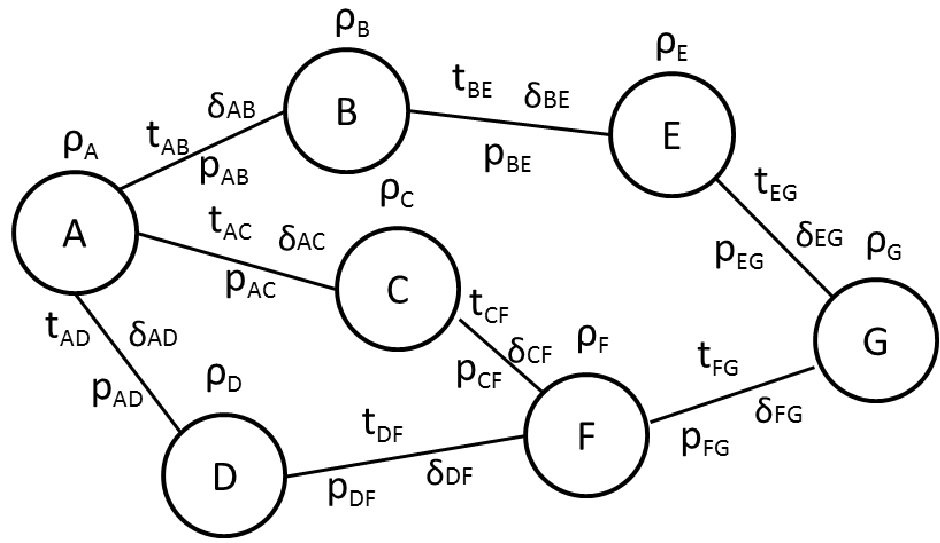 Figure 1: The Contextual Social Network model integrating trust, roles, and similarities.
Experiments & Results
The researchers validated their approach using the Filmtipset dataset, a large movie community. They compared their method (SoRegCT) against traditional CF (BCF) and matrix factorization methods (SoReg).
Time Efficiency
Compared to Random Walk Search (RWS), HCPS reaches target nodes much faster because it doesn't wander blindly; it follows the "scent" of social context and high-degree nodes.
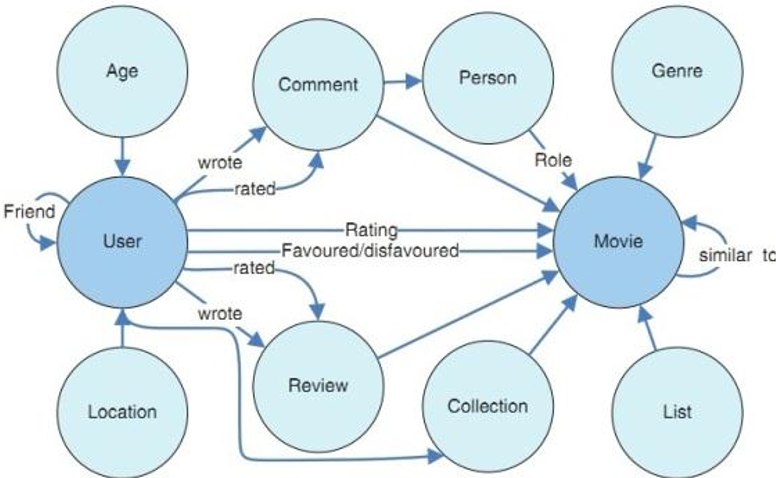 Figure 4: HCPS demonstrates superior time efficiency compared to RWS.
Accuracy (P@N)
By adding "Comprehensive Trust" to the matrix factorization (SoRegCT), the system achieved the highest precision (P@5 and P@10). This confirms that social context acts as a powerful regularizer, guiding the recommendation engine even when rating data is missing.
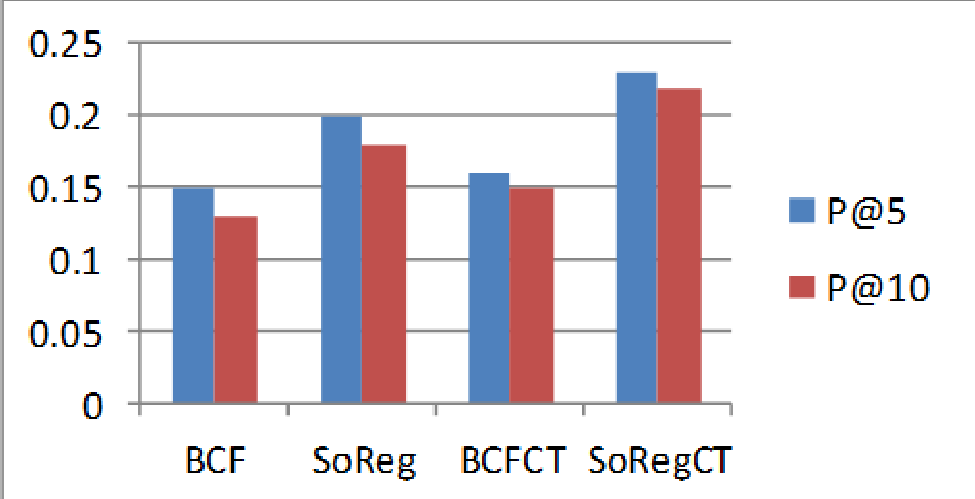 Figure 5: Precision comparison showing the advantage of contextual social information.
Critical Insight & Conclusion
The main takeaway of this work is that Social Trust is not a monolith. By decomposing trust into measurable social "contexts" (Roles, Profiles, Preferences), we can infer relationships that pure structural analysis misses.
However, a potential limitation is the linear weighting of social factors; in real-world scenarios, the importance of "Role" versus "Preference" might shift dynamically depending on the item category (e.g., Role matters more for medical advice, Preference matters more for movies). Future research integrating adaptive weights or deep latent factor modeling could further refine this promising approach.