
HCSCO: Bridging Semantic Gaps and Scalability in Short Conversation Clustering
Hierarchical Clustering of Large-Scale Short Conversations Based on Domain Ontology
This paper introduces HCSCO (Hierarchical Clustering of Large-scale Short Conversations based on Domain Ontology), a parallel hierarchical clustering algorithm specifically designed for short-text documents like chat logs and emails. By integrating Formal Concept Analysis (FCA) and domain ontology, it overcomes the data sparsity (low keyword frequency) typical of short texts, achieving significantly higher accuracy than traditional frequent-term methods.
TL;DR
Clustering short conversations (e-mails, chat logs) is notoriously difficult due to "feature sparsity"—there simply aren't enough words to find overlaps. This paper presents HCSCO, a framework that uses Domain Ontology to map words to concepts and a parallel architecture to scale to massive databases. It boosts F-measure accuracy by nearly 60% over traditional methods for short texts while maintaining linear scalability.
Context & Motivation: The Sparsity Trap
Standard clustering treat documents as a "bag of words." In long articles, frequent keywords provide a strong signal. However, in a 50-word chat message, two people might talk about the same topic using entirely different synonyms.
The authors identify three fatal flaws in prior work:
- High Dimensionality & Sparsity: Sparse vectors lead to poor distance measurements.
- Scalability Bottlenecks: Most algorithms cannot handle 100+ TB of data.
- Semantic Blindness: Traditional methods ignore the hierarchical relationship between terms (e.g., "iPhone" and "Smartphone").
Methodology: From Terms to Concepts
HCSCO moves beyond "Frequent Term Sets" to "Frequent Concept Sets." The heart of the method lies in two innovations:
1. Domain Ontology Learning via FCA
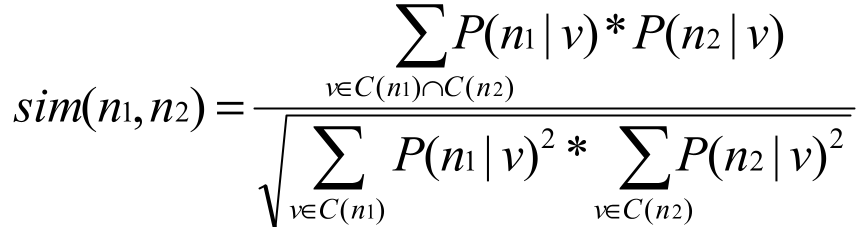
Using Formal Concept Analysis (FCA), the system extracts verb-object dependencies from text to build a taxonomy. It calculates semantic similarity between nouns () based on their shared verb contexts:
2. Parallel Semantic Clustering
The algorithm maps frequent terms to unique concept nodes. When a document overlaps with multiple clusters, HCSCO uses a semantic similarity score based on the ontology path length between the document's features and the concept set, ensuring each document is assigned to the most semantically relevant cluster.
Figure Tip: The architecture utilizes logical data partitioning across mining nodes to avoid the overhead of moving massive datasets.
Experimental Validation
The authors tested HCSCO against the industry-standard FIHC and HFTC algorithms using Reuters news and real-world chat room data.
Performance on Short Text
On short conversations, HCSCO's superiority was clear. While traditional methods hovered around a 0.40–0.46 F-measure, HCSCO reached 0.725. This proves that when "keywords" are missing, "concepts" save the day.
Massive Data Scalability
While other algorithms' runtimes grew exponentially or crashed with larger datasets, HCSCO's parallel mining nodes allowed for linear growth.
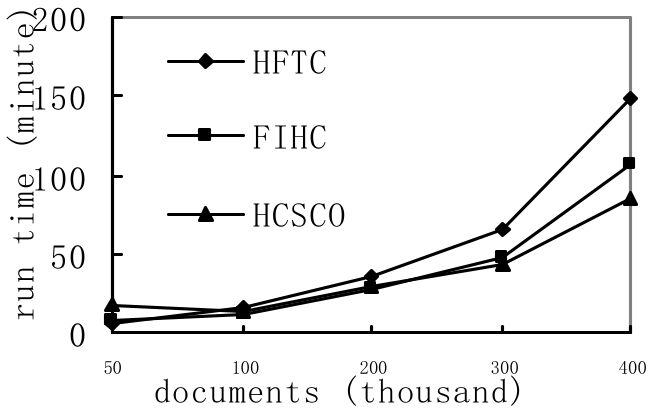 Figure 1: Comparison of execution time as dataset size increases.
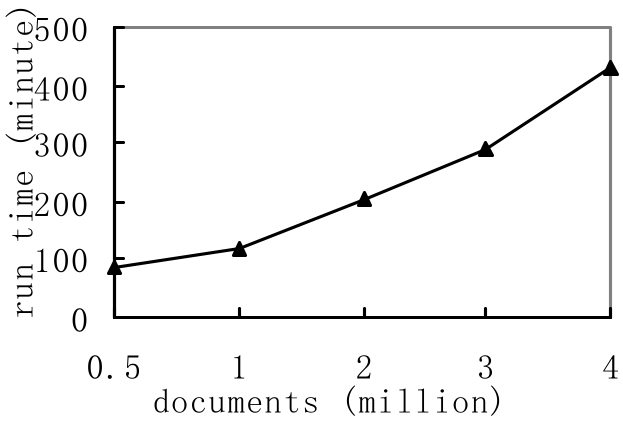 Figure 2: HCSCO exhibits near-linear scalability even up to 40GB+ of short text data.
Critical Analysis & Conclusion
Takeaway
HCSCO successfully demonstrates that semantic anchors (ontology) are the best antidote to the sparsity of short documents. By combining this with a parallel "mining node" architecture, the authors provided a blueprint for industrial-scale text analysis.
Limitations & Future Work
One notable limitation is the ontology learning time, which is not included in the performance graphs. Building a robust FCA-based ontology can be computationally expensive before clustering even begins. Future research could explore integrating "General Ontologies" (like WordNet) with "Domain Ontologies" to reduce setup time while maintaining specific accuracy.