
Hierarchical Manifold Learning: Decoding Regional Fingerprints in Medical Imaging
4361_Hierarchical Manifold Learning for Regional Image Analysis.
The paper introduces Hierarchical Manifold Learning (HML), a framework for regional image analysis that discovers localized properties in medical datasets. By extending Laplacian Eigenmaps (LE) into a multi-scale patch hierarchy, it achieves state-of-the-art results in motion analysis and diagnostic classification for Alzheimer’s Disease (AD), improving AD classification accuracy to 84% compared to 74% for whole-image methods.
TL;DR
Researchers have developed Hierarchical Manifold Learning (HML), a method that breaks down medical images into a multi-scale hierarchy of patches to uncover localized biological signals. Unlike traditional manifold learning which views an image as a single point, HML "zooms in" to find regional correlations. It successfully separated cardiac from respiratory motion and boosted Alzheimer's classification accuracy from 74% to 84% by automatically identifying discriminative brain regions.
Problem & Motivation: The "Global" Fallacy
In the world of medical imaging, we often deal with millions of voxels. Traditional Dimensionality Reduction (like PCA or Laplacian Eigenmaps) tries to squeeze this complexity into a few coordinates. However, these methods usually treat the entire image as one data point.
This is problematic because:
- Spatial Nuance is Lost: In a brain scan, Alzheimer’s might affect the hippocampus while leaving the primary visual cortex untouched. A global embedding averages these signals, diluting the "disease signature."
- Conflicting Motives: In thoracic imaging, some voxels move due to heartbeats, others due to breathing. Global methods struggle to disentangle these overlapping motions.
- Need for ROIs: Previous regional attempts required experts to manually draw "Regions of Interest" (ROIs). We need a method that finds these regions automatically.
Methodology: The Hierarchy of Patches
The core innovation is a bottom-up/top-down hybrid approach to manifold construction. Instead of solving one giant graph, HML recursively divides images into smaller patches.
1. The Alignment Intuition
HML leverages the principle that a small patch of an image should have an embedding similar to the larger patch it came from (its "parent"). By adding a regularization term to the Laplacian Eigenmaps (LE) cost function, the authors ensure that as we go deeper into the hierarchy (finer granularity), the embeddings stay spatially consistent.
2. Solving the Scale Problem
Calculating manifolds for every possible patch simultaneously is computationally impossible. HML cleverely formulates the alignment as a linear system rather than an eigenvalue problem: This allows the algorithm to scale linearly with the number of patches, making 3D analysis feasible.
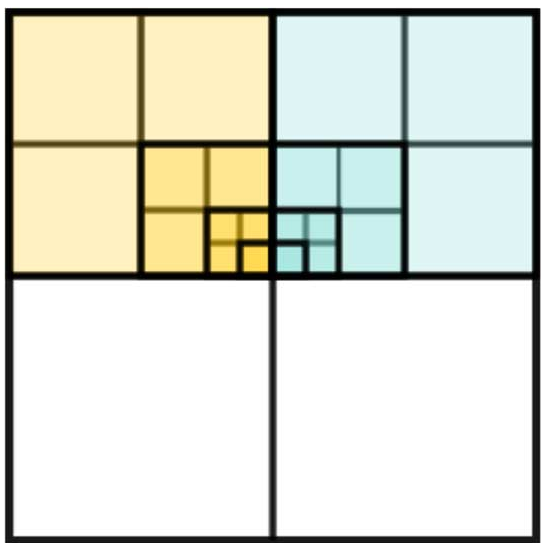 Figure 1: Illustration of hierarchical refinement. Patches are regularized by their parents to maintain spatial smoothness.
Experimental Proof: Motion and Disease
The authors validated HML in two high-stakes scenarios:
Disentangling the Thorax
In 2-D cardiac MRI, HML was able to generate correlation maps. It identified which specific pixels were pulsing with the heart versus those moving with the diaphragm. Independent patch analysis (without the hierarchy) resulted in "noisy" maps where spatial boundaries were jagged and physically impossible.
Pinpointing Alzheimer’s
Using the ADNI dataset (429 subjects), HML was tasked with classifying Alzheimer’s patients.
- The Result: By using 5x6x5 voxel patches at the finest level, the model reached 84% accuracy.
- The Discovery: The "most discriminative" patches automatically clustered around the medial temporal lobe, specifically the amygdala and hippocampus—perfectly aligning with clinical pathology.
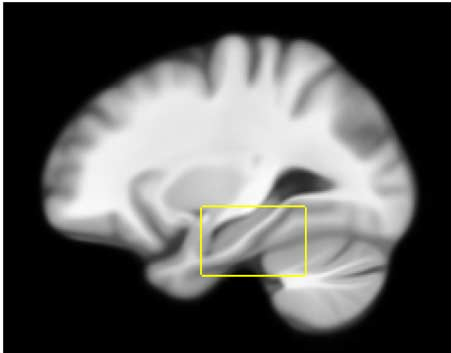 Figure 2: Heatmap of classification accuracy across the brain. Note the concentration of high-accuracy patches in the temporal regions.
Performance Comparison
| Method | Patch Size | Accuracy |
|---|---|---|
| Whole Image LE | 160x192x160 | 65% |
| ROI-based LE | Medial Temporal | 74% |
| HML (Proposed) | 5x6x5 (Hierarchical) | 84% |
Critical Insight: Why Hierarchy Matters
The "magic" of HML isn't just the small patches—it's the spatial regularization. Without the hierarchical constraint, tiny patches are vulnerable to noise. By "anchoring" them to parent manifolds, HML preserves the Inductive Bias that anatomy is continuous. This allows the model to distinguish between a voxel showing actual atrophy and a voxel showing imaging artifacts.
Conclusion & Future Outlook
Hierarchical Manifold Learning represents a shift from "Generic AI" to "Anatomy-Aware AI." It provides a pathway to discover biomarkers in a purely data-driven way.
Limitations: The method is memory-intensive and relies on pre-aligned (registered) images. Future work might integrate registration and manifold learning into a single end-to-end framework, potentially using Deep Learning to parameterize the manifold mapping.
Final Takeaway: To find the signal in the noise of medical data, don't just look at the forest or the trees—look at how the branches belong to the trunk.