
Unified ICT Governance: Bridging the Semantic Gap in Cloud Infrastructure
A High-Level Ontology Network for ICT Infrastructures
This paper introduces a high-level ontology network designed to homogenize the representation of complex ICT infrastructures. Developed by Universidad Politécnica de Madrid and Huawei, it provides a unified framework for Configuration Management Databases (CMDBs) and has been successfully implemented to create a large-scale Knowledge Graph (KG) for Huawei's cloud operations.
TL;DR
As ICT environments evolve into hyper-complex webs of virtualized hardware and microservices, traditional management databases (CMDBs) are struggling to keep up. This paper presents a comprehensive Ontology Network for ICT Infrastructures, a formal semantic framework that unifies disparate data sources into a queryable Knowledge Graph. Applied at scale within Huawei, it enables site reliability engineers to navigate millions of resources using natural language.
The "Complexity Wall" in Modern DevOps
In the era of Infrastructure as Code (IaC) and AIOps, the distinction between a physical server and a software-defined container has blurred. When a cloud service experiences a performance drop, engineers must trace dependencies across layers: from the business product to microservices, down to virtual servers, and finally to the physical hardware in a specific data center.
Prior work in this space has been fragmented. Many "cloud ontologies" proposed over the last decade (like CoCoOn or early NIST models) lack public OWL implementations or failed to maintain pace with DevOps practices. The result? Data silos where CMDBs, IT Service Management (ITSM), and Asset Management (ITAM) tools speak different "languages," making automated recovery nearly impossible.
Methodology: A Modular Network of Ontologies
The authors didn't just build a single giant model; they built a Network. Using the LOT (Linked Open Terms) methodology—an agile, sprint-based approach—they decomposed the ICT universe into 10 specialized modules.
The Structural Core
At the heart lies the Core Ontology, which defines the ConfigurationItem (CI). Every database, disk, or firewall inherits from this base, ensuring that universal properties like status, version, and dependsOn are tracked consistently across the entire organization.
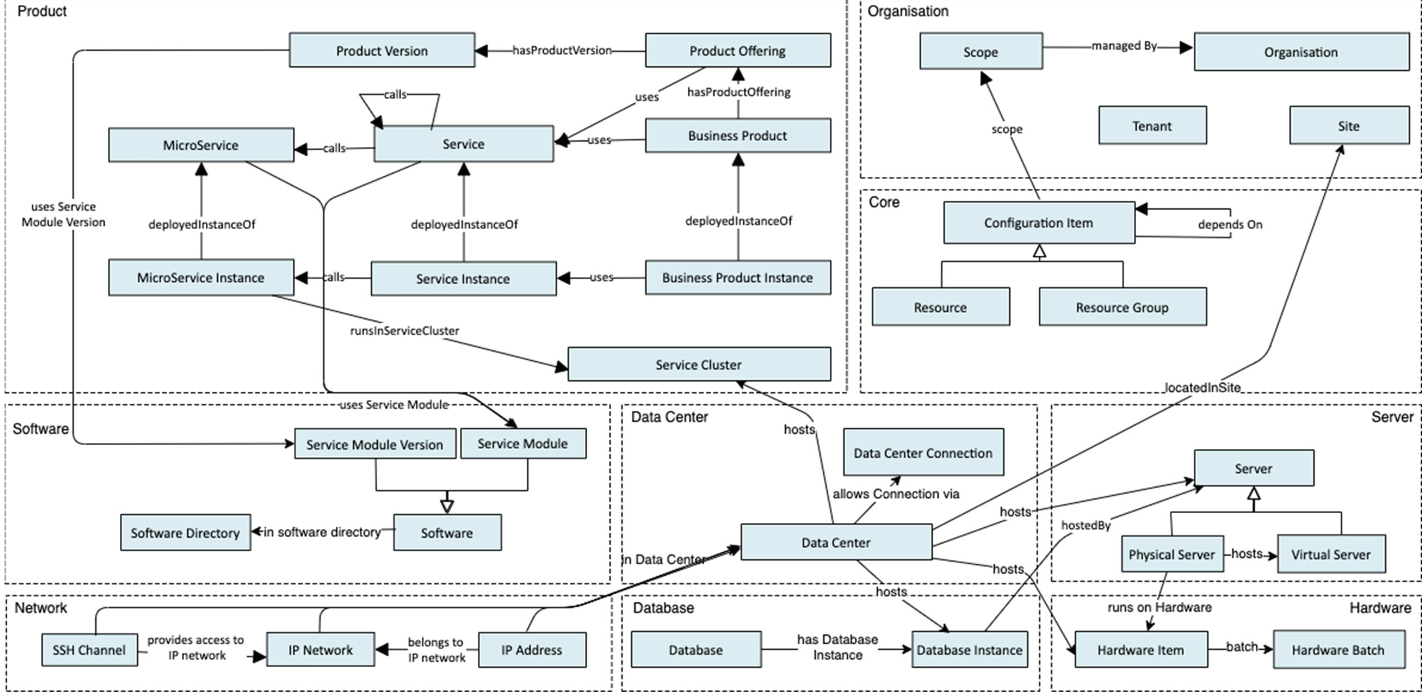 Figure 1: The interconnected modules covering everything from Business Products to Hardware Batches.
From Legacy SQL to Semantic Graph
The true value of an ontology is realized when it meets real-world data. The team developed a pipeline to transform Huawei's legacy relational databases (containing 82+ entity types) into a Knowledge Graph:
- Mapping: Using YARRRML, they defined how SQL tables map to ontology classes.
- Materialization: Legacy data was converted into RDF triples and stored in a Virtuoso triple store.
- Natural Language Interface: An unsupervised KGQA system was built using word embeddings (Fasttext) to allow engineers to ask questions like "Where is the instance of the cores_db hosted?" without writing complex SQL or SPARQL.
Experimental Results & Real-World Impact
The system was stress-tested against the massive scale of Huawei’s operations. By mapping 41 core concepts and 152 properties, the researchers proved that high-level ontologies could handle:
- Heterogeneity: Homogenizing different naming conventions for the same attributes across departments.
- Scalability: Navigating millions of running services across global data centers.
- Usability: Specifically, the KGQA system achieved high precision in disambiguating terms like "server" or "cluster" by using density-based clustering in vector space.
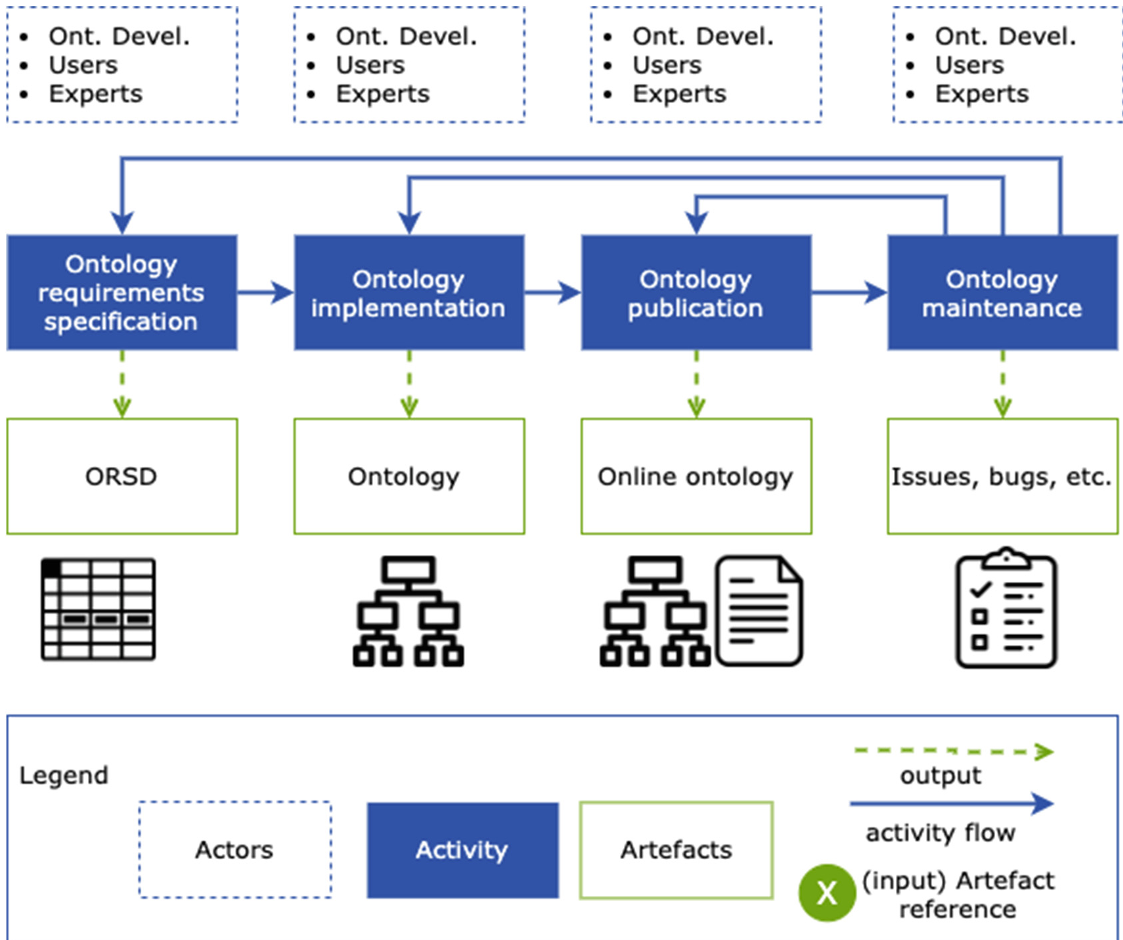 Figure 2: The LOT methodology workflow, integrating requirement specification with continuous CI/CD via OnToology.
Critical Insight & The Path Forward
The significance of this work lies in its FAIRness (Findable, Accessible, Interoperable, Reusable). Unlike previous academic exercises, this ontology network is published with persistent URIs (w3id) and is already archived in Zenodo.
Limitations: While the ontology is robust, the current mapping process still requires significant manual effort from knowledge engineers. The next frontier will likely involve Automated Schema Discovery, where AI agents automatically suggest mappings between new DevOps tools and the core ontology.
In conclusion, as we move toward AIOps, the industry needs a "Common Tongue." This ontology network provides the vocabulary for that future, allowing humans and AI alike to understand the complex digital machinery powering our world.