
High Water Pants: Bending Time Through Mechatronic Wearables
High Water Pants: Designing Embodied Environmental Speculation
The paper introduces "High Water Pants," a mechatronic speculative wearable designed for urban cyclists that mechanically shortens its legs when entering GPS-geofenced areas projected to be impacted by sea-level rise. This Research through Design (RtD) project explores how "embodied speculation" can make the abstract, large-scale "hyperobject" of climate change tangible through everyday physical practice.
TL;DR
"High Water Pants" are speculative, mechatronic cycling trousers that shorten as the wearer enters areas of Seattle predicted to be submerged by future sea-level rise. By "bending time," this project transforms abstract climate data into a somatic, "high-water" sensation, forcing a confrontation between our present daily routines and a submerged future.
The Problem: The Invisibility of Hyperobjects
Climate change is what philosopher Timothy Morton calls a hyperobject: it is everywhere but nowhere specific; it is happening now, but its true impact is deferred across generations. For an everyday cyclist in Seattle, climate change might be perceived as a smoky summer or a particularly crisp autumn, but the catastrophic long-term shifts—like sea-level rise—remain invisible.
The authors argue that current Human-Computer Interaction (HCI) approaches to sustainability are too narrow. They often focus on "persuading" users to use less electricity or track their carbon footprint. This paper proposes a more radical shift: Designing for the Anthropocene by making the climate's future visceral.
Methodology: From Probes to Pant-Legs
The researchers followed a Research through Design (RtD) methodology, moving through several phases to ground their speculation in the lived experience of Seattle cyclists:
- First-Person Prototyping: The lead author used "experience prototypes" (like cutting heart shapes in uniforms to track sun exposure) to understand how gear mediates the relationship between the body and the elements.
- Cultural Probes: Participants used "Gabbing Gear" booklets to imagine their bike components as sentient actors, revealing anxieties about gear becoming obsolete in a hotter, wetter future.
- The Artifact: The final "High Water Pants" integrate a GPS module and a microcontroller as a soft circuit. Using a polygon detection algorithm, the pants actuate (shorten) when the rider enters geofences mapped to NOAA’s 30-80 year sea-level rise projections.
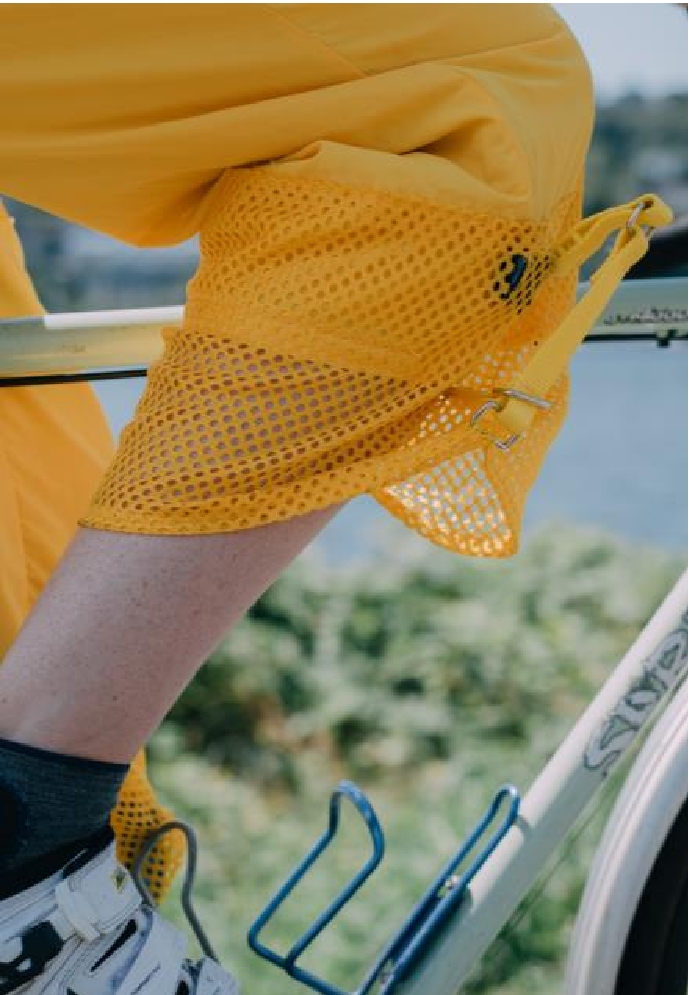 Fig 1. The High Water Pants in the 'up' position (left) and the internal microcontroller soft circuit (right).
Insights: The Sensation of a Future-Factual World
Unlike standard haptics (like a phone vibration), the mechanical shortening of the pants provided a "liminal" sensation. Pilot participants noted several key shifts in their perception:
- Emotional Anchoring: One participant realized that the "up" position of her pants coincided with a waterfront park that held deep personal meaning, leading her to speculate on the loss of shared public space rather than just "data."
- Ecological Speculation: Riders began imagining "estuary sounds" and "yellowy grasses" replacing the current urban soundscape, shifting the focus from human mobility to interspecies resilience.
- Bending Time: By experiencing a "present/future" duality, the gear acts as a translator for an "ecology-to-be."
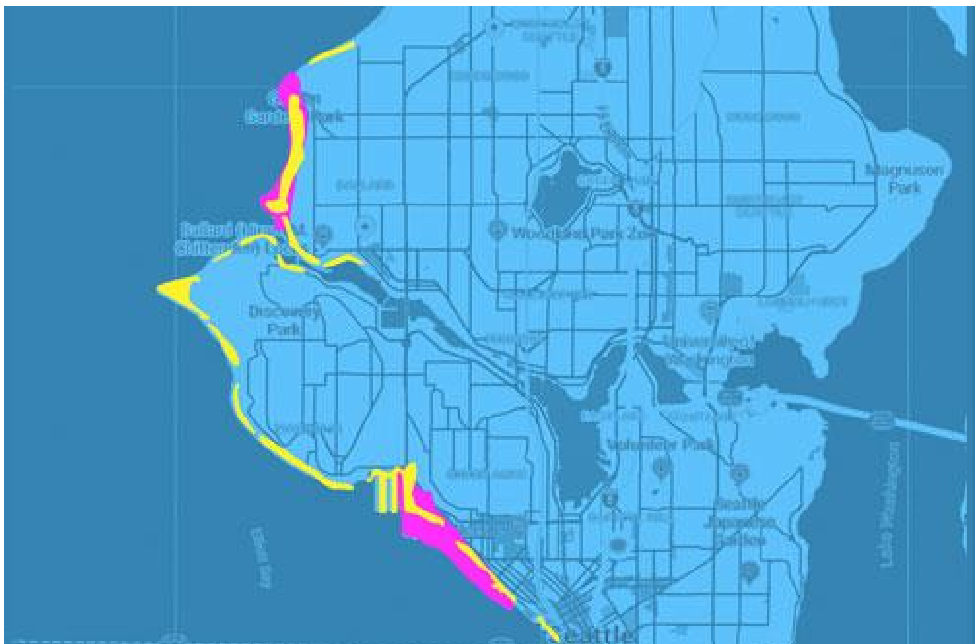 Fig 2. Mapping the future: Yellow areas show projected sea-level rise; pink lines indicate the geofences where the pants actuate.
Conclusion: Staying with the Trouble
The "High Water Pants" represent a pivot in Sustainable HCI. They do not offer a "solution" to climate change. Instead, they follow Donna Haraway’s call to "stay with the trouble."
By unseating the human from the center of the interaction and allowing the environment (via data) to speak through the garment, the design helps us navigate the ambiguity of the future. It suggests that our future relationship with technology will not just be about "utility," but about attunement—using sensors and actuators to maintain a kinship with a planet in flux.
Takeaways for Researchers
- Tactile over Visual: Large-scale data (like sea-level charts) is often ignored; somatic feedback (the feeling of high-water pants) creates lasting "nodes of insight."
- Speculative Enactments: Moving speculation out of the "white cube" gallery and into the "muddy" context of a daily commute creates more authentic, situated knowledge.