
From Latecomer to Leader: The Architectural Blueprint of Korea’s Internet Miracle
A HISTORY OF COMPUTER NETWORKING AND THE INTERNET IN KOREA
This paper provides a historical analysis of the Republic of Korea's rapid evolution from a networking latecomer in the late 1970s to a global broadband leader. It details the development of the System Development Network (SDN), Korea's first TCP/IP implementation in 1982, and its subsequent dominance in high-speed infrastructure and innovative digital services.
TL;DR
In the late 1970s, Korea had virtually no computer networking capability. By 1982, it was the second country in the world to establish a TCP/IP network. By the 2000s, it led the world in broadband penetration. This article deconstructs the historical and technical strategies—from the "Software Development Network" (SDN) to the birth of the "Freemium" model—that transformed a developing nation into a digital superpower.
Problem & Motivation: The Technology Access Crisis
In the late 1970s, the Republic of Korea faced a massive technological "moat." The United States and NATO countries held restricted access to the Interface Message Processor (IMP)—the core hardware of ARPANET. For a developing nation, building a network from scratch was deemed impossible due to:
- Human Resource Scarcity: A lack of specialized network engineers.
- Hardware Embargoes: Restricted access to state-of-the-art US networking tech.
- Software Dependency: Early TCP/IP implementations (like those under BSD) were heavily dependent on specific DEC hardware (VAX and PDP-11), making them difficult to port to local Korean systems.
The authors reveal that the initial research proposal in 1980 was actually rejected by the government, highlighting the immense skepticism surrounding the project's viability.
Methodology: Open Systems as the Great Equalizer
The breakthrough came through a strategic pivot led by Kilnam Chon. Instead of trying to reinvent the wheel, the team leveraged Open Systems.
The Protocol Pivot
The team rejected building TCP/IP from scratch. Instead, they chose UNET from 3Com, an implementation designed for Ethernet that could be ported to any UNIX system (System V or BSD). This allowed them to develop a TCP/IP link between KIET and Seoul National University in May 1982, operating at a then-impressive 1.2 Kbps.
Architectural Evolution: The SDN
The System Development Network (SDN) served as the foundational testbed. It wasn't just a single protocol; it was a multi-stack environment supporting:
- TCP/IP for domestic backbones and campus networks.
- UUCP for international dial-up and email (connecting to North America in 1983).
- X.25 for packet-switched data.
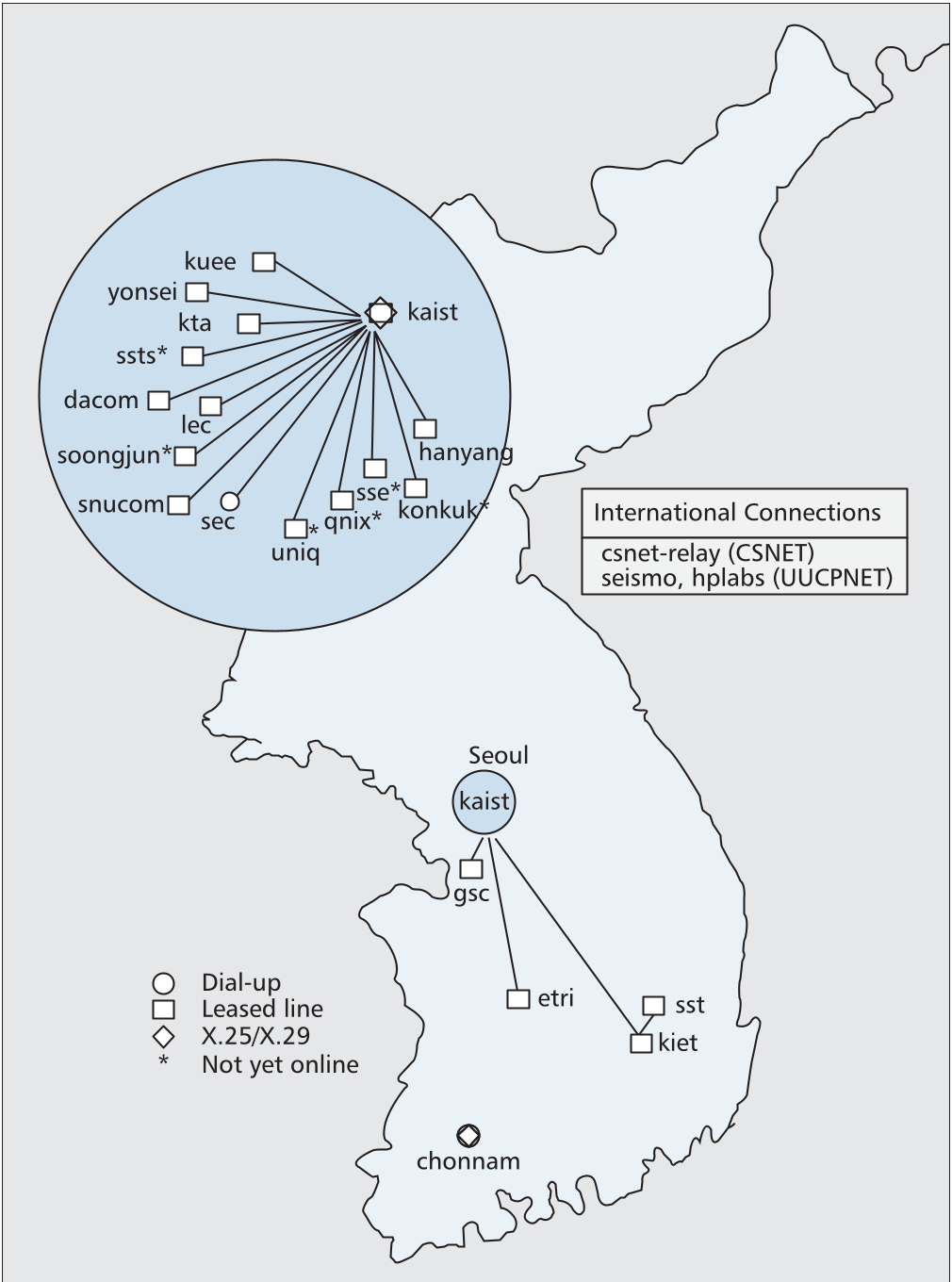 Figure 1: Early network distribution and the evolution of the SDN hub.
Experiments & Results: The Broadband Explosion
The mid-90s marked the shift from research to mass adoption. The Korea Information Infrastructure (KII) project (1995) treated broadband as a basic utility.
The "PC Bang" Phenomenon & Starcraft
A unique catalyst for Korea's success was the Internet Cafe (PC Bang). When individual home speeds were capped at 64 Kbps, these cafes provided high-speed access. The explosive popularity of games like Starcraft in 1998 created a massive "bottom-up" demand for high-speed residential access (ADSL and Cable).
Quantitative SOTA
By June 2001, Korea achieved a "miracle" in OECD statistics:
- Broadband Penetration: More than double the next best performing country (Japan/USA).
- Cost Efficiency: Korean ISPs provided some of the lowest subscription fees globally (42.75 ~ 224.32 kbps per USD vs. 17.94 in the US).
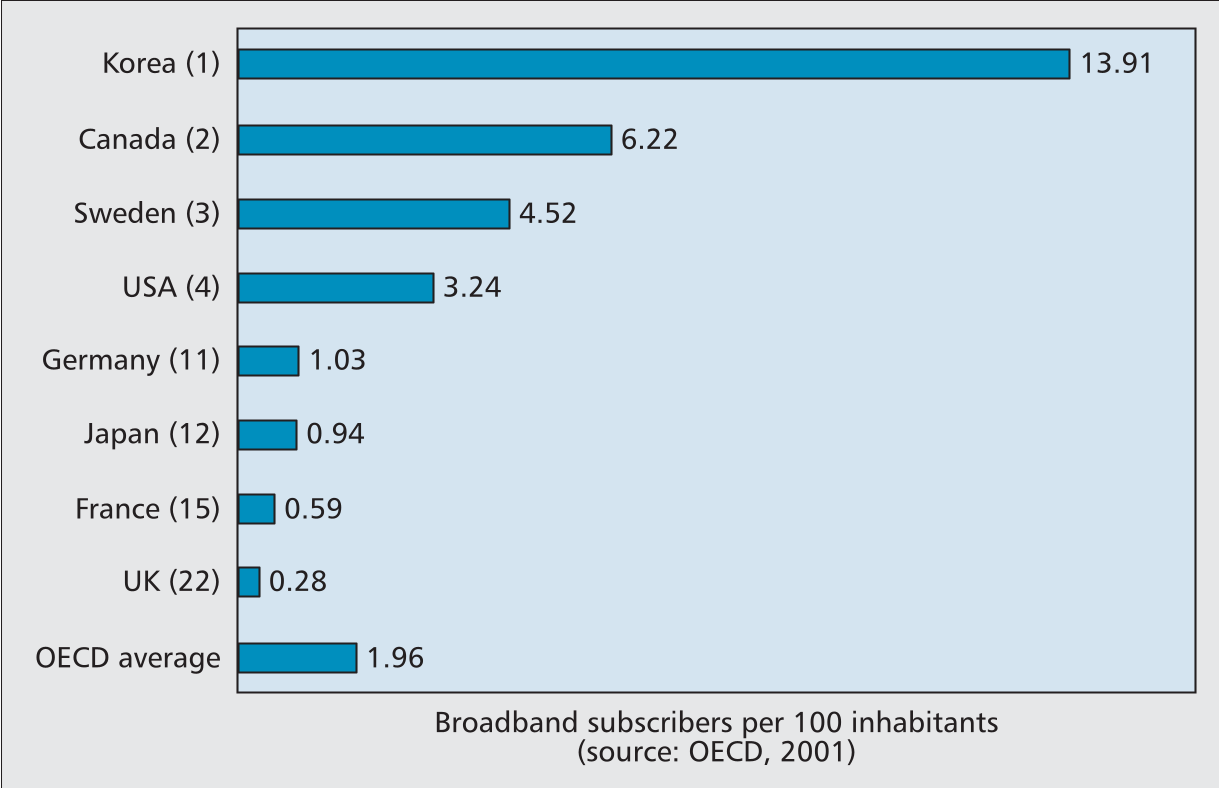 Figure 2: OECD statistics showing Korea's dominant lead in broadband subscribers.
Deep Insight: The Invention of "Freemium"
Perhaps the most significant contribution mentioned isn't hardware, but the Freemium Business Model. In 1997, the Korean service SayClub began selling virtual items (avatars and costumes) while keeping the core service free. This model:
- Proved that users would pay for digital identity.
- Became the foundation for modern giants like Tencent and Zynga.
- Shifted the global digital economy from "software-as-a-product" to "service-as-an-ecosystem."
Critical Analysis & Conclusion
The paper does not shy away from Korea’s setbacks. The authors cite the 2003 SQL Slammer worm incident, which crashed the Korean internet, as a warning about the homogeneity of operating systems and the lack of robust incident handling.
Takeaway: Korea’s journey suggests that technical leadership is not just about inventing protocols, but about the foresight to adopt open standards early and the ability to link infrastructure to a societal use-case (like online gaming and e-banking). While the US built the Internet’s "bones," Korea arguably built its "lifestyle."
Future Outlook
As we move toward 6G and ubiquitous AI, the Korean model of "national master plans" combined with "fierce commercial competition" remains a potent blueprint for developing nations aiming to leapfrog the digital divide.