
WiMAX: An Anatomy of Global Wireless Standardization and Evolution
The History of WiMAX: A Complete Survey of the Evolution in Certification and Standardization for IEEE 802.16 and WiMAX
This paper provides a comprehensive historical survey of WiMAX technology, detailing its evolution across three pivotal organizations: the IEEE 802.16 Working Group (Standardization), the WiMAX Forum (Certification), and the ITU (International Recognition). It tracks the technology's trajectory from initial fixed broadband concepts to the SOTA Mobile WiMAX (802.16e) and Advanced (802.16m) frameworks.
TL;DR
WiMAX was more than just a set of protocols; it was a massive experiment in global technical coordination. This survey deconstructs the roadmap of IEEE 802.16, shifting from early high-frequency fixed access to the mobile-first Mobile WiMAX (802.16e) and the IMT-Advanced certified 802.16m. It highlights the indispensable role of the WiMAX Forum’s certification and the ITU’s spectrum recognition in making WiMAX a reality in developing markets.
Background: Beyond the "What," Understanding the "How"
Most engineers know WiMAX as a competitor to LTE. However, its value in the academic coordinate system lies in its survival through radical pivots. It began as a solution for 10-66 GHz Line-of-Sight (LoS) links but found its commercial "sweet spot" in sub-11 GHz Non-Line-of-Sight (NLoS) mobile environments. This paper serves as a post-mortem and a roadmap for any future wireless technology aiming for global scale.
The Standardization Engine: IEEE 802.16
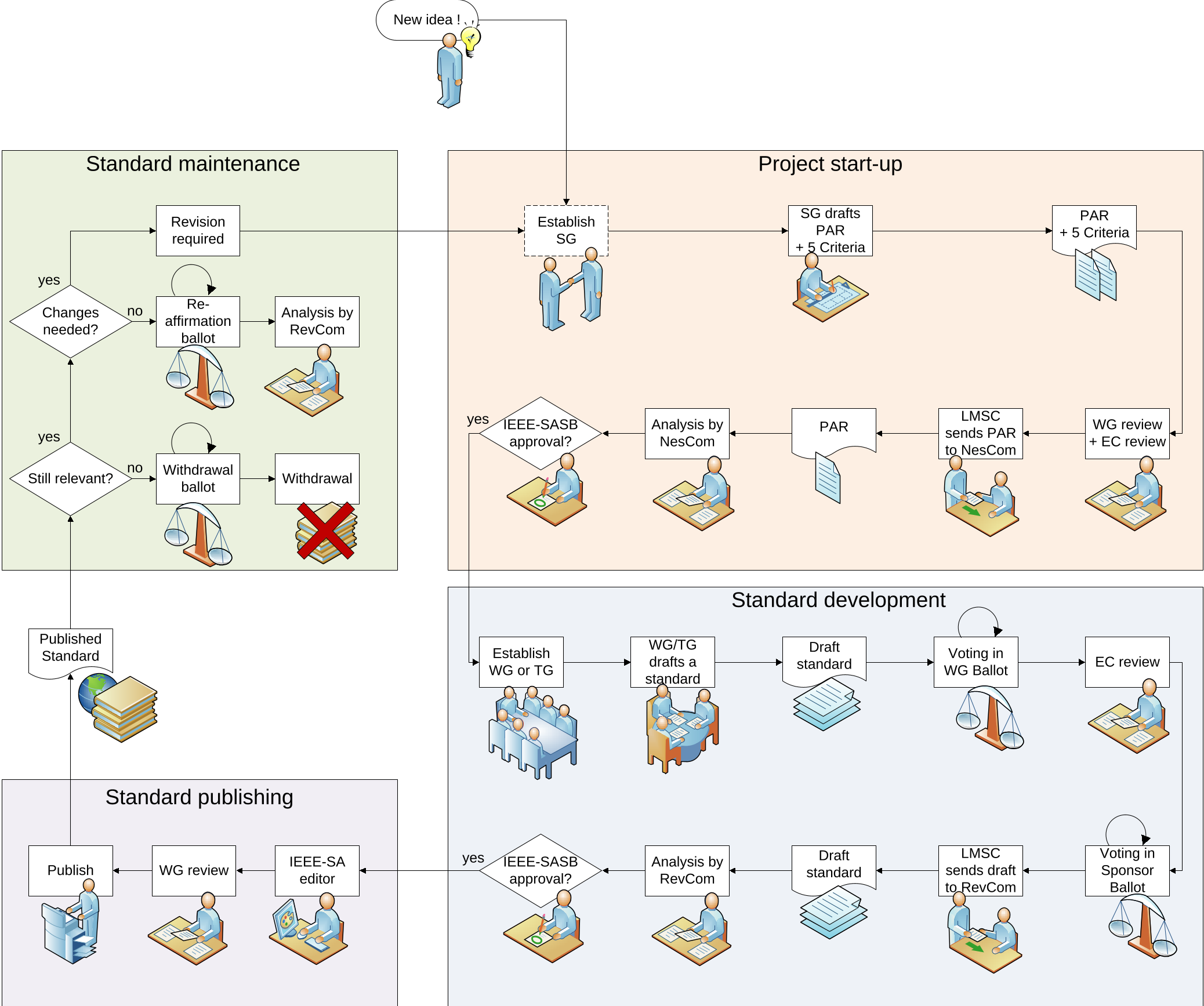
The IEEE 802.16 Working Group maintained a unique philosophy: keep a common Medium Access Control (MAC) layer while allowing the Physical (PHY) layer to evolve.
- The Pivot: Early efforts (TG1) focused on single-carrier systems for high frequencies. As market interest moved to mobility, Task Groups 'e' and 'm' introduced Scalable OFDMA, allowing the technology to adapt to varying bandwidths and user speeds.
The Certification Filter: The WiMAX Forum
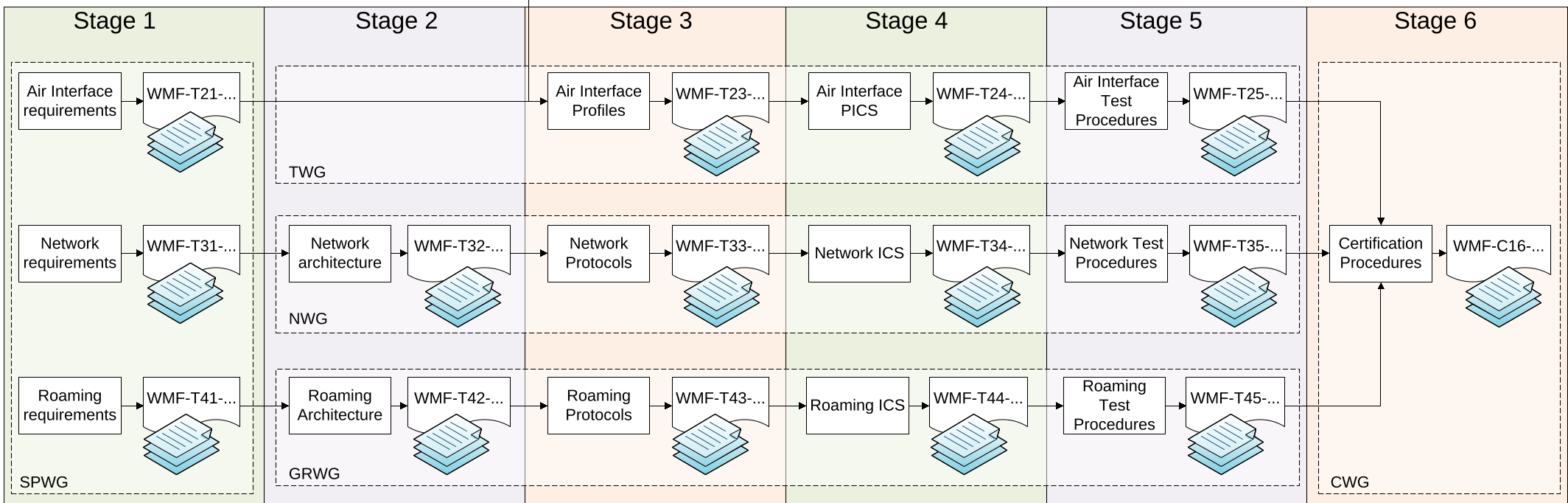
Standardization (IEEE) creates the menu, but Certification (WiMAX Forum) chooses the meal. The paper argues that "IEEE-compliant" does not mean "interoperable."
The WiMAX Forum created System Profiles—mandatory subsets of features that vendors had to implement. By awarding the "WiMAX Forum Certified" label, they solved several industry pain points:
- Vendor Lock-in Removal: Operators could mix base stations from Vendor A with mobile devices from Vendor B.
- Global Roaming: Common profiles meant a device bought in one country could (theoretically) work in another.
Global Legitimacy: The ITU Connection
The most technical standard in the world is useless without spectrum. The paper details how the IEEE/WiMAX Forum successfully petitioned the ITU to include WiMAX in the IMT-2000 (3G) and later IMT-Advanced (4G) families. This was a masterstroke that allowed WiMAX to be deployed in spectrum bands previously reserved exclusively for traditional cellular technologies.
Market Trends: Success in the "Green-field"
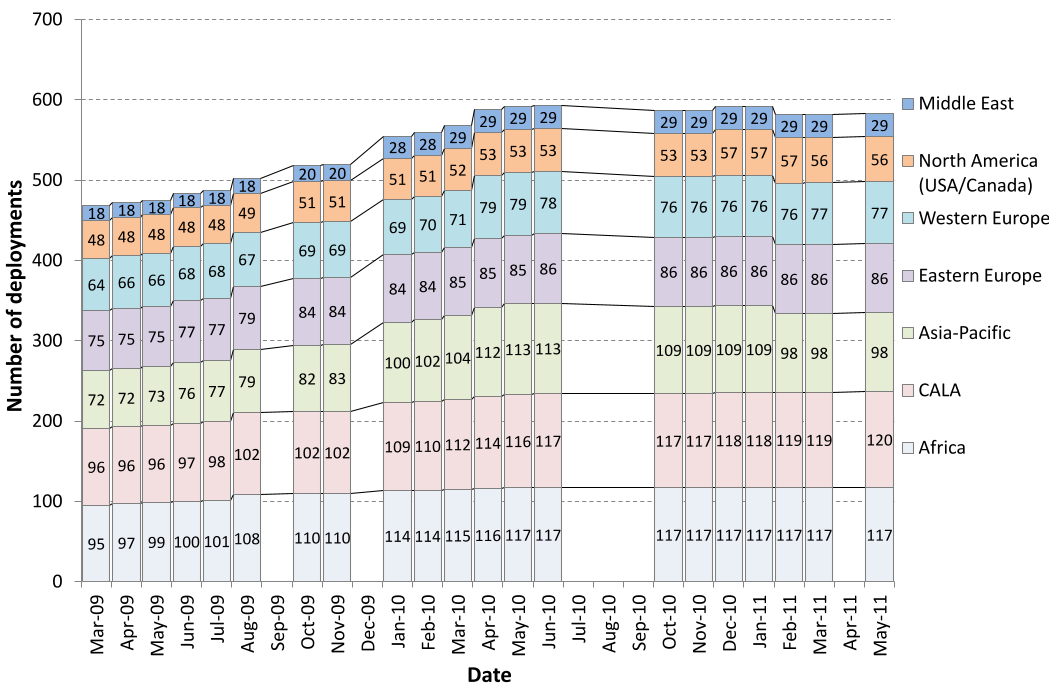
The analysis reveals a fascinating geographical divide. While WiMAX struggled in the West against entrenched DSL and Cable providers, it flourished in Asia-Pacific and Africa.
- Insight: WiMAX acted as a "digital gap" bridge. In regions lacking legacy copper or fiber infrastructure, WiMAX "green-field" deployments were faster and cheaper to roll out than traditional wired solutions.
Critical Insight & Conclusion
The history of WiMAX teaches us that technical innovation (like the move to 802.16m/Advanced) must be paired with ecosystem willingness. The shift from high to low frequency and the eventual merger of WiMAX 4G concepts into the broader defined "4G" category (alongside LTE) shows that standards are fluid, driven as much by economic viability as by Shannon's Law.
Future Outlook: As we look towards 6G, the WiMAX story warns us: beware of being "blind to new elements." A standard must remain open-minded to survive the shifting sands of industry interest.