
SNETT: Beyond Transactions—The Social Capital of Smart Tourism
Toward a holistic understanding of continued use of social networking tourism: A mixed-methods approach
This study presents a mixed-methods investigation into Social Networking Tourism (SNETT), specifically focusing on the popular platform CouchSurfing. By integrating Theory of Planned Behavior, Self-Determination Theory, and Social Capital Theory, the authors identify key motivations—networking and economic value—and empirically validate a model explaining continued use intention.
TL;DR
Social Networking Tourism (SNETT) sites like CouchSurfing are more than just cost-saving tools; they are complex ecosystems of trust and social capital. This research reveals that while saving money (Economic Value) gets people through the door, it is the accumulation of "Social Capital"—the intangible benefits of connection—that keeps them coming back. Through a dual-phase study, the authors prove that trust and satisfaction are the ultimate engines of platform longevity.
Problem & Motivation: The Gap in Digital Tourism
Traditional tourism research focuses on transactions like booking flights and hotels. However, a new paradigm has emerged where travelers seek authentic experiences by connecting directly with locals. Despite the growth of platforms like CouchSurfing, the academic community lacked a holistic understanding of why users stay.
The authors argue that SNETT communities face a unique challenge: the Inherit Risk of meeting strangers at remote destinations. Unlike Facebook (strong ties), these niche networks rely on Weak Ties, making the transition from "first-time adopter" to "regular user" much harder to maintain.
Methodology: From Interviews to Equations
The researchers utilized a robust Mixed-Methods Approach to capture both the nuance of human motivation and the rigor of statistical proof.
Phase 1: Qualitative Discovery
The team interviewed active CouchSurfers to identify what truly motivates them. They discovered four main drivers:
- Networking: Meeting people from diverse backgrounds.
- Economic Value: Finding cost-effective or free travel options.
- Information sharing: Learning about local cultures.
- Curiosity: (Dismissed as a pre-adoption factor, not a "continued use" factor).
Phase 2: Quantitative Validation
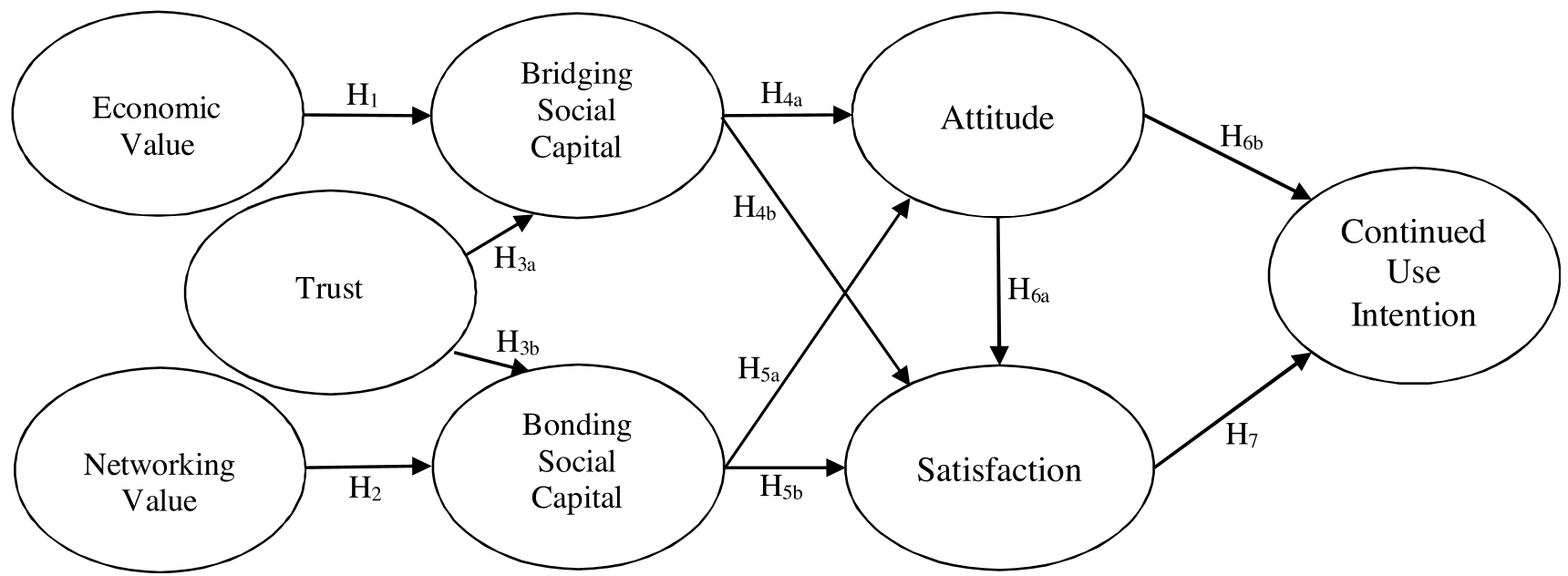
Using these insights, they built a Structural Equation Model (SEM) grounded in Social Capital Theory. They analyzed 593 responses from 56 countries to test how these motivations impacted "Bridging Social Capital" (connecting different backgrounds) and "Bonding Social Capital" (deepening relationships).
Core Findings: What Drives Longevity?
The results provided several key insights into the mechanics of digital communities:
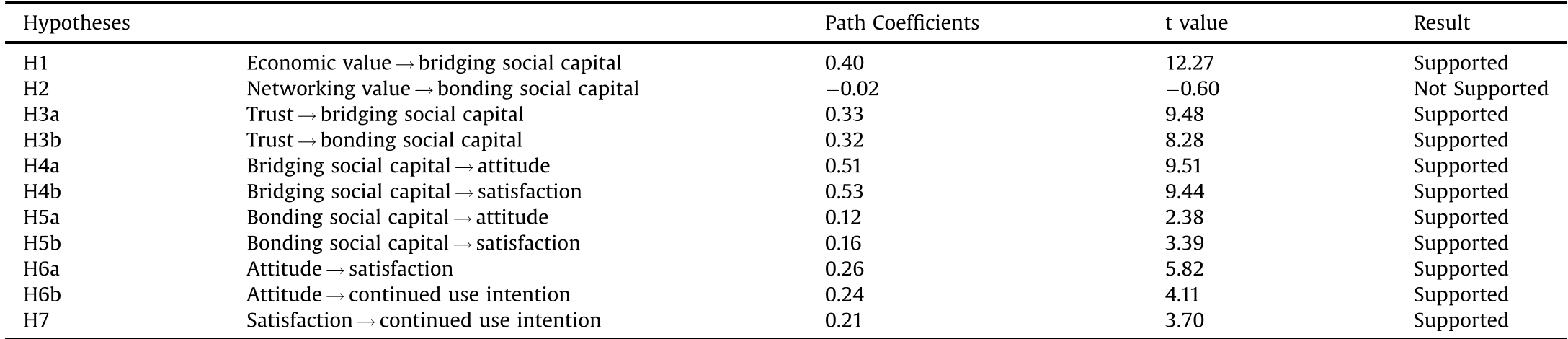
- Economic Value is a Bridge: There is a strong positive link between seeking economic benefit and Bridging Social Capital. Users who want to save money are more likely to reach out across diverse social groups.
- Trust is Foundation: Trust in the community directly fuels both bridging and bonding social capital. Without trust, the "social capital engine" stalls, led by a path coefficient of 0.33 (p < 0.001).
- The Satisfaction Loop: Bridging social capital is a massive driver of satisfaction (0.53) and attitude (0.51). If users feel they are expanding their network, they view the platform favorably.
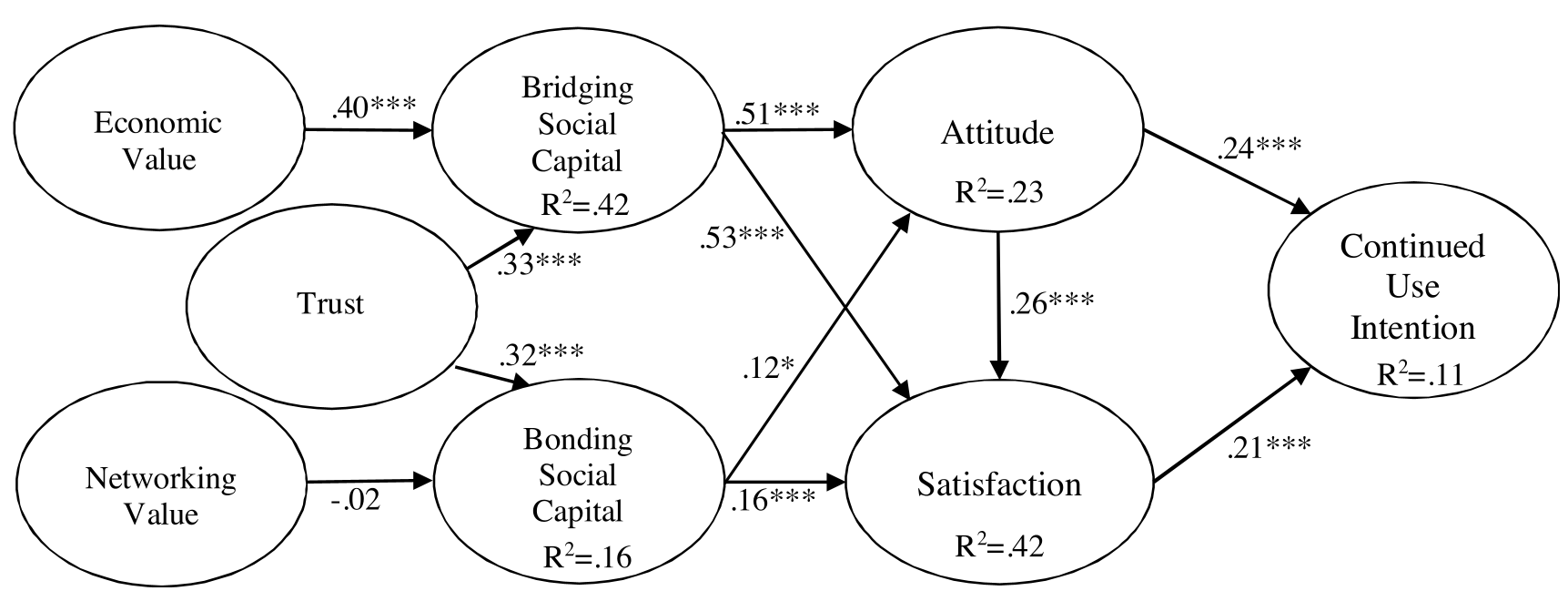
Table: Hypothesis Testing Summary
Critical Analysis & Conclusion
A fascinating anomaly in the study was that Networking Value did not significantly influence Bonding Social Capital. This suggests that while travelers say they want to make lifelong friends, the platform is primarily used for the functional benefit of meeting new, diverse people (Bridging) rather than deepening long-term support systems (Bonding).
Takeaways for Industry
- For Travel Agencies: SNETT isn't just a competitor; it's a blueprint. Agencies should incorporate social features to increase "stickiness."
- For Platform Designers: Focus on building trust and facilitating "Bridging" interactions to maximize satisfaction.
Future Outlook
While this study covers community-level trust, the next frontier is Individual-Level trust. How does a user decide which specific person to trust in a remote country? Future research into privacy and individual matchmaking algorithms will be critical as the "Sharing Economy" moves toward more specialized, high-stakes human interaction.