
REST at Home: Reclaiming Privacy by Turning Your Smartphone into a Family Cloud
A platform for proving family oriented RESTful services hosted at home
This paper introduces a RESTful architecture for hosting family-oriented services (e.g., photo albums, calendars) directly on home infrastructure like smartphones. It leverages a trusted broker and standardized web protocols like OAuth and OpenID to enable secure, fine-grained remote access for friends and external service mash-ups.
TL;DR
As we become increasingly dependent on cloud services for our digital lives, we trade privacy and data ownership for convenience. This paper presents a paradigm shift: an architecture that allows families to host RESTful services (calendars, photo albums, etc.) directly on home-based devices—even a smartphone. By combining a trusted broker with social network integration, it enables secure, fine-grained sharing without ever uploading private files to a third-party server.
Problem & Motivation: The "Cloud" Trap
The modern Internet "jungle" has made the home the last bastion of true privacy. While web applications are easy to use, they present several critical flaws:
- Loss of Control: Once you upload a photo or a health record to the cloud, you often surrender copyright and administration rights.
- Data Mining: Service providers use your data to build advertising profiles.
- Fragmentation: Your digital life is scattered across a dozen different platforms with no unified way to manage permissions.
The authors argue that with the commoditization of home storage and broadband, the home should transition from a place of data consumption to a place of data hosting.
Methodology: The "REST at Home" Architecture
The core innovation lies in applying REST (Representational State Transfer) principles to the home environment. Instead of complex, proprietary protocols, the system uses standard HTTP.
1. The Home Server
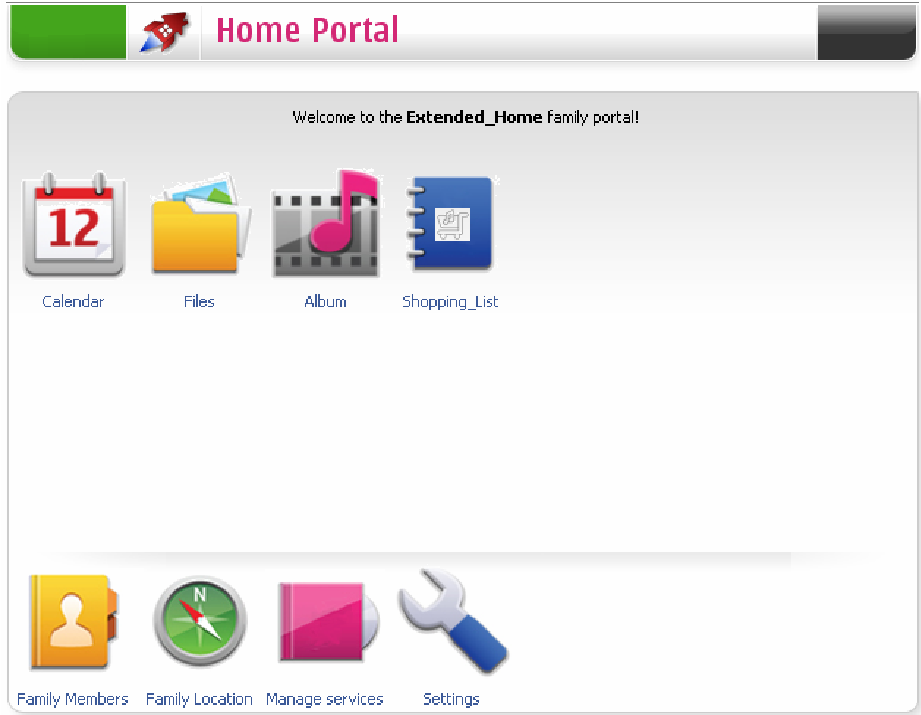
The researchers proved that a dedicated PC isn't necessary; a smartphone running a "Personal AMP" (Apache, MySQL, PHP) stack can serve as the hub. Every family service (e.g., a "Shopping List") is addressed via a unique URL.
2. The Trusted Broker & Tunneling
To solve the problem of NAT (Network Address Translation) and security, the home server initiates an outbound tunnel to a trusted broker on the public Internet. This bypasses firewall issues and ensures that the home infrastructure isn't directly exposed to the open web.
3. Identity and Mash-ups
Rather than forcing friends to create new accounts, the platform integrates with Social Networking Sites for identity verification. It also uses OAuth to allow external services (like an online grocery store) to "peek" into the home shopping list temporarily, without ever seeing the user's password.
Experiments & Results
The team built a prototype where a smartphone functioned as the server, communicating via WLAN through a home gateway.
- Performance: Testing a shared shopping list and photo album showed "adequate" and "unnoticeable" redirects, proving that even a limited-resource platform like a 2000s-era smartphone could handle RESTful service overhead.
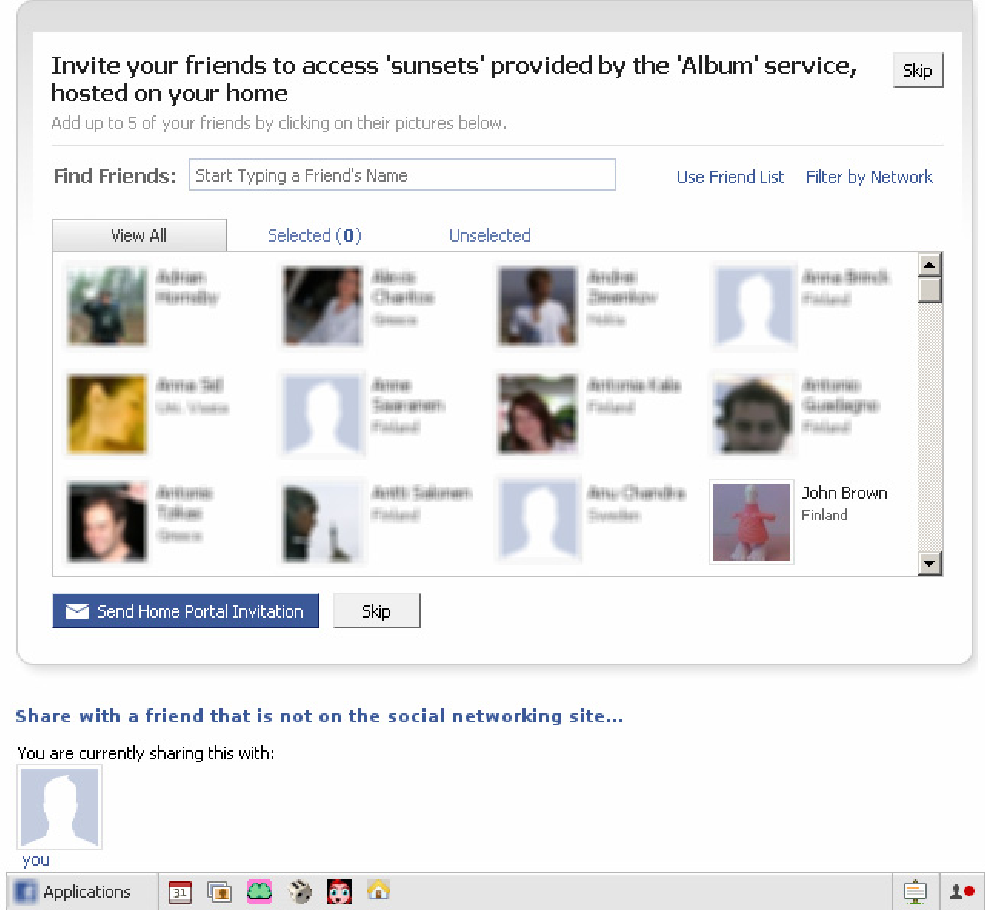
- Ease of Use: By leveraging social networks, they showed that a user could "Send a Home Portal Invitation" as easily as sending a message. The recipient simply clicks a button to access the home-hosted content via the broker.
Deep Insight & Conclusion
The true value of this work is the realization that the home can be a content provider, not just a consumer. By using RESTful APIs, the home becomes a first-class citizen in the "Web 2.0" ecosystem.
Key Takeaway: This research highlights that the bottleneck for decentralized home hosting isn't hardware performance—it's the complexity of configuration and trust. By using a broker-proxy model and standard web protocols, we can build a "Personal Cloud" that is as easy to use as Google Drive but as private as a physical filing cabinet.
Limitations: The reliance on a single "Trusted Broker" remains a potential point of failure. Future iterations might look toward decentralized "mesh" brokers or hierarchical systems similar to DNS to remove this dependency.