
HCARS-EHC: Revolutionizing E-Health Security with Merkle Trees and Evolutionary Algorithms
Hybrid Context Aware Recommendation System for E-Health Care by merkle hash tree from cloud using evolutionary algorithm
The paper introduces HCARS-EHC, a Hybrid Context-Aware Recommendation System for E-Health Care. It integrates a Merkle Hash Tree (MHT) for secure medical report indexing and an Evolutionary Algorithm to optimize data searching and updating within an encrypted cloud environment.
Executive Summary
In the era of digital medicine, the challenge of outsourcing sensitive patient reports to the cloud while maintaining searchable privacy is paramount. HCARS-EHC (Hybrid Context-Aware Recommendation System for E-Health Care) addresses this by merging cryptographic integrity with biological-inspired optimization. By utilizing Merkle Hash Trees (MHT) and Evolutionary Algorithms, the system achieves State-of-the-Art (SOTA) performance in search latency and communication efficiency, effectively connecting patients with specialized doctors without compromising data confidentiality.
The Bottleneck in Secure E-Health
Modern E-Health systems allow doctors to outsource encrypted reports, but searching through this "black box" of data usually incurs massive overhead. Traditional indexing structures, such as B+ trees or AVL trees, provide efficient search but often lack built-in integrity verification or become computationally expensive when scaled to millions of medical records. Furthermore, existing recommendation systems often ignore the context (e.g., doctor availability, fees, and response time), leading to suboptimal patient-doctor matching.
Methodology: The Fusion of MHT and Heuristics
The core innovation of HCARS-EHC lies in its three-pronged approach to security and efficiency:
1. Cryptographic Foundation
The system employs Bilinear Pairing () and ECC to generate doctor keywords and patient trapdoors. This ensures that even if an attacker intercepts a search request, solving the underlying Discrete Logarithm Problem (DLP) remains computationally infeasible (NP-Hard).
2. The Optimized Merkle Index
Instead of a standard flat index, the authors use an MHT to store patient reports.
- Integrity: Any minor change in a record alters the root hash, ensuring verifiable data possession.
- Efficiency: MHT requires only logarithmic time for operations.
- Evolutionary Tuning: The paper uses crossover and mutation operations to "breed" more efficient index structures, eliminating redundant elements and optimizing search paths.
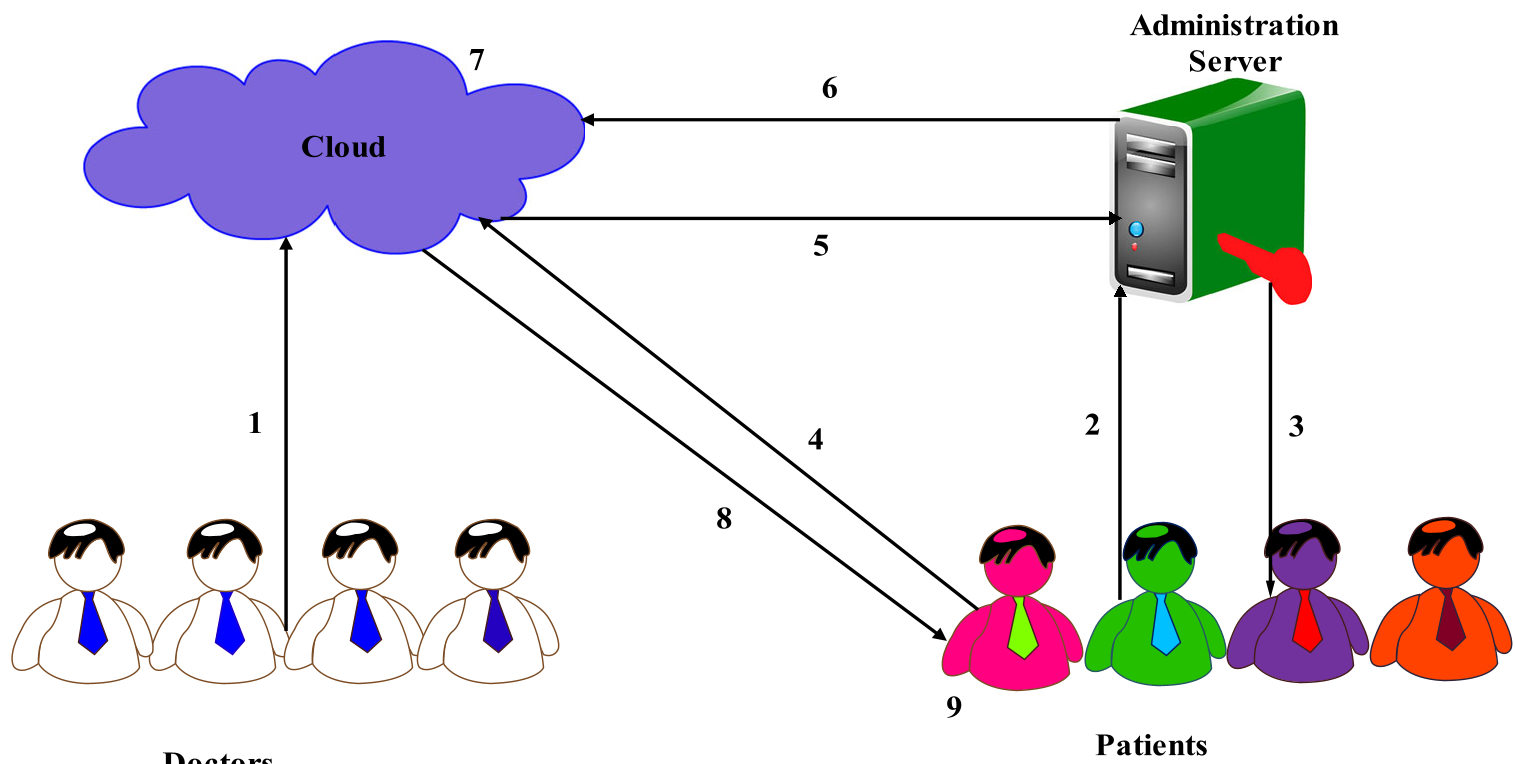 Figure 1: Overall Architecture of the HCARS-EHC System.
3. Context-Aware Collaborative Filtering
The recommendation engine doesn't just look at keywords; it uses Hybrid Collaborative Filtering. It predicts ratings () compared to true ratings () using metrics like MAE (Mean Absolute Error) and RMSE, factoring in parameters like "Doctor on call" and "Medicine Satisfaction."
Experimental Results & Benchmarking
The performance analysis was conducted using Cygwin on an Intel Core i3 environment, comparing HCARS-EHC against 16 other protocols (including SDKS, FIBE, and CP-ABE).
- Search Speed: For 10,000 keywords, the Cloud matching phase takes only 32ms, outperforming nearly all classical attribute-based encryption (ABE) variants.
- Communication Efficiency: As the bit-size increases to 4096, HCARS-EHC maintains a drastically lower communication cost (53,248 bits) compared to SDKS (over 100,000 bits).
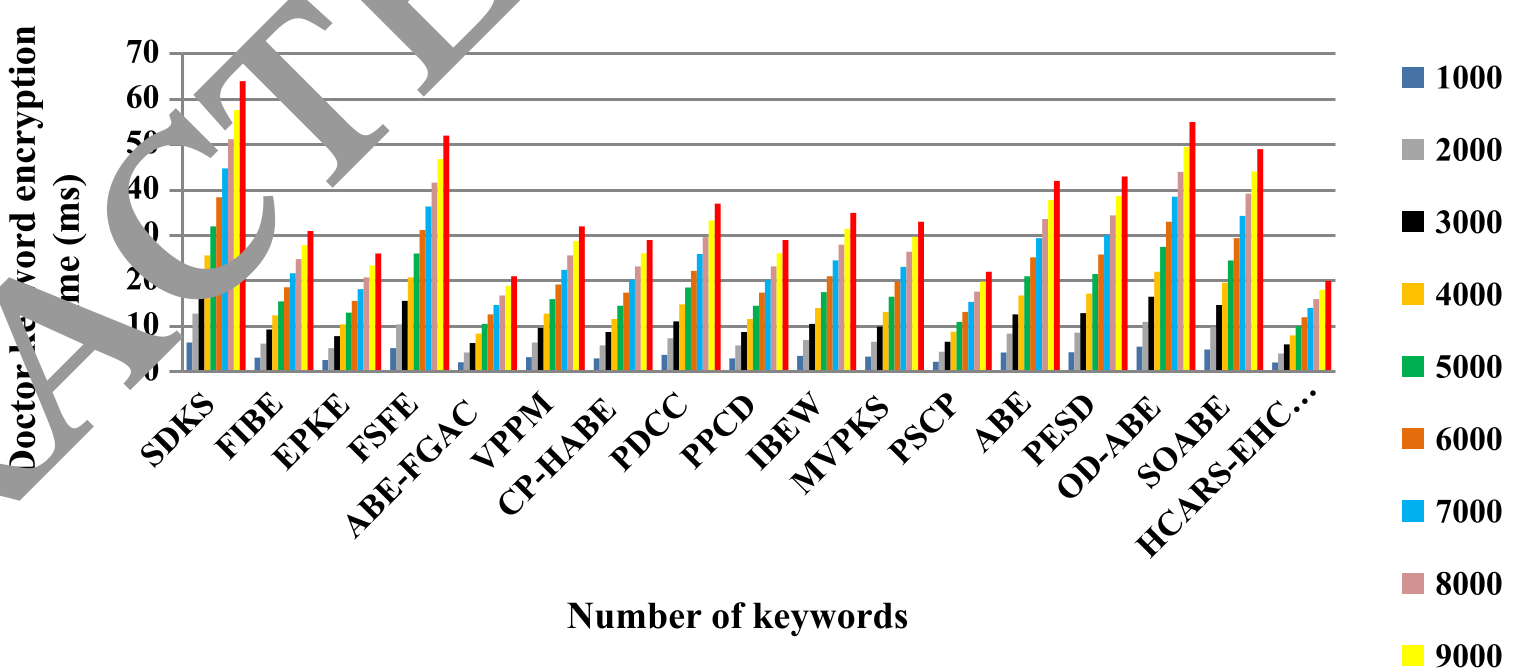 Figure 2: Efficiency of Doctor Keyword Encryption vs. Existing Methods.
Critical Insight & Conclusion
While the paper achieves impressive quantitative gains, it is important to note the retraction status suggested in the metadata—readers should verify the reproducibility of the specific evolutionary parameters used for the MHT optimization.
Takeaway: The real value here is the proof of concept that Dynamic Indexing (via MHT) combined with Meta-heuristic Optimization can solve the efficiency lag in Encrypted Cloud Search. For future developers, integrating real-world datasets from platforms like credihealth.com will be the next step in stress-testing this hybrid architecture.
Limitations
The study primarily focuses on text-based keywords. In modern E-Health, the integration of high-dimensional data (MRI scans, genomic sequences) into this Merkle structure remains an open research frontier.