
HDS: Breaking the Silos of Heterogeneous Social Networks through Hybrid De-anonymization
Hybrid de-anonymization across real-world heterogeneous social networks
The paper introduces the Hybrid De-anonymization Scheme (HDS) for re-identifying users across heterogeneous social networks. It combines graph-based community detection (Infomap) with profile-based string matching (Monge-Elkan) to map identities across platforms like Last.fm, Livejournal, and MySpace with high precision.
TL;DR
In an era where the average user maintains accounts across multiple social platforms, privacy is increasingly fragile. This paper presents HDS (Hybrid De-anonymization Scheme), a robust framework that merges social graph topology with profile metadata to link identities across disparate platforms like Last.fm and Livejournal. By using community structures to prune the search space, HDS achieves over 90% accuracy, significantly outperforming traditional standalone methods.
Problem & Motivation: The Identity Fragmentation Challenge
Most de-anonymization research falls into two camps:
- Structure-based: Assumes the "friendship graph" is similar across platforms. This fails in heterogeneous settings (e.g., your LinkedIn network looks nothing like your Instagram network).
- Profile-based: Matches usernames or bios. This suffers from a massive False Positive rate because "JohnDoe123" on one site may not be the same "JohnDoe123" on another when searching across millions of users.
The authors' insight is that while your global graph might change, your local communities (circles of friends) remain relatively stable, acting as a natural filter to eliminate incorrect matches.
Methodology: The Two-Step Alignment
The HDS framework operates through a sophisticated "detect and refine" pipeline:
1. Community Detection and Alignment
Instead of comparing every user in Network A to every user in Network B, HDS uses the Infomap algorithm to partition both networks into disjoint communities.
- Seed Mapping: It identifies a small set of "anchor points" (users with identical usernames).
- Cluster Alignment: If two communities from different networks share a significant number of these anchor points, they are deemed "aligned." This reduces the candidate matching set from the entire population to just a few dozen or hundred individuals.
2. In-community Profile Matching
Within these aligned clusters, the system performs a deep dive into the metadata. Recognizing that users often use slight variations of their names (e.g., "David Jones" vs. "D. Jones"), the authors use the Monge-Elkan algorithm with Jaro-Winkler similarity. This allows for fuzzy string matching that is resilient to abbreviations and typos.
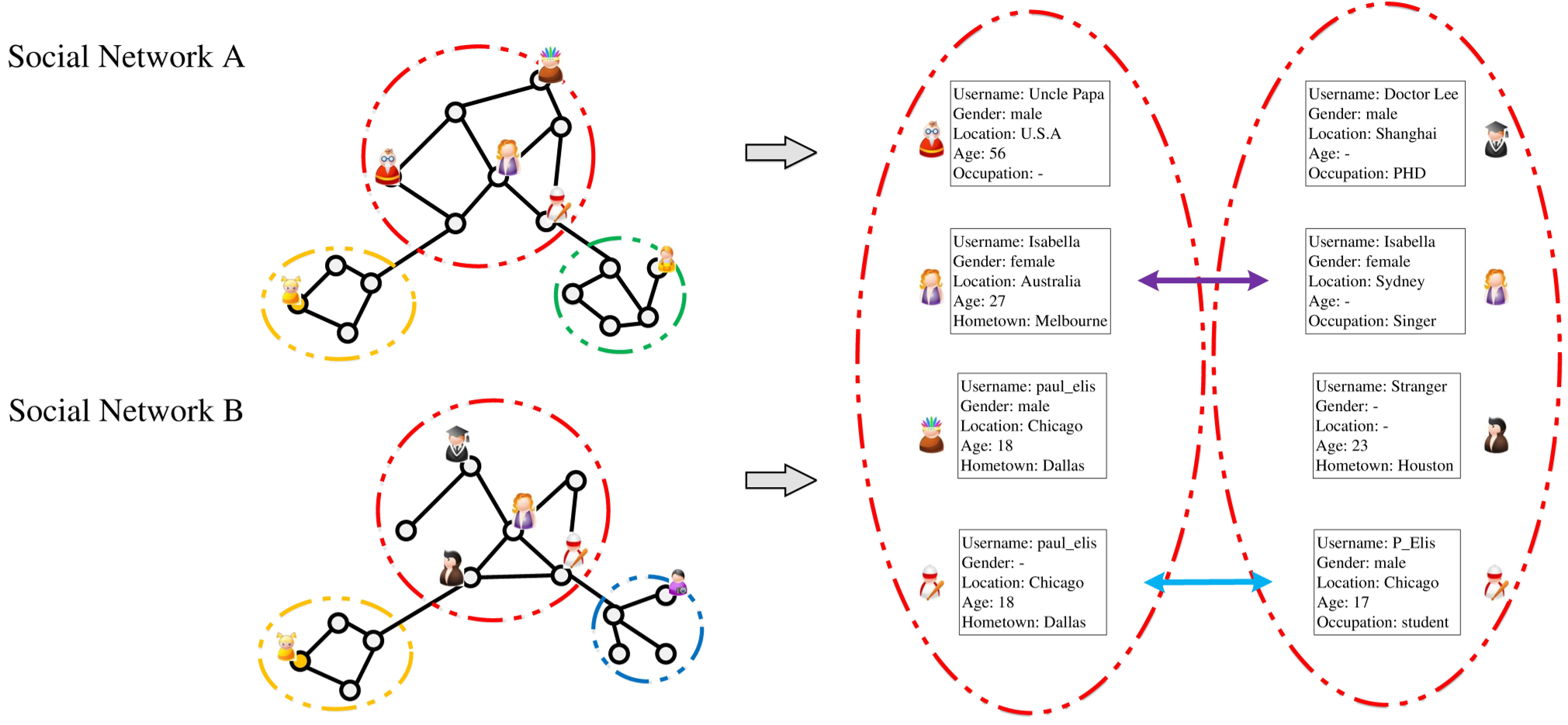 Figure 1: The HDS workflow showing the transition from global graph to community-level matching.
Experiments & Results: Real-World Performance
The authors tested HDS on three massive datasets: Last.fm, Livejournal, and MySpace.
SOTA Comparison
Compared to direct profile matching (the baseline), HDS showed a marked improvement:
- Accuracy Boost: HDS reached 96% accuracy in some scenarios, a 12% improvement over direct matching.
- Efficiency: By pruning the search space through community alignment, it avoids the computational explosion of pair-wise comparisons across millions of nodes.
 Table: Performance of HDS across different thresholds (). As the similarity requirement increases, precision skyrockets.
The "Ablation-style" comparison in Figure 2 of the paper highlights that while pure graph-based methods (like the Narayanan-Shmatikov algorithm) struggle with heterogeneous data, the hybrid approach keeps the retrieval rate high while nearly eliminating false positives.
Critical Analysis & Conclusion
Takeaway
The core value of HDS is its proof that graph topology and semantic data are complementary, not redundant. The graph provides the context (who you know), while the profile provides the identity (who you are).
Limitations
- Seed Dependency: The alignment still relies on an initial set of "easy" matches (identical usernames). If a user completely changes their handle and friend circle simultaneously, they remain invisible.
- Dataset Age: The study uses datasets from 2017 (Last.fm, MySpace). Modern platforms have more sophisticated privacy toggles and dynamic graph structures that might challenge the Infomap partitioning.
Future Outlook
This research underscores a massive privacy risk: even if you hide your profile details, your "place" within a social circle can betray your identity. Future work likely involves applying these concepts to Graph Embedding spaces (like Node2Vec), where community structures can be matched in a latent vector space.