
Eventer: Bridging Social Networks and Real-World Activities via Hybrid Filtering
A mash-up application utilizing hybridized filtering techniques for recommending events at a social networking site
The paper introduces "Eventer," a hybrid event recommendation system deployed as a Facebook mash-up application. It combines content-based filtering (artist similarity) and collaborative filtering (user ratings) while integrating geographical constraints to recommend concerts to users within their social network.
TL;DR
Eventer is a Facebook-integrated mash-up that solves the "what to do and who to go with" dilemma. By hybridizing content-based artist data from Last.fm with collaborative user ratings and strict geographical filtering, the system achieves near-perfect recommendation accuracy as user interaction grows. It marks a transition in recommendation logic from "item-to-user" to "event-to-social-clique."
Problem & Motivation: The Social Context of Events
Most recommendation research treats consumption as a solitary act (e.g., watching a movie on Netflix). However, the authors argue that events are inherently social. You don't just attend a concert for the music; you attend for the experience and the company.
Existing systems faced three major hurdles:
- The Sparsity Problem: New events have no ratings, making collaborative filtering fail.
- The Geographical Constraint: A 5-star concert 5,000 miles away is a 0-star recommendation.
- The Company Factor: Users are more likely to attend an event if their social circle is involved.
Methodology: The Hybrid "Mash-up" Architecture
The "Eventer" architecture is designed as a modular mash-up. It uses RESTful APIs to pull data from sources like Last.fm and screen scraping for localized sources (like Biletix).
1. Hybrid Similarity Computation
The system calculates a combined similarity score () between two events and :
- Content-Based: For Last.fm events, it queries the similarity of performing artists. If Artist A and Artist B are similar in genre, their respective concerts are linked.
- Collaborative-Based: It employs a rating correlation formula (Pearson Correlation) to find "look-alike" users:
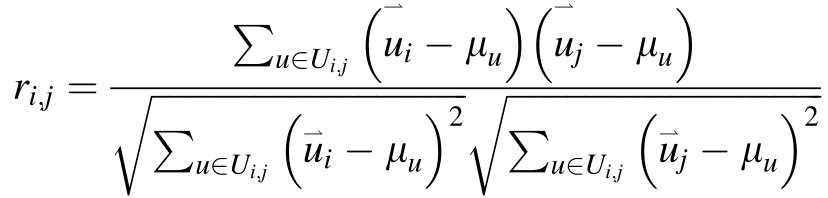 Where is the rating, and is the user's mean rating.
2. Social & Geo Integration
The system uses IP-to-Location mapping (via MaxMind) to enforce a 200-mile radius utility filter. Within the Facebook UI, the application specifically highlights which friends have been recommended the same event, facilitating group planning.
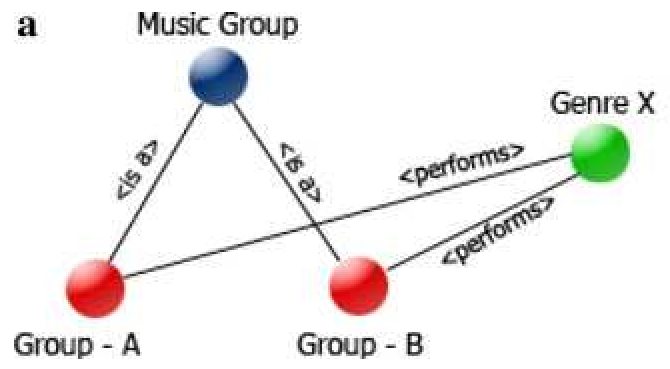 Fig 1: The proximity logic between artists (content) and individuals (social).
Experiments & Results
The authors tested the system on a group of university students and IT professionals. They measured performance using correlation coefficients and Kendall Tau rank correlations.
Key Findings:
- Performance Convergence: As users increased their rating history from 5 to 35 events, the "False Recommend" (Type I Error) rate plummeted from 0.4 to 0.02.
- Zero Missed Opportunities: The "False Opt-out" (Type II Error) reached 0.00 at the 30-event mark, meaning the system successfully captured every event the user would have liked.
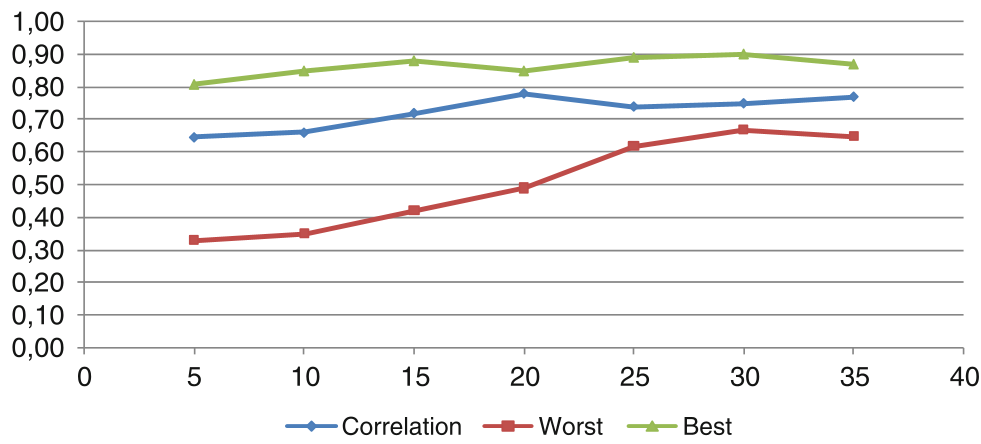 Fig 2: User correlation showing a steady increase in recommendation reliability as data density grows.
Critical Analysis & Conclusion
Takeaway
The "Eventer" project proves that for event-based recommendations, heterogeneous data is king. Combining artist metadata (content), friend activity (social), and physical location (geo) creates a much more robust "utility function" than any single-source algorithm.
Limitations
- Scalability: The paper acknowledges that calculating similarity for every user-event pair in a large network like Facebook is computationally expensive.
- Diversity: The current implementation is heavily weighted toward concerts. Transferring this logic to sports or theater would require different content metadata (e.g., team standings vs. genre).
Future Outlook
This work presages the current era of "Hyper-local" social apps. The jump from 2010's mash-ups to today's AI-driven social graphs involves replacing manual similarity formulas with Graph Neural Networks (GNNs), but the core intuition remains: an event's value is defined by who else is there.