
HIFE-JRS: Navigating the Maze of Online Recruitment with Hybrid Information Filtering
Hybrid Information Filtering Engine for Personalized Job Recommender System
The paper introduces HIFE-JRS, a Hybrid Information Filtering Engine for job recommendation. By integrating Content-Based, Collaborative, Behavioral, and Ontology-Based filtering, the system significantly improves personalized job matching for e-recruitment platforms.
TL;DR
Online recruitment is plagued by "information flooding." Job seekers are overwhelmed by irrelevant posts, while recruiters are buried under thousands of unqualified resumes. HIFE-JRS (Hybrid Information Filtering Engine for Job Recommender Systems) addresses this by combining classic filtering with behavioral tracking and domain-specific knowledge, ensuring the right job finds the right person at the right time.
The "Cold-Start" and "Flooding" Problem
Most job boards rely on simple keyword matching. If your profile says "Backend Developer" and the job says "PHP Developer," a basic system might miss the connection. Furthermore, traditional systems ignore the human element of tolerance—a applicant might accept a slightly lower salary or a job one town over, but standard filters are often too rigid.
The authors identify a core frustration: users have limited searching abilities to dig through "tons of jobs," leading to missed opportunities and wasted time for both parties.
Methodology: The Hybrid Engine Architecture
The HIFE-JRS isn't just one algorithm; it's an ensemble. The core innovation lies in how it layers different types of intelligence:
- Behavioral-based (BBR): It learns from what you do, not just what you wrote. If a "Backend Developer" frequently applies to "PHP" roles, the system adjusts.
- Concept-based (COBR): It augments queries. It knows that "JavaScript Developer" is often synonymous with "Frontend Engineer."
- Knowledge-based (KBR): This solves the cold-start problem by applying domain rules, such as knowing which employer requirements (like age) are flexible versus those that are strict (like gender).
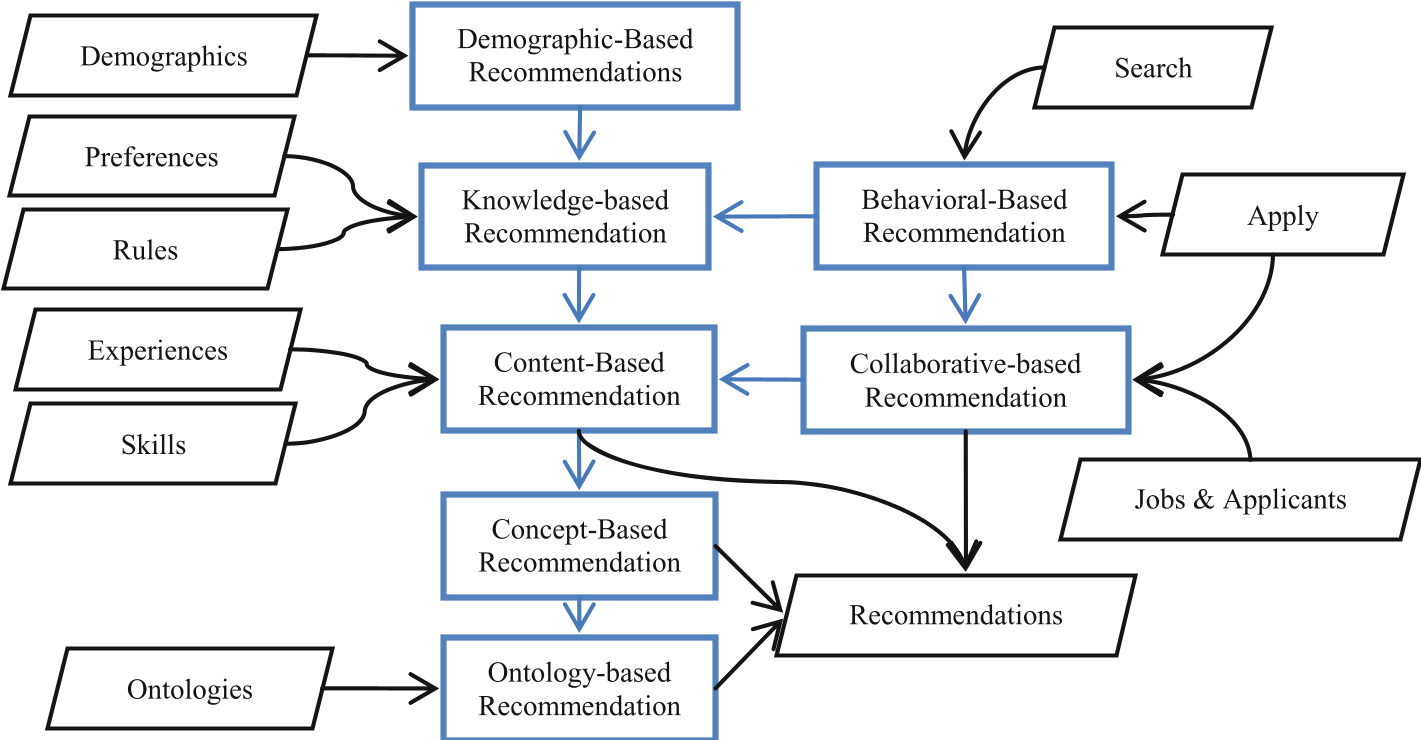 Figure 1: The multi-modular flow of the proposed hybrid recommendation engine.
HRA: The Three Pillars of Ranking
A recommendation is only as good as its rank. HIFE-JRS uses a Hybrid Ranking Algorithm (HRA) that balances three critical scores:
- Relevancy (RR): Textual and attribute similarity (Skills, Salary, Education).
- Proximity (PR): Geographical distance. The system uses a variable radius () that expands if high-quality matches aren't found nearby.
- Recency: Prioritizing new listings. Data shows that 80% of clicks happen on jobs less than a week old.
The ranking logic is hierarchical: It sorts by Relevancy. If there's a tie, it uses Proximity. If there's still a tie, Recency becomes the tie-breaker.
Data Insights and Results
The study analyzed real-world behavior, revealing a stark decline in user interest as jobs age.
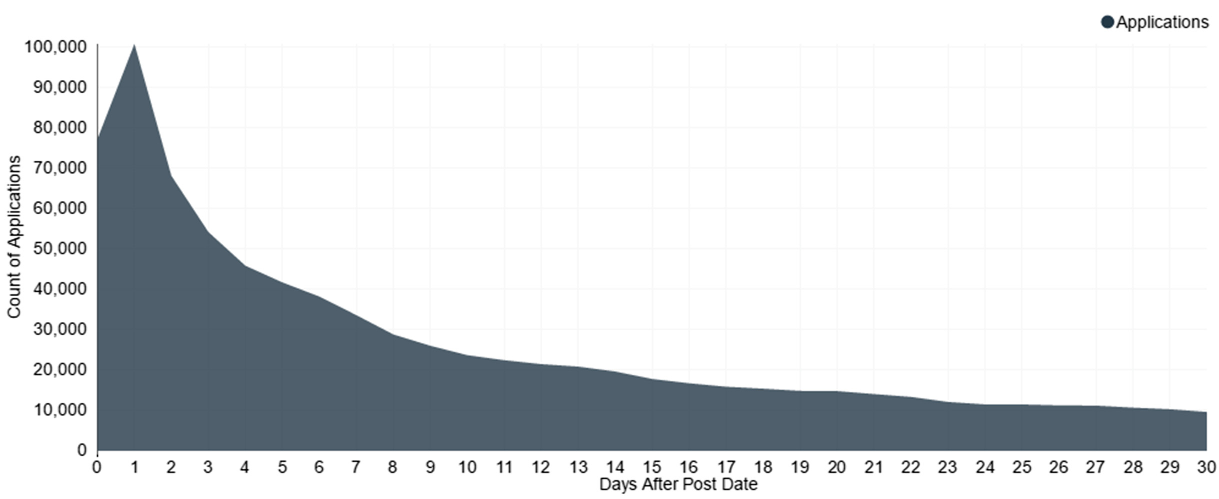 Figure 2: The sharp decline in job applications as postings become older than one week.
By clustering users by education level (e.g., "Blue-collar" vs. "Technical High School"), the authors were able to map specifically which segments are most "tolerated" by recruiters, even when they don't perfectly match the job's initial criteria.
Critical Insight & Conclusion
HIFE-JRS moves the needle from "Search" to "Personalization." The real value here is the Ontology-based component—recognizing that in the job market, language is fluid. By grouping "SEO," "Social Media," and "E-marketing" into a unified "Marketing" hierarchy, the system reduces the risk of users missing relevant roles due to semantic hurdles.
Limitations: While the system excels in textual and attribute matching, the paper notes that the "tolerance parameters" () are variables that require constant tuning. Future work could benefit from more advanced Deep Learning embeddings (like BERT or Transformers) to further automate the semantic relationship between fragmented job titles.
In the era of the "Great Reshuffle," HIFE-JRS provides a robust blueprint for how recruitment platforms can transform from static databases into proactive, intelligent matchmaking agents.