
Advancing Healthcare Strategy: A Hybrid AI Approach to Precision Nutrition
Advancing competitive position in healthcare: a hybrid metaheuristic nutrition decision support system
The paper introduces a hybrid metaheuristic Nutrition Decision Support System (NDSS) that combines Genetic Algorithms (GA) and Simulated Annealing (SA). It optimizes hospital diet menus by balancing nutritional accuracy (protein, carbs, fat, calories) with cost-effectiveness through minimized menu variety.
TL;DR
Personalized nutrition is a cornerstone of patient recovery, yet "cooking for every individual" is a logistical nightmare for hospital managers. This paper proposes a Hybrid Metaheuristic Decision Support System (NDSS) that blends Genetic Algorithms (GA) and Simulated Annealing (SA). The system successfully generates diet menus that satisfy complex clinical orders (protein/fat/carb ratios) while keeping the number of different dishes low enough to be cost-effective.
The Conflict: Clinical Precision vs. Operational Reality
Modern healthcare strives for "patient-centered care." However, nutrition is often the "forgotten" therapy.
- The Clinical Side: Patients with oncology, cardiology, or renal issues need precise macronutrient intake to prevent malnutrition and reduce hospital stay duration.
- The Operational Side: A hospital kitchen cannot practically cook 100 different menus for 100 different patients. Standardizing to 2 or 3 menus saves money but sacrifices patient health.
The authors identify this as a combinatorial optimization problem: How can we pick a small set of menus and adjust their portion sizes to "best fit" a wide variety of medical diet orders?
Methodology: The GA-SA Hybrid Engine
The search space for this problem is massive. Selecting 4 components (soup, main, side, dessert) from a base of 12 meals each, across multiple menus and variable portion sizes, creates exponential complexity. To solve this, the authors use a two-layered intelligence:
1. Global Exploration (Genetic Algorithm)
GA is used to explore the "big picture." It treats potential menus as "chromosomes." Through tournament selection, crossover, and mutation, it identifies the best combinations of specific food items.
2. Local Exploitation (Simulated Annealing)
GA is great at finding good regions but often gets "stuck" near the finish line (premature convergence). The system hands the GA’s best solution to Simulated Annealing. SA fine-tunes the portion sizes (from 0.6x to 1.2x) with surgical precision. Because SA can accept "worse" moves with a decreasing probability (the metaphor of cooling metal), it avoids local optima to find the literal "perfect portion."
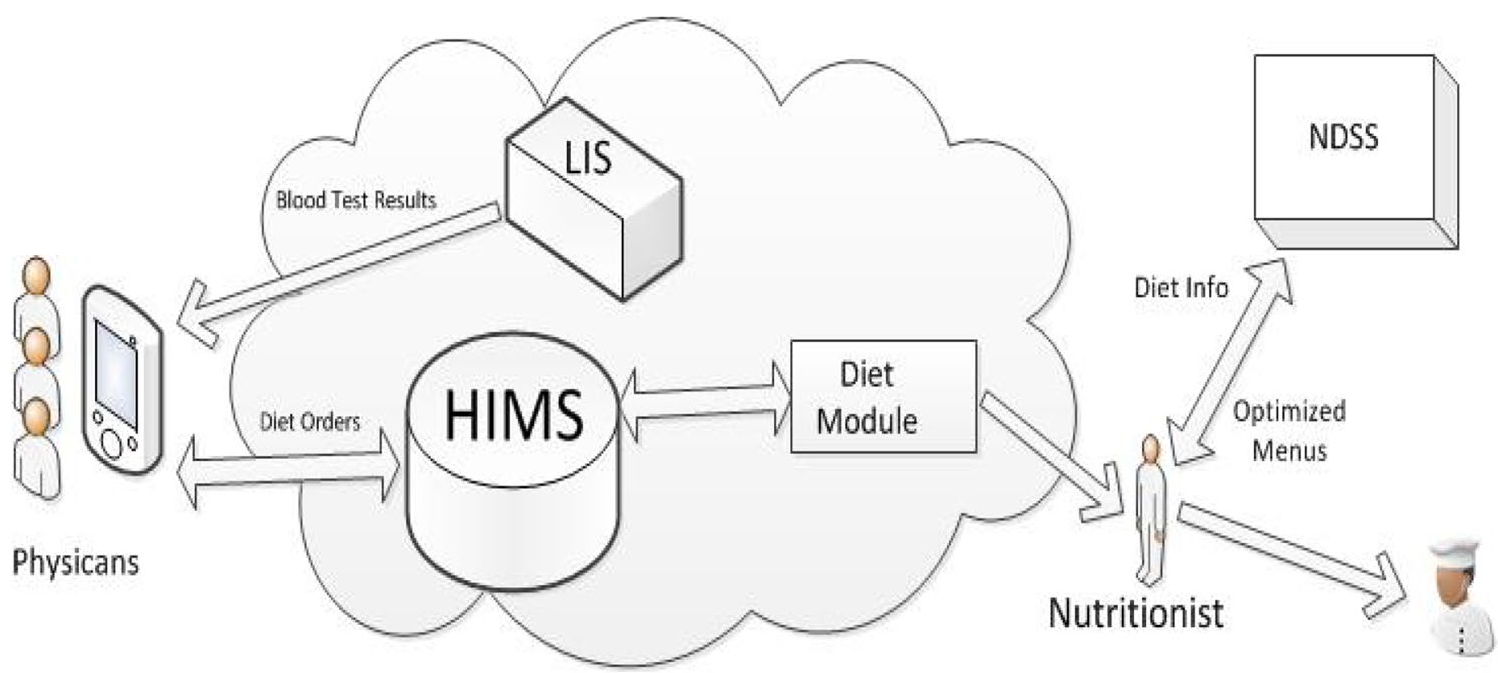 Figure 1: The NDSS workflow—integrating Hospital Information Systems (HIMS) with the optimization engine.
Experiments: Beating the Human Expert
The researchers tested the system against two datasets (5-order and 20-order diet sets) and compared the results to an expert nutritionist.
- Accuracy vs. Cost: As the system was allowed to suggest more different menus (e.g., 5 menus instead of 2), the error rates for protein and calories dropped to nearly 0%.
- The "Winning" Edge: Even at low menu counts (enhancing cost efficiency), the AI consistently provided lower error rates in macronutrient ratios compared to the manual calculations of a nutritionist.
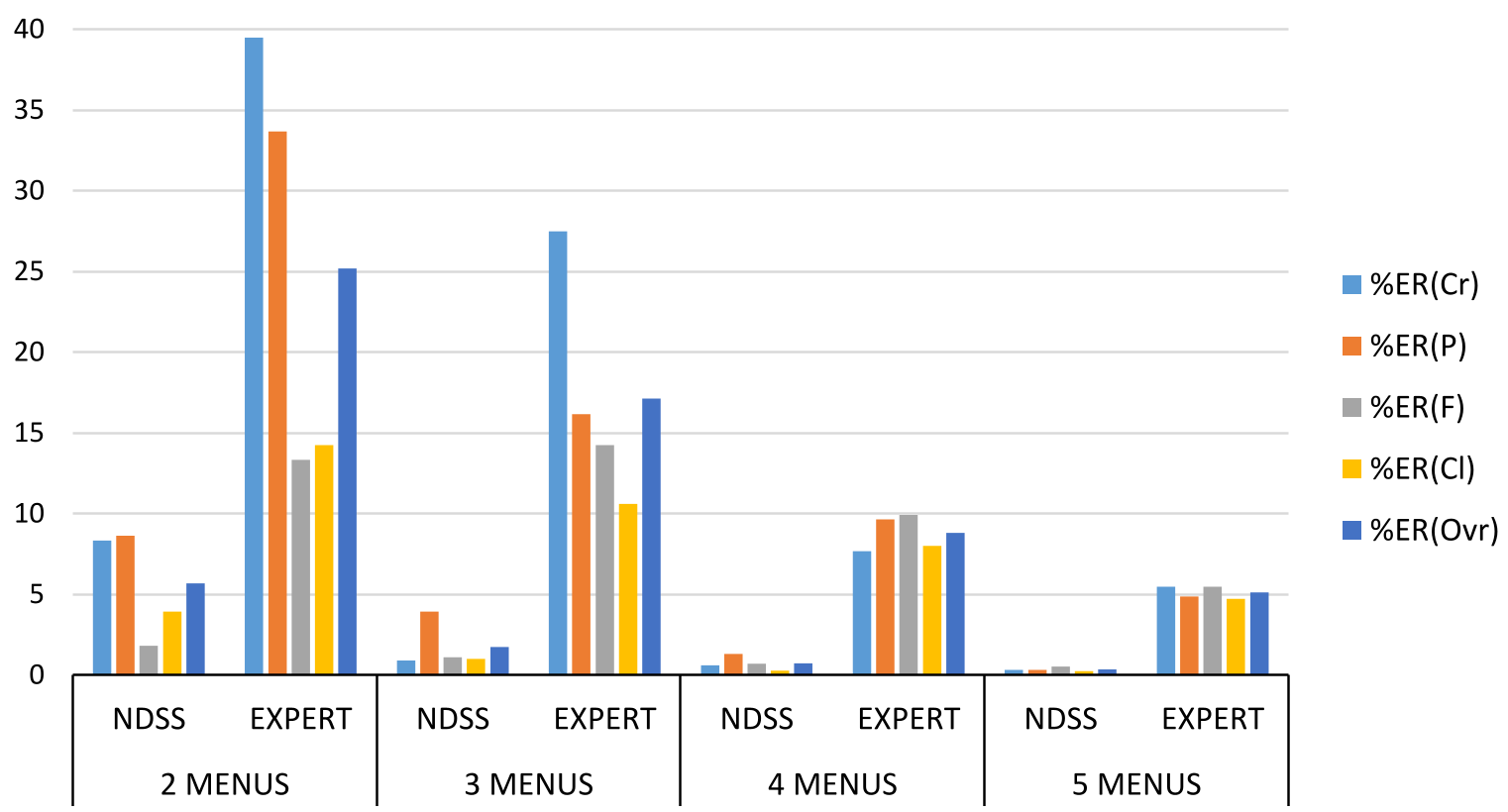 Figure 2: Average error rates showing the NDSS significantly outperforming expert nutritionists across all variables.
Critical Insight: Why This Matters
The true value of this work isn't just "better math." It provides a flexibility dial for hospital managers.
- Need to save on labor/overhead? Set the NDSS to a 2-menu limit.
- Need to prioritize high-acuity patient recovery? Set it to an 8-menu limit.
The system provides the "best possible" solution for whatever constraints the reality of the kitchen dictates.
Conclusion and Future Directions
The hybrid GA-SA model proves that metaheuristics are robust enough for clinical decision support. By moving from "standardized diets" to "optimized flexible diets," hospitals can improve patient outcomes (reducing length of stay and readmission) without blowing the budget.
The next frontier? Integrating real-time food market prices and micronutrient (vitamin/mineral) tracking into the genome of the optimizer.