
HPTSA: Orchestrating the Future of Distributed Manufacturing Scheduling
A Hybrid Pareto-Based Tabu Search for the Distributed Flexible Job Shop Scheduling Problem With E/T Criteria
This paper introduces a Hybrid Pareto-based Tabu Search Algorithm (HPTSA) to solve the multi-objective Distributed Flexible Job Shop Scheduling Problem (DFJSP). The method optimizes four conflicting objectives: makespan, maximal workload, total workload, and earliness/tardiness (E/T) criteria, achieving state-of-the-art performance on realistic industrial datasets.
TL;DR
Manufacturing is moving from single-site production to distributed networks. This paper presents HPTSA, a Hybrid Pareto-based Tabu Search Algorithm that masters the complexity of assigning jobs across multiple factories while simultaneously balancing processing time, machine workloads, and delivery deadlines (Earliness/Tardiness). By blending deep physical insights of industrial bottlenecks with advanced Meta-heuristics, HPTSA sets a new SOTA for realistic production scheduling.
Background: The Shift to Distributed Manufacturing
In the traditional Flexible Job Shop Scheduling (FJSP), the goal is simply to map jobs to machines. However, real-world giants like Baosteel operate across distributed sites. This adds a critical "Factory Selection" layer, making the optimization search space exponentially larger. The challenge isn't just "when" to process, but "where," while keeping an eye on four conflicting KPIs.
Solving the Multi-Objective Headache
The authors identified a critical limitation in existing Pareto-based methods: they often fail when handling more than three objectives due to the "curse of dimensionality" in non-dominated sorting.
1. Strategic Objective Fusion
To maintain the efficiency of Pareto-based search, the authors combined "Maximal Workload" and "Total Workload" into a single workload objective (). This allowed the algorithm to focus on three distinct dimensions:
- Efficiency: Makespan ()
- Balance: Combined Workload ()
- Economic Profit: Earliness/Tardiness Penalty ()
2. The Core Architecture: HPTSA
The algorithm employs a sophisticated "three-component vector" coding scheme (Factory, Machine Routing, and Scheduling) to represent the entire production pipeline.
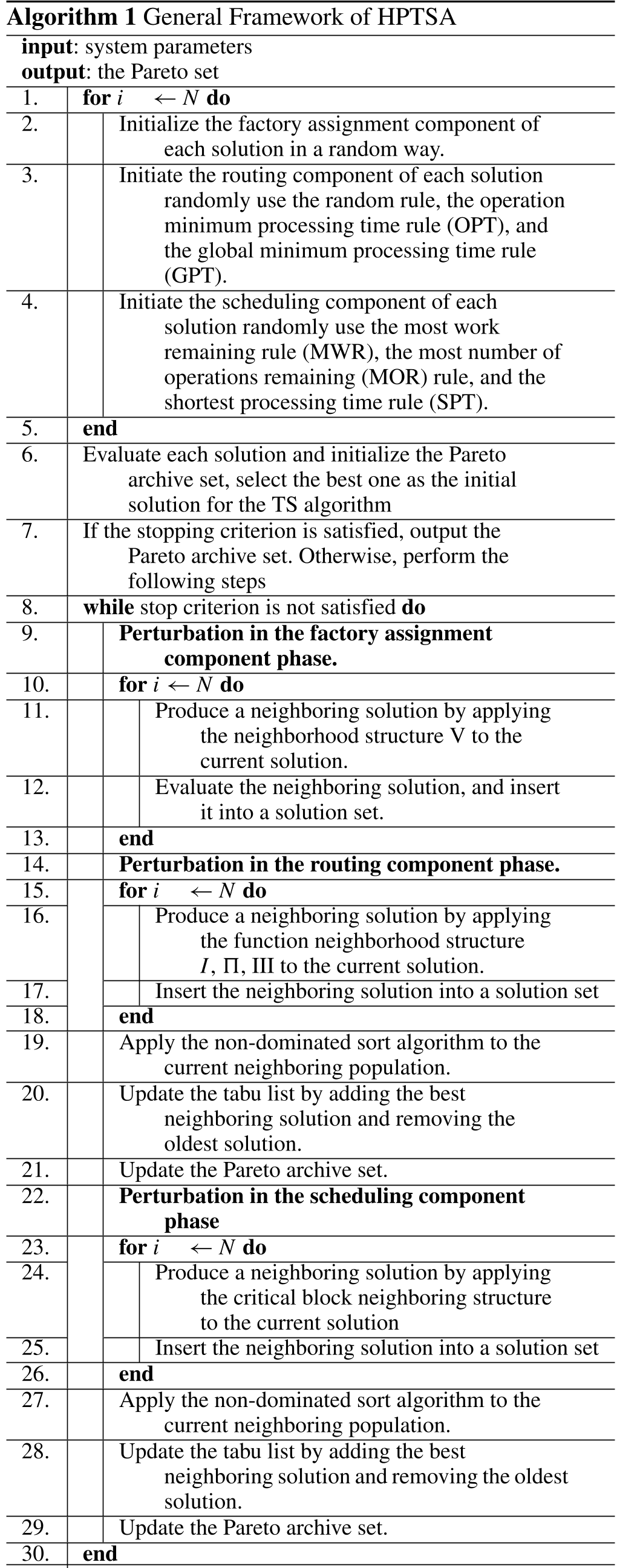
Methodology: Insights Over Brute Force
What makes HPTSA different is its Neighborhood Structures. Rather than random mutations, the algorithm uses "Surgical Strikes" on the schedule:
- Critical Path Theory: It identifies the "Critical Blocks"—the sequence of operations that directly dictate the makespan. By swapping or moving operations within these blocks, it slices through latency.
- Modified Backward Method: A brilliant "Backward" scheduling logic starts from the due date and works toward the present, ensuring jobs are completed as close to their deadlines as possible, minimizing both storage costs (earliness) and late fees (tardiness).
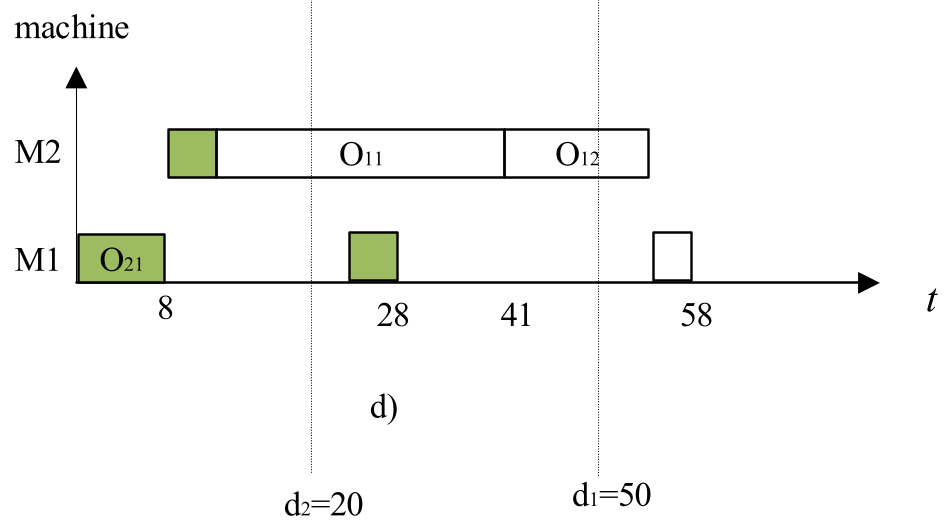 Figure: The impact of different scheduling strategies on Makespan and E/T criteria.
Experimental Results: Dominance in the Steel Industry
The authors validated HPTSA against a suite of top-tier algorithms (NSGA-II, MOEA/D, etc.) using 20 realistic instances based on data from the steelmaking industry.
- Pareto Number: HPTSA found an average of 5.6 non-dominated solutions, nearly double that of MOEA/D.
- Pareto Distance: With a distance of 0.09, HPTSA's solutions remained significantly closer to the theoretical optimal front than its competitors.
- Diversity: The LSD (Fisher’s Least Significant Difference) test confirmed that HPTSA’s performance gain is statistically significant across all problem scales (50 to 200 jobs).
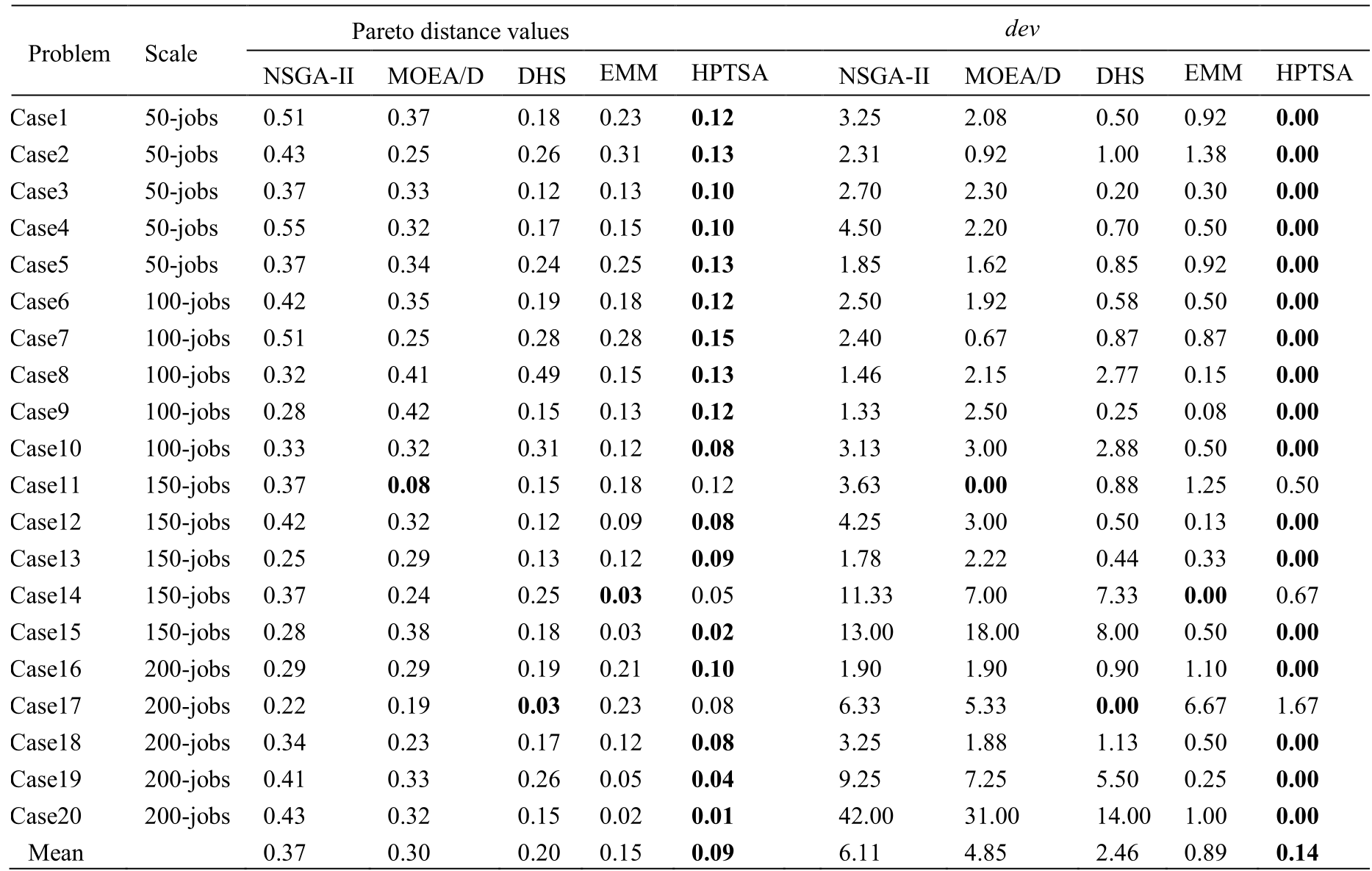 Table: Comparison of Pareto distance values across 20 realistic problems.
Critical Insight: Why it Works
The success of HPTSA lies in its Inductive Bias. By embedding the "Backward Method" into a Tabu Search, the authors effectively constrained the search to high-value areas of the solution space. Instead of the algorithm "wandering" through millions of invalid or poor schedules, the neighborhood structures guide it towards the "bottleneck" operations that actually matter.
Conclusion & Future Outlook
HPTSA proves that multi-objective optimization for distributed manufacturing isn't just about better math—it's about better problem-specific logic.
Future Work: The authors aim to integrate "Energy Consumption" as a fifth objective, reflecting the growing industry trend toward Green Manufacturing. As we move toward Industry 4.0, hybrid algorithms like HPTSA will be the brains behind the self-organizing factory.