
Efficient Social Search: Optimizing Information Discovery via Dynamic Weighted Clustering
Hybrid Search Scheme for Social Networks Supported by Dynamic Weighted Distributed Label Clustering
The paper proposes a Hybrid Search (HS) scheme for social networks supported by Dynamic Weighted Distributed Label Clustering (DW-DLC). It combines random walker and flooding mechanisms to optimize information discovery while minimizing redundant query traffic.
TL;DR
Searching for information in massive social networks often fluctuates between two extremes: inefficient random searching or network-clogging flooding. This paper introduces HS DW-DLC, a hybrid search scheme that uses a novel Dynamic Weighted Distributed Label Clustering algorithm to identify a lean group of influential nodes. By switching from a single-path walk to local flooding only when these "hub" nodes are reached, the system cuts down search delays and redundant messages, significantly reducing the "annoyance factor" of repeated queries.
Background & Motivation: The Searcher's Dilemma
In a social network modeled as a graph, finding a specific piece of information (e.g., a product recommendation or a niche expertise) is a needle-in-a-haystack problem.
- Flooding (BFS): Guaranteed to find information but creates a "message explosion," bothering users with the same query multiple times.
- Random Walker: Message-efficient but often gets lost in the graph, leading to high failure rates.
- Prior Auxiliary Structures: Methods like Connected Dominating Sets (CDS) try to create a "backbone" for searches, but they often produce too many backbone nodes, leading to excessive message overhead.
The authors' insight is simple: Not all nodes are created equal. By dynamically identifying the most representative nodes and using them as high-speed "relay stations," we can achieve high success rates without the noise of total flooding.
Methodology: The DW-DLC Engine
The core innovation is the Dynamic Weighted Distributed Label Clustering (DW-DLC). Unlike traditional DLC which uses static weights based on fixed node degrees, DW-DLC updates weights in two phases.
1. The Dynamic Weight Formula
The weight of a node is calculated not just by the degree of its neighbors, but by the degree of neighbors who are not yet clustered. This ensures that once a region is "covered," the remaining nodes adapt their priority to form fewer, more efficient clusters.
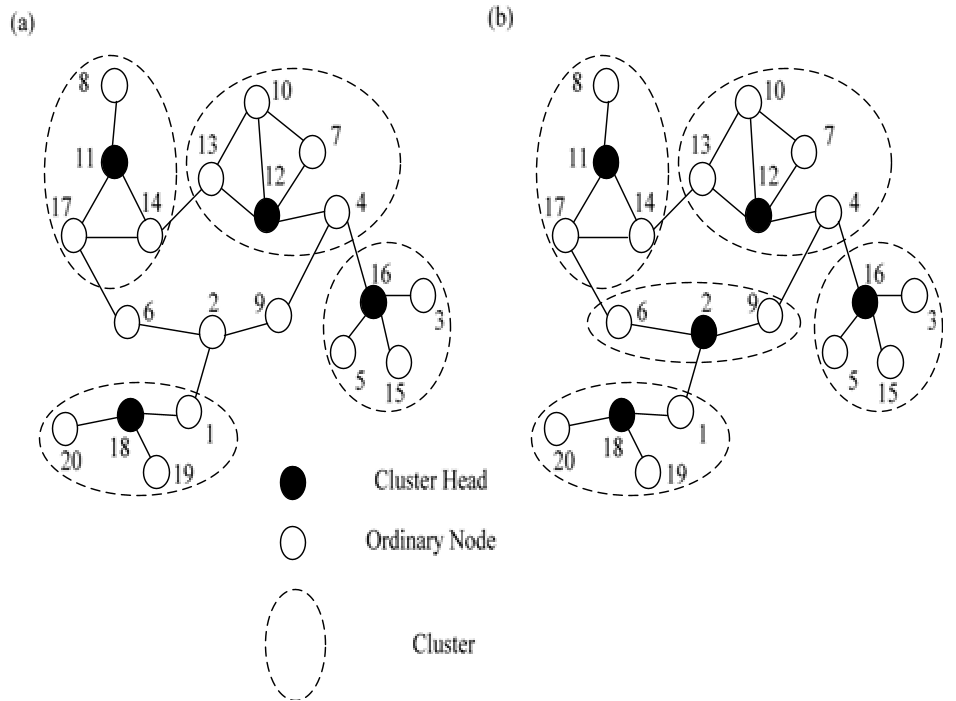 Fig 1. The two-phase evolution of DW-DLC ensuring a lean auxiliary structure.
2. The Hybrid Search (HS) Logic
- At a Normal Node: The query functions as a Random Walker (selects one neighbor).
- At a DW-DLC Member: The query switches to Flooding (broadcasts to all neighbors).
- Loop Prevention: A
DW-DLC_sentflag ensures that a clusterhead only floods a specific query once, preventing the infinite loops common in naive routing.
Experimental Validation
The authors simulated a network of 50,000 nodes following a power-law distribution (mimicking real-world social silos).
Key Breakthroughs:
- Lower Redundancy: HS DW-DLC showed the lowest ratio of repeated messages (as seen in Fig 10), which is critical for user retention in social apps.
- Efficiency: It outperformed HS-DS and HS-CDS in terms of message overhead per successful hit.
- Speed: Search delay was minimized compared to flooding, as the query propagates through optimal "shortcuts" in the network.
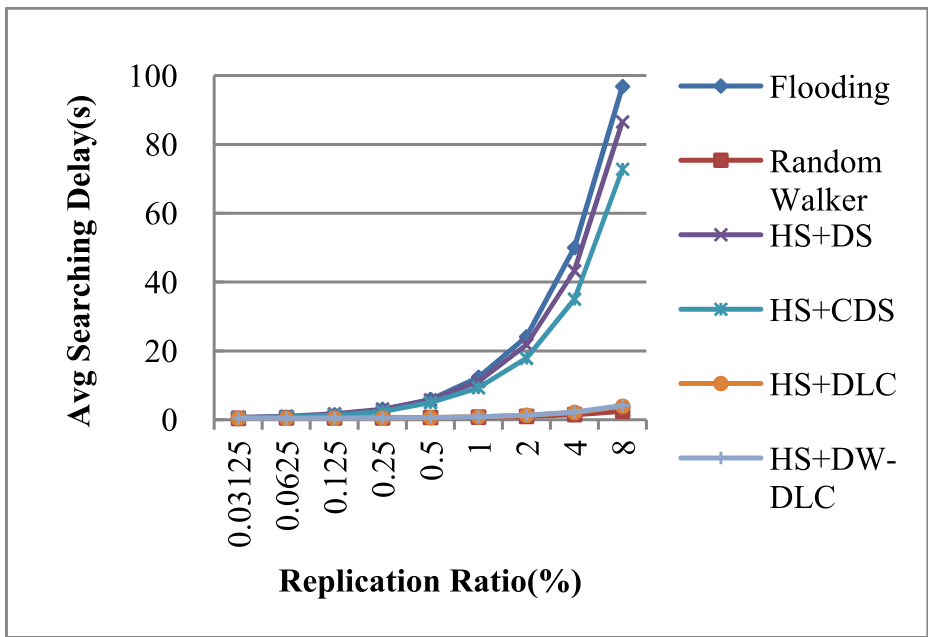 Fig 2. Average searching delay comparison across different search schemes.
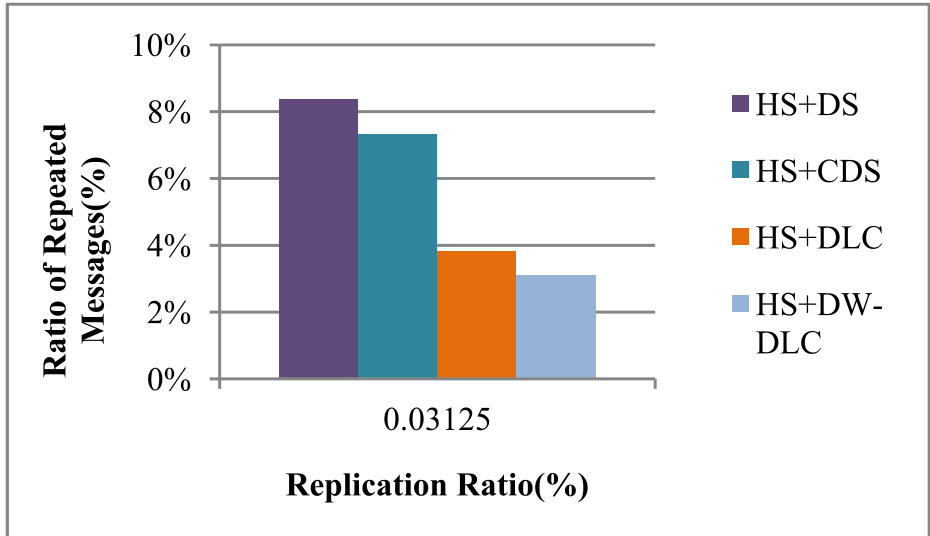 Fig 3. Ratio of repeated messages—DW-DLC significantly reduces user disturbance.
Critical Insight & Conclusion
The beauty of DW-DLC lies in its Inductive Bias: it assumes that social networks are not uniform. By favoring "representatives" through a dynamic weighting process, the algorithm naturally aligns with the 80/20 rule of social influence.
Takeaway for Practitioners: When designing decentralized search or discovery systems (including P2P or Edge networks), static clustering is rarely enough. Moving toward dynamic role determination based on the current "coverage state" of the network is the key to scaling without congestion.
Limitations: While effective, the scheme assumes a relatively stable snapshot of the network for clustering. In extremely high-churn environments (users joining/leaving every second), the overhead of re-clustering might offset the search gains.