
Hybrid Simulation in Healthcare: Bridging the Gap Between Operational Logic and Strategic Dynamics
A Review of Hybrid Simulation in Healthcare
This paper provides a systematic review of Hybrid Simulation (HS) applications in healthcare, focusing on the combination of Discrete Event Simulation (DES), System Dynamics (SD), and Agent-Based Modeling (ABM). It identifies the current SOTA in hybridization and evaluates 12 key application papers using the Brailsford et al. (2019) framework.
TL;DR
Healthcare systems are notoriously difficult to model because they require both "micro" precision (individual patient flow) and "macro" vision (population-level trends). This review examines how Hybrid Simulation (HS)—the combination of Discrete Event Simulation (DES), System Dynamics (SD), and Agent-Based Modeling (ABM)—is being used to solve this. While DES-SD is currently the "standard" hybrid, the industry is shifting toward tripartite models (DES-SD-ABM) to capture human behavior, yet real-world implementation remains a significant hurdle.
Problem & Motivation: The Single-Method Paradox
For decades, researchers have relied on Discrete Event Simulation (DES) to fix wait times in Emergency Rooms or System Dynamics (SD) to plan national health policies. However, as the authors note, "everything affects everything else" in healthcare.
The core problem is dimensionality:
- DES is great at modeling queues but ignores the "feedback loops" of the wider community.
- SD captures the "big picture" (e.g., infection spread) but treats patients as homogeneous aggregates, losing individual nuance.
- ABM captures heterogeneous behavior but can be computationally expensive and difficult to validate.
The motivation for this review is to find the "Holy Grail": a model that can handle both the strategic (long-term) and operational (daily) shifts of a healthcare system.
Methodology: Mapping the Hybrid Landscape
The authors filtered the literature down to 12 seminal application papers and applied a rigorous framework to analyze how these models are built.
The Hybridization Spectrum
Models aren't just "mixed"; they interact in specific ways:
- Sequential (H2): One model feeds data to another (e.g., SD calculates disease prevalence, which sets the arrival rate for a DES clinic model).
- Interaction (H3): Models run concurrently and exchange data at every time step.
- Integration (H4): The most complex form, where paradigms are inseparable within the code.
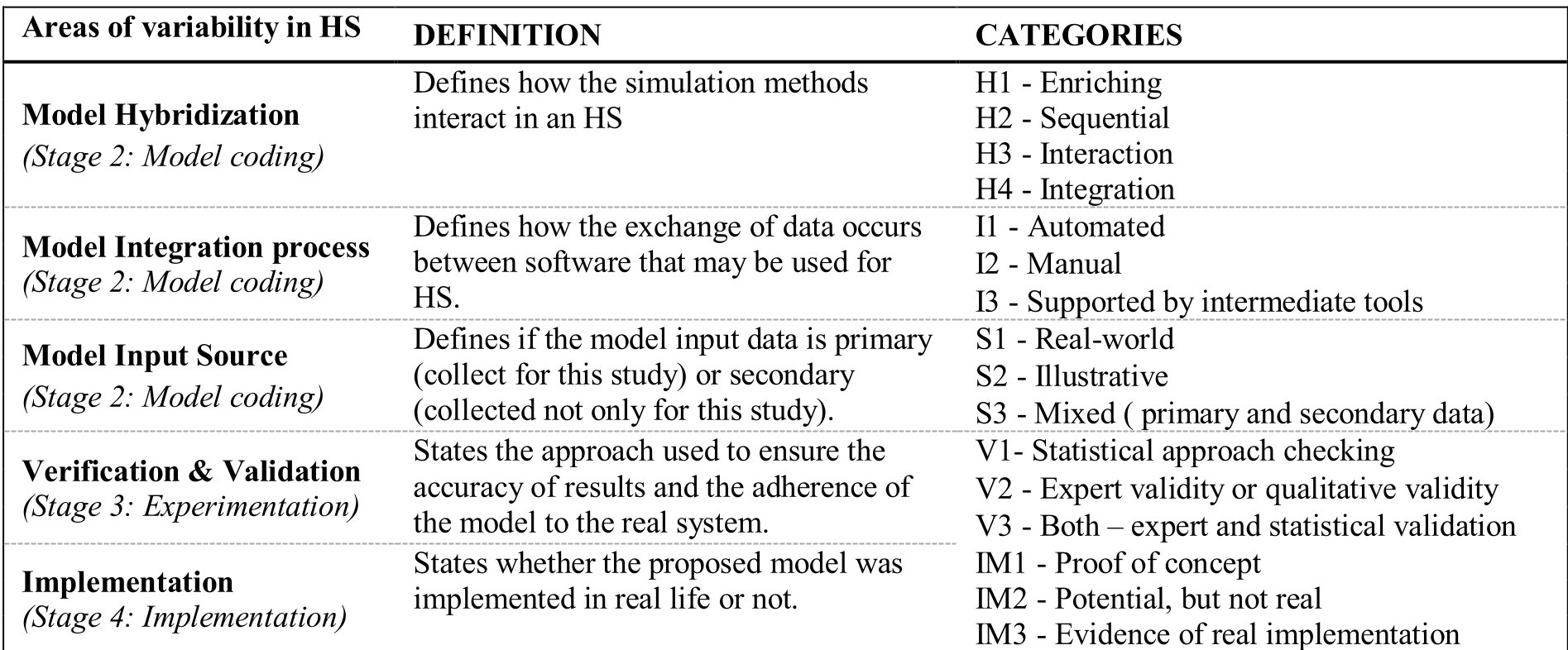
The authors found that AnyLogic has emerged as the leading software because it supports all three paradigms (DES, SD, ABM) within a single environment, facilitating "automated" integration (I1).
Key Insights from the Literature
The review highlights a clear hierarchy in current research:
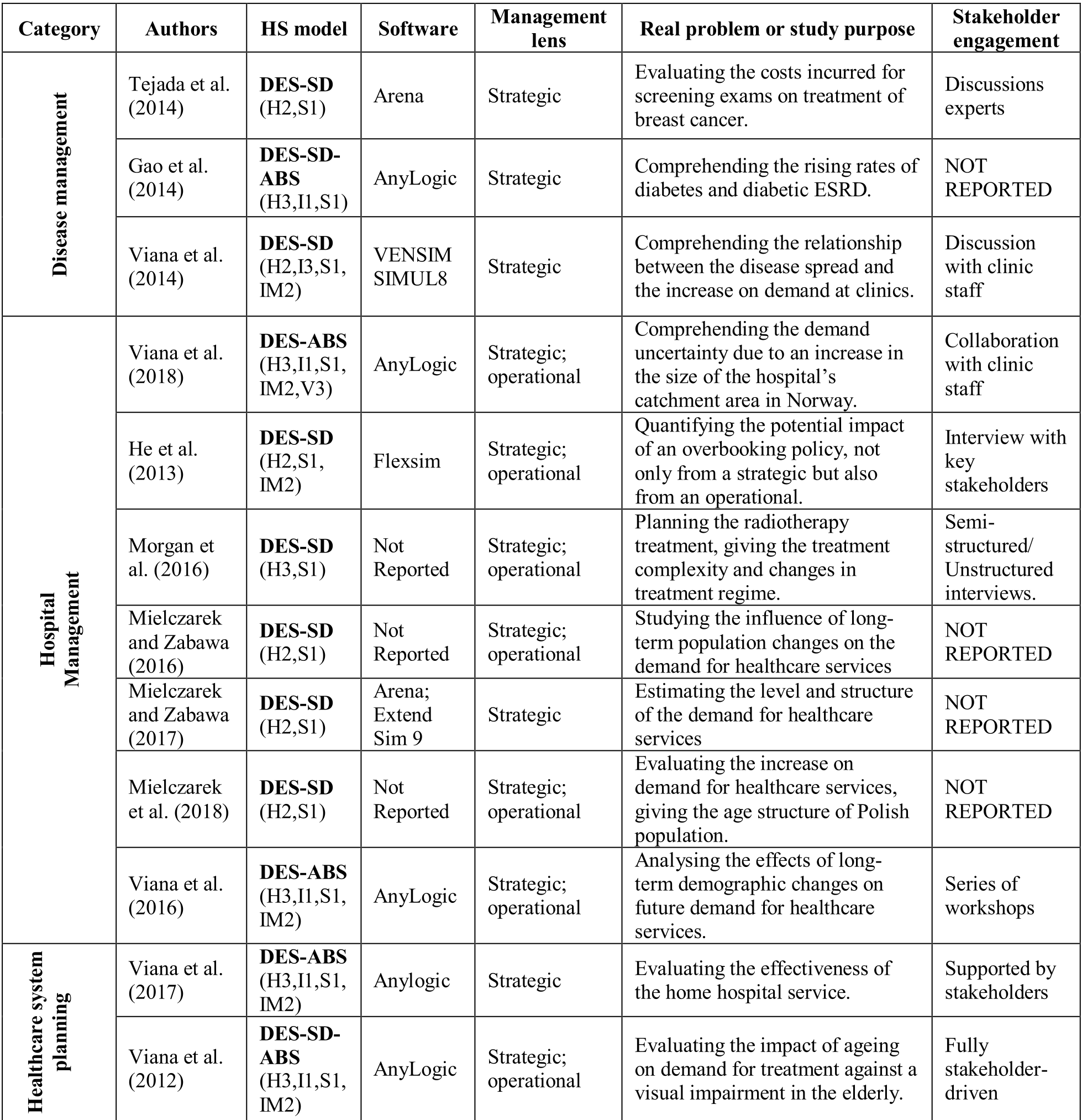
- The Dominant Duo (DES-SD): 58% of the reviewed papers used this. It is the go-to for modeling patient flow against a backdrop of population changes.
- The Behavioral Frontier (DES-ABM): Newer studies use ABM to represent patient "agents" with specific demographics and health histories moving through a DES-modeled hospital.
- The Tripartite Architecture (DES-SD-ABM): The most complex approach. For example, Gao et al. (2014) used all three to study Diabetes: SD for pre-diabetes evolution, ABM for social networks, and DES for clinical resources.
Critical Analysis: Why Aren't We Using These Models?
Despite the technical brilliance of these hybrid models, the review uncovers a sobering reality: Actual implementation in real-world clinical decision-making is almost non-existent (IM1/IM2 status).
The authors identify two main "bottlenecks":
- Verification & Validation (V&V): Validating a DES model is statistical; validating an SD model requires expert "face validity." Validating both simultaneously is a nightmare. If a hybrid model says we need 50 more beds, can we trust it if one part of the code is based on qualitative expert opinion and the other on hard data?
- Stakeholder Engagement: Many researchers develop these complex models in a vacuum. The authors argue for Soft OR (Operational Research) methods—using workshops and interviews throughout the lifecycle—to ensure clinicians actually trust and use the results.
Takeaway & Future Outlook
The value of Hybrid Simulation isn't just "more detail"—it's the ability to provide a management lens that is both strategic and operational.
Future Research Directions:
- The SD-ABM Gap: Curiously, no healthcare papers utilized the SD-ABM combination, which is ideal for studying how individual behaviors (ABM) impact system-wide health policies (SD).
- Communicable Diseases: Post-COVID, HS is perfectly positioned to model the interplay between social distancing (ABM), virus mutation (SD), and hospital capacity (DES).
Conclusion: Hybrid simulation is shifting from a theoretical curiosity to a necessary tool for managing the "Everything affects everything" reality of modern healthcare.