
The Hybrid Social Network: When Humans, Agents, and Sensors Become "Friends"
Designing and Experimenting a Hybrid Social Network Made up of People, Agents and Sensors
The paper explores the concept of "Hybrid Social Networks" where humans, software agents, and hardware sensors interact as equal social entities. It proposes a multi-agent framework to enable human-machine socialization and introduces FAMOSO, a large-scale experimental platform based on IP Multimedia Subsystem (IMS) for testing these innovative social networking paradigms.
TL;DR
In a world dominated by human-to-human social interaction, what happens if your fire sensor and your emergency responder's smartphone become "friends" on a dedicated social bus? This paper proposes a radical shift: extending the social networking paradigm to include Sensors, Logic Agents, and Simulators. It moves away from rigid, centralized monitoring systems toward a decentralized, "social" ecosystem where coordinated intelligence emerges from the collaboration of heterogeneous actors.
Problem & Motivation: Beyond "Human-Only" Socializing
Current social networking is highly effective for human connectivity (e.g., Facebook, LinkedIn), but it leaves out a massive potential resource: the Internet of Things (IoT). Most sensor networks today are closed, centralized, and lack the flexibility to "talk" to different systems.
The authors argue that we are missing out on the "Wisdom of the Crowds" effect. Just as humans collectively solve complex problems on platforms like Wikipedia or Trapster, a hybrid network where devices act like social beings could result in more robust environmental monitoring, faster disaster response, and easier system management.
Methodology: The Architecture of Hybridity
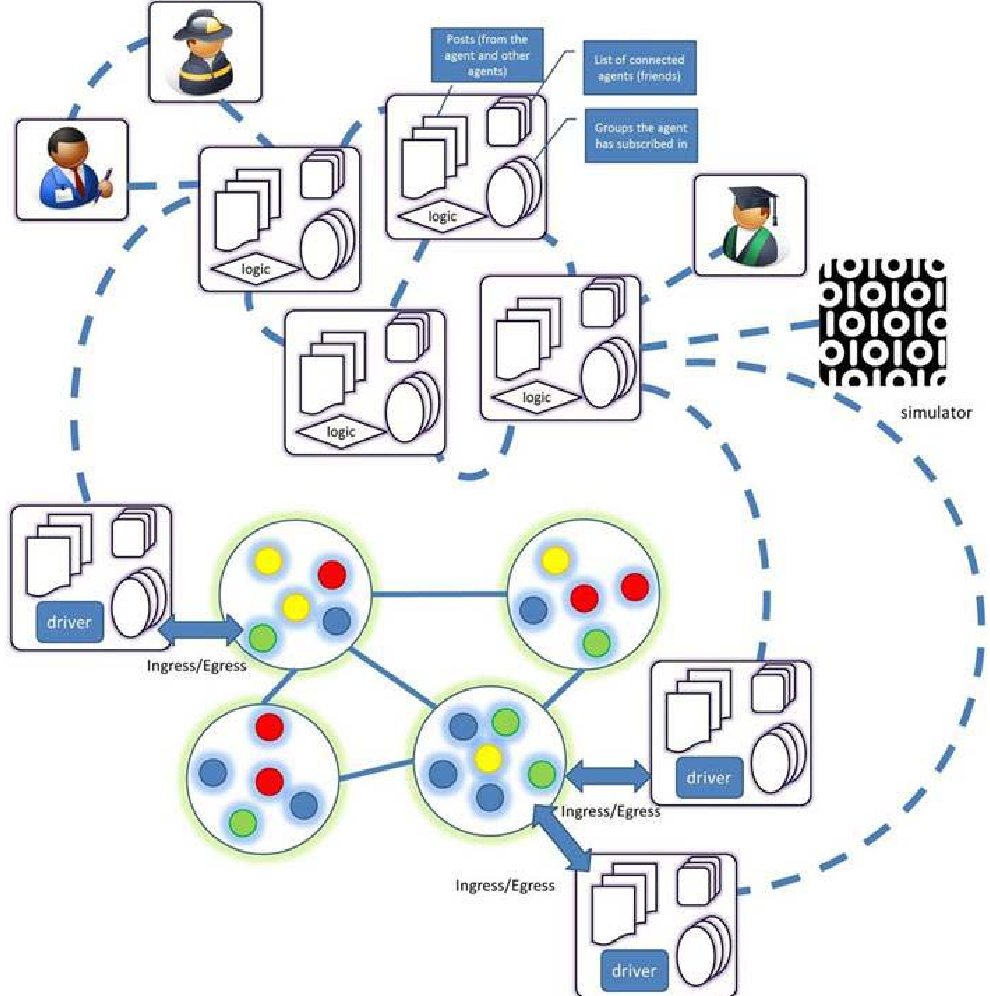
The core of the proposal is the Multi-Agent Framework. In this system, every participant—whether a human or a temperature sensor—is represented by an Agent.
1. The Four Pillars of the Network
- Human Agents: Interfaces for people to access data, introduce logic, and create links.
- Logic Agents: The "brains" of the platform. They process data from other agents to reach conclusions (e.g., a "Fire Logic Agent" combines data from temperature and smoke sensors).
- Sensor Agents: The bridge to physical hardware, capable of "poking" sensors for information and updating their "Social Wall" with status updates.
- Simulator Agents: Used for testing scenario campaigns (e.g., simulating a forest fire) within the social structure.
2. Social Interaction Mechanics
Communication happens over a Social Service Bus. Agents have profiles that list their interests and metadata (like location). They establish "friendships" based on these interests. For instance, a "Tsunami Agent" might friend a "Seismic Sensor Agent" to receive real-time earthquake alerts. To protect data, the researchers employ Ciphertext-Policy Attribute-Based Encryption (CP-ABE), ensuring that only "friends" with certain attributes can decrypt sensitive sensor data.
Experiments & Future Scaling: The FAMOSO Platform
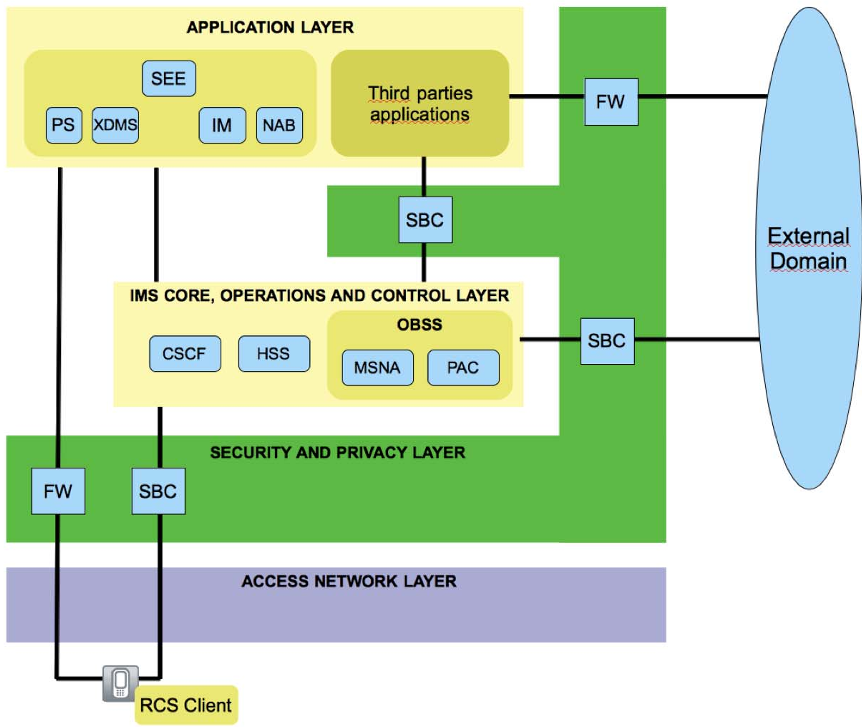
Theoretical frameworks need large-scale testing. The authors propose FAMOSO (FAcility for MObile SOcial Networking Applications), a testbed designed to support thousands of users across several European universities.
- Technology Stack: Built on the Rich Communication Suite (RCS) and IP Multimedia Subsystem (IMS), aligning the research with telecommunications industry standards.
- Cloud-Native: The infrastructure is virtualized, allowing it to scale as the student population (potentially 200,000+) grows.
Critical Analysis & Conclusion
The true value of this work lies in its Human-Centric approach to Machine Logic. By treating sensors like social agents, the system becomes more intuitive for human operators and more flexible for autonomous machine interaction.
Takeaways:
- Decentralization is Key: Moving away from centralized decision-making allows for higher resilience in disaster scenarios.
- Standards Matter: By using IMS and RCS, the researchers ensure their "social" machines can eventually live on commercial telco networks.
Limitations:
While the architecture is sound, the paper is a position paper—the focus is more on the "How" and "Why" rather than deep quantitative performance metrics from the FAMOSO deployment. Future research will need to address the latency and bandwidth costs of running a "Social Service Bus" across millions of high-frequency sensors.
Ultimately, the vision of a "Social Internet of Everything" marks a significant evolution in how we view the relationship between the physical world and digital logic.