
P-NO: Bridging Human Sociology and M2M Intelligence for Secure Social IoT
A hybrid trust management framework for a multi-service social IoT network
The paper proposes a hybrid trust management framework for Social IoT (SIoT) networks based on Probabilistic Neighbourhood Overlap (P-NO). It integrates Online Social Network (OSN) data with device interaction history to prioritize service providers, effectively handling heterogeneous multi-service environments.
TL;DR
As the Internet of Things evolves into the Social IoT (SIoT), devices must autonomously decide which service providers to trust. This paper introduces a hybrid framework that uses Probabilistic Neighbourhood Overlap (P-NO) to rank trust. By combining "human" data from Facebook with "device" interaction data, the system solves the cold-start problem and resists malicious attacks even in environments where 50% of the network is compromised.
Context: Why "Things" Need a Social Life
In a SIoT ecosystem, your car might need traffic data from nearby vehicles, or a smart sensor might need to offload data to a neighbor. But how does a device know the data provider isn't a malicious actor?
Current trust models are either Graph-based (static but sometimes inaccurate) or Interaction-based (accurate but too power-hungry for tiny sensors). The authors argue that we need a hybrid approach that treats device relationships like human friendships, leveraging the sociological concept of "tie strength."
The Problem: The "Missing Edge" Anomaly
A major contribution of this research is the critique of purely OSN-based trust. The authors found that human social ties (e.g., Facebook friends) only match physical-world interactions 40% to 55% of the time. Relying only on a user's friend list to establish device trust results in massive "missing edges"—trusted physical neighbors that are ignored because they aren't "friends" online.
Methodology: The P-NO Framework
The core innovation is the Hybrid Multi-service Social Tie-graph (HMST).
- Hybrid Input: It initializes trust using the owner's OSN (Human Intelligence) and updates it based on actual M2M service successes (Device Intelligence).
- Directed Neighbourhood Overlap: While sociology usually looks at undirected friendships, SIoT is often directed (Service User Service Provider). The authors developed a mathematical model to calculate overlap in directed graphs.
- Probabilistic Logic: Recognizing that trust isn't binary, every tie has a probability score. The P-NO formula aggregates these to find the most "central" and reliable providers.
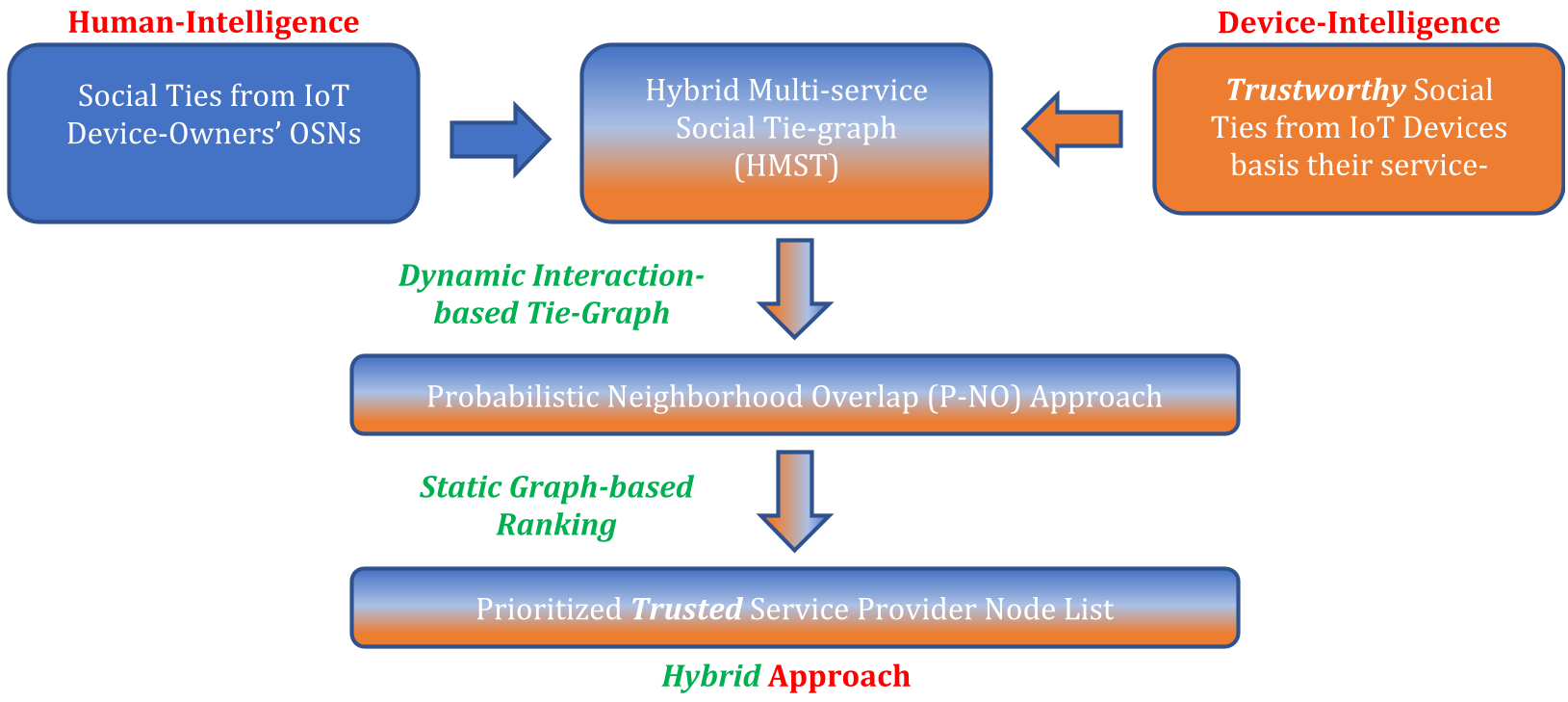 Figure 1: The Hybrid SIoT trust management framework architecture.
Resilience Against Attacks
The paper puts the P-NO framework through a "stress test" of common cybersecurity threats:
- Slandering Attacks: Malicious nodes giving false negative ratings.
- Sybil Attacks: One attacker creating multiple fake identities.
- On-Off Attacks: Nodes that behave well for a while, then turn malicious.
Because P-NO relies on the structure of the shared neighborhood, a single malicious node cannot easily swing the trust score of a target unless they are also "trusted" by many others in the cluster.
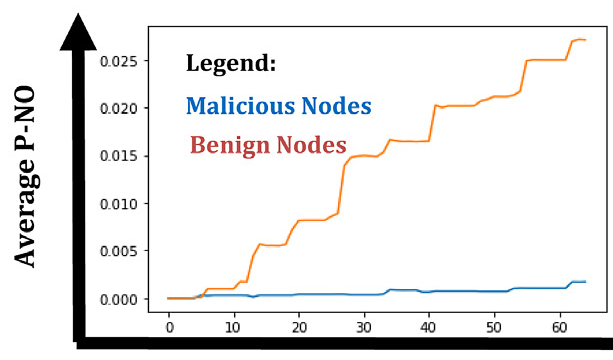 Figure 2: Performance in the upb_hyccups dataset showing the gap between Benign and Malicious node trust scores.
Depth Perspective: Why This Matters
The "Plug-and-Play" nature of this framework is its strongest asset. Most trust models force a specific algorithm on the device. Here, the authors decouple the Direct Opinion (how a device feels about an interaction) from the Trust Management (how the network propagates that feeling). This allows low-power sensors to use simple logic while high-end gateways use complex AI, all within the same ecosystem.
Conclusion
The transition from zero-trust to high-performing SIoT requires a balance. By using P-NO, this framework effectively utilizes the "wisdom of the crowd" (both human and machine) to ensure that even in hostile environments, your smart device knows exactly who its real friends are.
Future Outlook: The integration of Blockchain for "evaporating" ratings and Fog Computing for offloading P-NO calculations represents the likely next step for standardized SIoT security layers.