
Mining the Amazon: Uncovering Ecological Patterns with the Apriori Algorithm
Exploring an Ichthyoplankton Database from a Freshwater Reservoir in Legal Amazon
This study applies the Apriori algorithm for association rule mining on an ichthyoplankton database from the Lajeado reservoir in the Legal Amazon. By processing ecological data that traditional statistical methods failed to correlate, the researchers successfully identified hidden patterns between abiotic factors (water transparency, pH, depth) and biotic factors (fish larval stages).
TL;DR
Researchers at the Federal University of Tocantins have pivoted from traditional statistics to Data Mining (DM) to unlock secrets within an Amazonian ichthyoplankton database. Using the Apriori algorithm, they discovered crucial links between water transparency, depth, and fish larval development that standard statistical tests had completely missed.
Background: The Limits of Traditional Statistics
In the Legal Amazon, the construction of hydroelectric plants like the Lajeado reservoir has drastically altered aquatic environments. Monitoring fish fauna—specifically ichthyoplankton (eggs and larvae)—is vital for conservation. However, ecologists often hit a wall: traditional statistical methods are designed for confirmatory analysis (testing known hypotheses). When the relationship between bio-environmental factors is complex or unknown, these methods often return null results. This paper explores the "Exploratory" power of AI to bridge that gap.
The Methodology: From Raw Data to Knowledge
The researchers followed a rigorous four-stage pipeline:
- Data Integration & Cleaning: Merging biotic (larvae counts) and abiotic (pH, Temp, Conductivity) spreadsheets while handling missing values and outliers.
- Feature Selection: Using the CfsSubsetEval algorithm, they reduced 33 original attributes down to 10 essential ones, ensuring the model focused on the most "merit-heavy" predictors.
- The Apriori Engine: Implementing the seminal Apriori algorithm to find frequent itemsets. Unlike regression, which looks for global trends, Apriori looks for "If-Then" rules (Association Rules).
- Expert Validation: Rules were filtered not just by math (Support/Confidence) but by their semantic meaning to ichthyology experts.
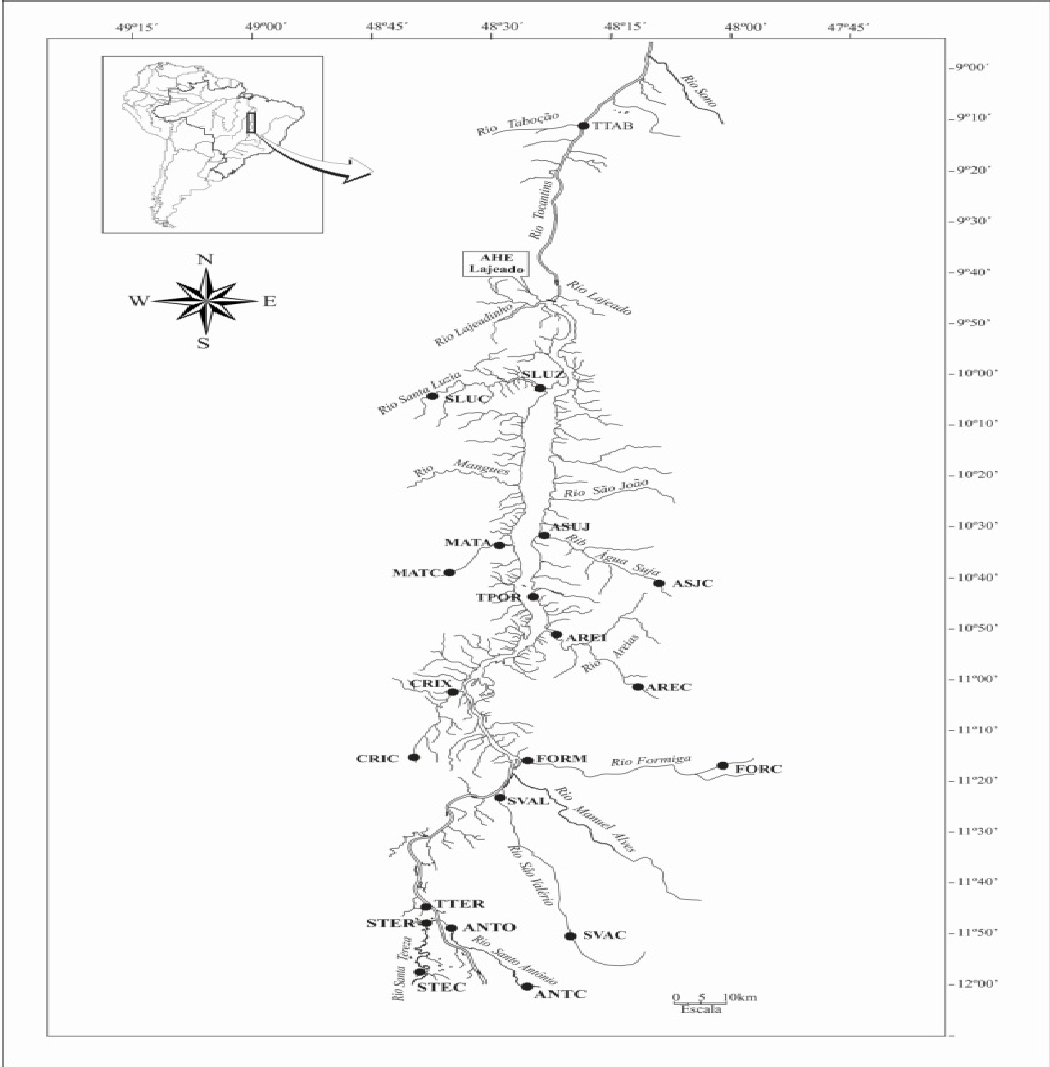 Figure 1: The study area at the Lajeado reservoir, Tocantins River.
Key Insights: The Hidden Rules of Spawning
The core of the discovery lay in the relationship between the larval stage and its environment. While the top 10 general rules focused on the inter-dependency of abiotic factors (e.g., pH, dissolved oxygen, and transparency), rules 17 and 22 provided the "Eureka" moment for biologists.
Significant Association Rules:
- Rule 17:
transparency=6 AND stage=pre ==> depth=7(Confidence: 0.99) - Rule 22:
depth=7 AND stage=pre ==> transparency=6(Confidence: 0.96)
These rules suggest that larvae in the pre-flexion stage are highly sensitive to specific combinations of depth and water clarity. In a reservoir environment where dam operations frequently change water levels and turbidity, these rules help identify exactly which habitats are critical spawning grounds.
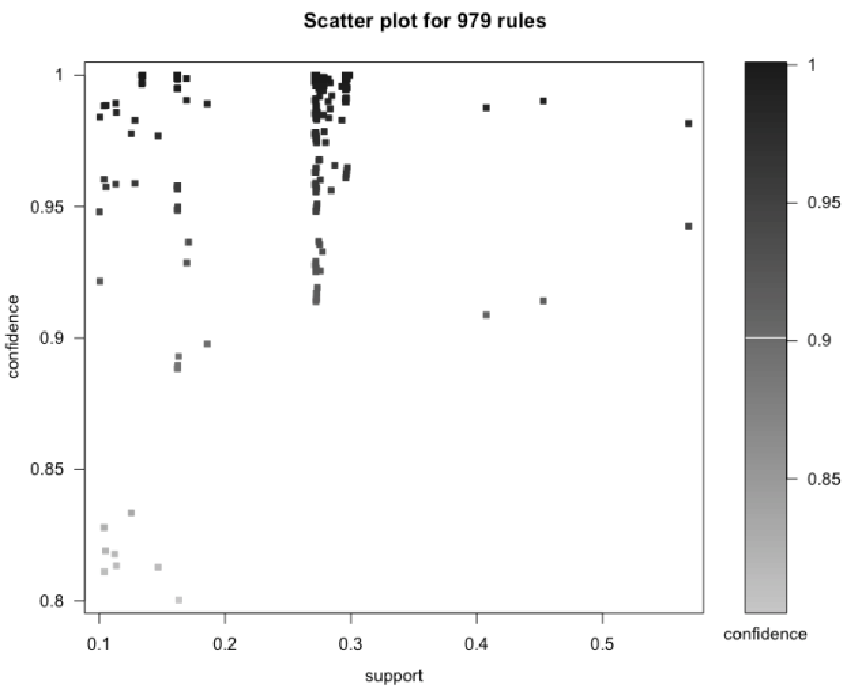 Graph 1 & 2: Distribution of association rules based on Support, Confidence, and Lift.
Critical Analysis & Conclusion
Why it Matters
The "value-add" of this research isn't just a slightly better accuracy score—it's the validation of a methodology. By proving that data mining can find patterns that statistics cannot, the authors open the door for more robust environmental impact assessments (EIA).
Limitations
- Discretization Bias: The Apriori algorithm requires nominal data, meaning continuous variables (like temperature) had to be "binned." The choice of these bins can significantly influence the resulting rules.
- Software Gaps: The authors noted that current ecological software is ill-equipped for these tasks, leading them to develop custom tools for future work.
The Takeaway
For data scientists and ecologists alike, this paper serves as a case study in Hybrid Research. Don't wait for a hypothesis to test; use data mining to find the hypothesis, then use domain expertise to validate it. This approach is essential for protecting complex, threatened ecosystems like the Amazon.