
PMACO & IMOACO: Redefining Viral Marketing with Ant Colony Optimization and Negative Influence
Identifying influential nodes based on ant colony optimization to maximize profit in social networks
The paper proposes two novel Ant Colony Optimization (ACO) based algorithms, PMACO and IMOACO, designed to identify the most influential nodes in social networks for profit maximization. By constructing an influence graph that accounts for both positive and negative user interactions, the methods outperform traditional greedy-based SOTA approaches like CELF and Simpath in finding high-value "seed" users.
TL;DR
Researchers have developed a pair of algorithms, PMACO and IMOACO, that use the collective intelligence of "virtual ants" to find the most profitable users in a social network. Unlike previous models that only look at popularity, this approach accounts for the "haters" (negative influence) and ensures selected influencers aren't just redundant clones of one another (similarity reduction).
Academic Positioning: This work sits at the intersection of Swarm Intelligence and Viral Marketing, moving beyond the monotonic submodular assumptions of early greedy algorithms to a more nuanced, multi-objective optimization framework.
The "Blind Spot" in Influence Maximization
Most SOTA methods for Influence Maximization (IM) operate under a sunny-day scenario: they assume that if User A follows User B, for example, User B will always have a positive impact. In reality, social networks are rife with negative influence (distrust, block lists, and toxic interactions).
Furthermore, the "Value for Money" problem is often ignored. Companies have finite budgets; picking the three "most influential" people is useless if they all influence the same small circle of friends. This Redundancy Penalty is what the authors aim to solve.
Methodology: The Ant's Strategy
The authors propose a multi-stage pipeline that transforms raw social data into a profit-generating machine.
1. The Influence Graph (Beyond Simple Links)
The influence weight isn't just a 0 or 1. It’s a specialized metric:
- +1 for trust lists.
- -1 for block lists.
- A specific emotion-based score derived from comment ratings (using a sigmoid-like function ).
2. Similarity and Diversity
To prevent redundancy, the authors define a Semi-Local Weighted Similarity. If two nodes share too many first and second-order neighbors, the algorithm penalizes selecting both. This ensures the chosen "seed set" is geographically spread across the social manifold.
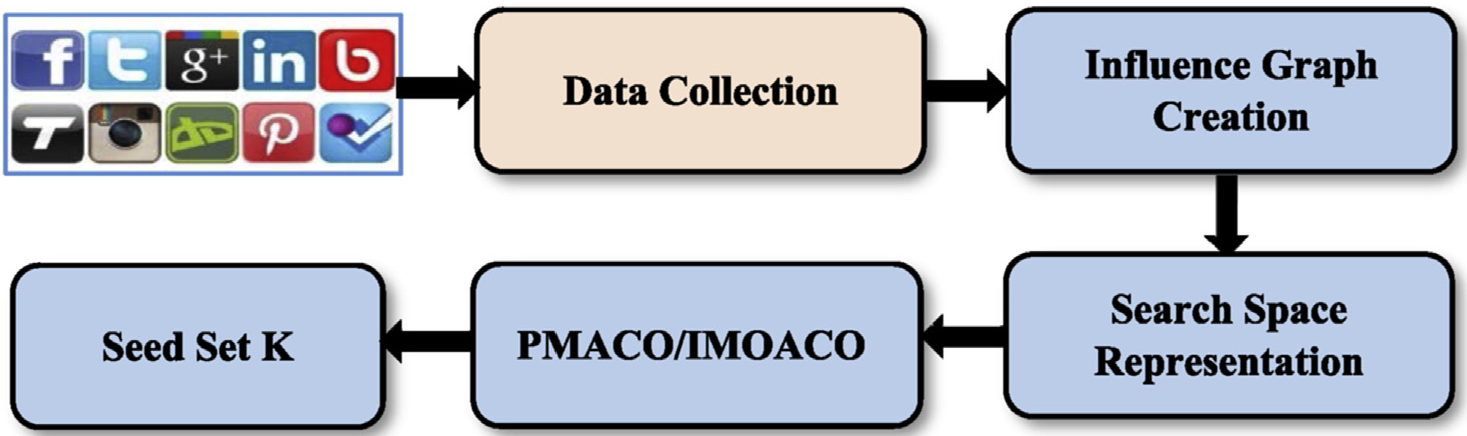 Figure 1: The framework showing the transition from data collection to the ACO search space.
3. The ACO Engine
The "Ants" move through a fully connected search space. Their state transition is governed by a balance of:
- Pheromone (): Learned wisdom from previous successful seed sets.
- Profit (): The expected revenue minus the cost of activation.
- Inverse Similarity (): The drive to find "unique" influencers.
Experimental Battleground
The researchers tested their models against heavyweights like CELF, Simpath, and LDAG across three datasets, notably the Extended Epinions set (15,112 nodes).
SOTA Results
The comparison results are striking. As the seed set size () increases, the profit gap between IMOACO and traditional methods like High Weighted Degree (HWD) or Weighted Closeness (WC) widens significantly.
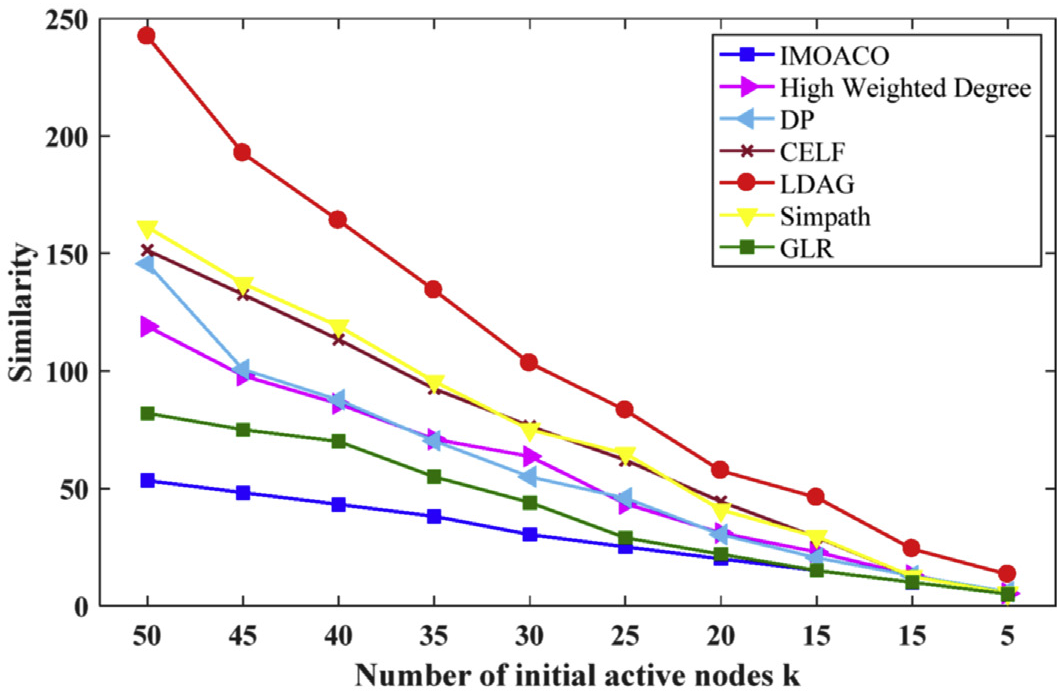 Figure 2: Performance metrics on the Epinions dataset showing IMOACO leading in profit and maintaining low similarity.
Key Findings:
- Profitability: PMACO/IMOACO consistently found seed sets that yielded higher net returns after accounting for activation costs.
- Coverage: By minimizing similarity, the IMOACO variation achieved a broader "Influence Spread" under the Independent Cascade (IC) model compared to its single-objective counterpart (PMACO).
Critical Insight & Future Outlook
The genius of this paper lies in the Search Space Representation. Instead of walking the actual social graph—which can be sparse and restrictive—the ants walk a "Virtual Graph" where edges represent potential similarity. This allows the ACO to perform a global search that greedy algorithms typically miss due to their local-optima traps.
Limitations: While faster than the standard CELF, the approach still has similarity pre-computation. For networks with millions of nodes, this would require a distributed computing approach or a more sparse similarity approximation.
Takeaway for the Industry: Influencer marketing should focus on "Network Diversity" as much as "Individual Reach." Don't just buy the loudest voices; buy the most independent loudest voices.