
Deciphering the DNA of Knowledge Sharing: Givers, Takers, and Matchers in ESNs
“Thanks for sharing”—Identifying users’ roles based on knowledge contribution in Enterprise Social Networks
This paper introduces a three-step methodological approach (Message Classification, Role Identification, and Characterization) to classify Enterprise Social Network (ESN) users based on their knowledge contribution. By applying SVM-based text analysis and Social Network Analysis (SNA) to a consulting firm's data, it identifies three distinct user roles: Givers, Takers, and Matchers.
TL;DR
In the digital hallways of Enterprise Social Networks (ESNs), not all activity is created equal. This research moves beyond simple post counts to analyze the content of messages using Machine Learning. By categorizing users into Givers, Takers, and Matchers, the study reveals that "Matchers"—those who both ask and answer—are the true lifeblood of organizational knowledge ecosystems, holding the network together through high reciprocity and structural centrality.
Problem & Motivation: Beyond the Superficial "Like"
Most companies implement ESNs like Yammer or Slack to foster innovation, but they struggle to measure if actual knowledge exchange is happening. Prior research has focused heavily on Social Network Analysis (SNA)—looking at who follows whom—or Activity Metrics—who posts the most.
However, a user with 100 posts might just be asking 100 questions (a "Taker") without adding a single bit of value. Conversely, a "Giver" might provide expert answers but fail to engage the community. The authors argue that to truly understand ESN value, we must look inside the messages to distinguish between Knowledge Sharing and Knowledge Seeking.
Methodology: A Three-Step Intelligence Pipeline
The authors propose a rigorous framework to move from raw text to behavioral roles:
- Message Classification: Using Support Vector Machines (SVM), the system separates "Professional" from "Non-professional" talk, then sub-classifies professional messages into "Knowledge Sharing" (providing links, advice, documents) or "Knowledge Seeking" (asking for help/info).
- Role Identification: Using a probability formula (), they calculate a user's net contribution.
- Givers: High share-to-seek ratio.
- Takers: High seek-to-share ratio.
- Matchers: Balanced exchange within one standard deviation of the mean.
- Characterization: They map these roles back to SNA metrics (Degree, Betweenness, and Eigenvector centrality) to see where these people sit in the "social graph."
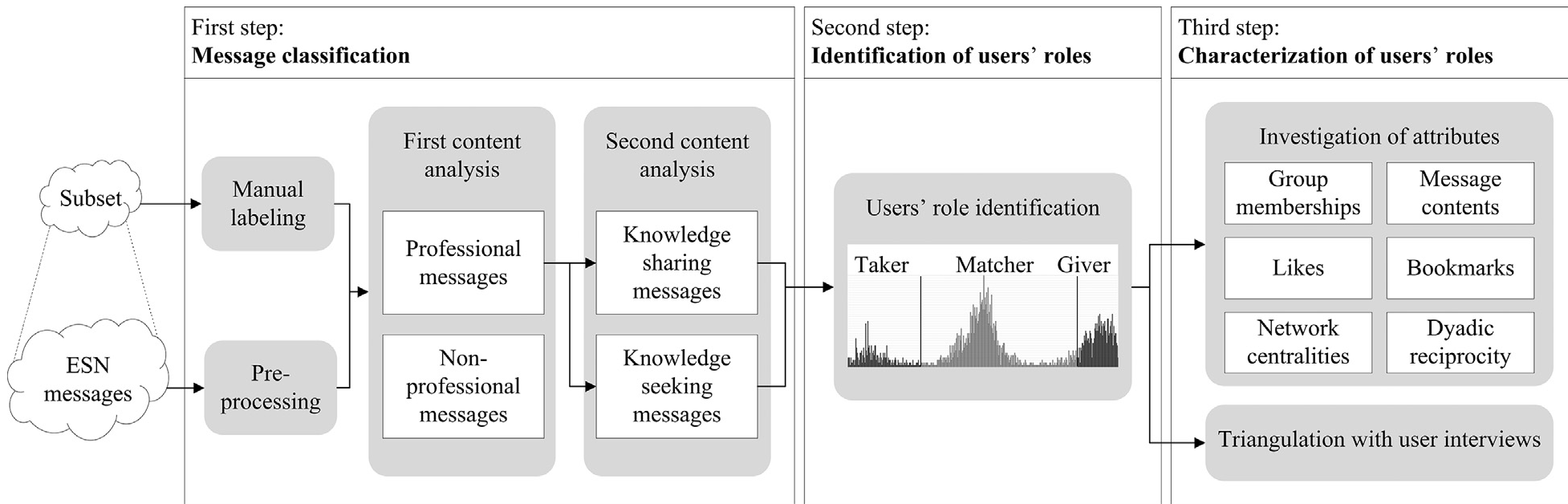 Figure 1: The Methodological Approach for Identifying User Roles.
Key Insights: The Power of the Matcher
The study applied this to a multinational consulting company's Yammer data. The results were telling:
1. The Survival of the Reciprocal
Matchers are the most important nodes. They aren't just the most active (averaging 60 sent messages vs. 5-6 for givers/takers); they are also the most technically central. Their Betweenness Centrality—the measure of how often they act as a "bridge" between different groups—is significantly higher than others.
2. The Content Matters
Knowledge-sharing messages are generally longer and contain more specific terms (e.g., "ishyperlink", "istag"), whereas seeking messages are shorter and dominated by "questionmark."
3. The Lurker Problem
Despite the benefits of exchange, the "90-9-1" rule still haunts the enterprise. 63.2% of users were "Lurkers" who never posted a single message. This suggests a massive untapped potential for organizations to convert observers into participants.
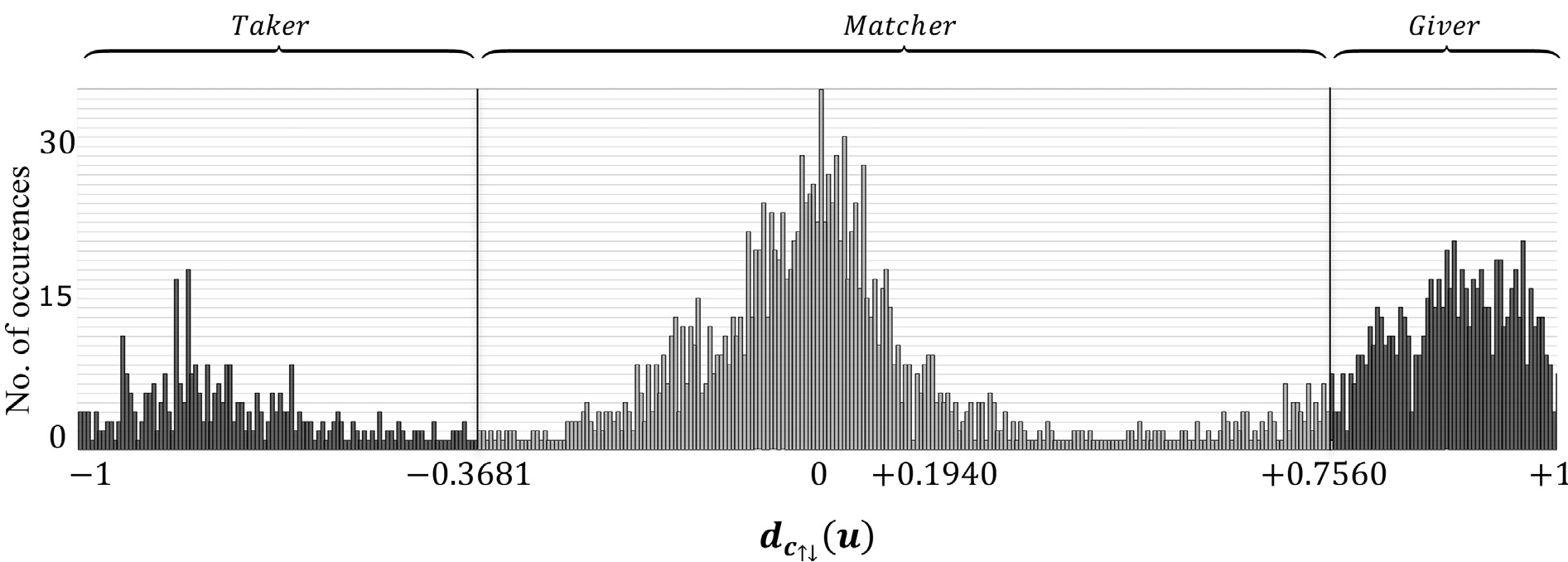 Figure 2: Distribution of users based on their knowledge contribution index.
Critical Analysis & Conclusion
The value of this study lies in its content-first philosophy. It proves that structural connectivity (who you know) is highly correlated with contribution type (what you give).
Takeaway for Managers: Don't just reward the "Top Posters." You need to identify your Matchers. They are the individuals who sustain the network by ensuring that the "Takers" get answers while the "Givers" feel their contributions are part of a reciprocal community.
Limitations: The study is based on a single consulting firm. Consulting cultures are inherently "share-heavy." Future research should examine if these roles hold true in more competitive or siloed industries (like Manufacturing or Finance).
Future Outlook: As LLMs (Large Language Models) become integrated into ESNs, we might see "AI Matchers" that automatically bridge the gap between seekers and givers, further evolving the roles defined in this seminal work.