
The Feedback Loop of Exclusion: How Identity-Based Learning Segregates Social Networks
Identity-based learning and segregation in social networks under different institutional environments
This paper presents an identity-based learning model to explain the evolution of segregation in social networks across different institutional environments. By employing Monte Carlo simulations, the authors demonstrate how a "mutual learning multiplier" transforms initial attention to identity into high levels of structural segregation, achieving SOTA-level insights into the endogenous micro-mechanisms of network formation.
TL;DR
Why do some organizations become silos even when their members start with relatively open minds? This paper reveals that the culprit isn't just initial prejudice, but a Mutual Learning Multiplier. Through a sophisticated identity-based learning model, Rhee and Kim demonstrate how small, repeated experiences of "successful" homophily (connecting with similar others) create a feedback loop that rapidly segregates networks, even in environments intended to be inclusive.
Problem & Motivation: Beyond Static Structures
Traditional social network analysis often suffers from two blinkered views:
- Institutional Staticism: Focusing on how external factors (like culture or government) define network structure, but ignoring the process of change.
- Evolutionary Agnosticism: Tracking network changes over time but ignoring how the environment guides those changes.
The authors argue that we must bridge these views by looking at the actor as an agent. Actors don't just follow rules; they learn from every tie they initiate or reject. The core problem is understanding the micro-mechanisms that link institutional pressure to long-term structural segregation.
Methodology: The Identity-Based Learning Model
The authors propose a model centered on Attention to Identity (p). This parameter dictates the probability of an actor seeking out a "same-subgroup" tie versus a "cross-subgroup" tie.
1. The Mechanics of a Tie
- Initiation: An actor chooses a target. If is high, they prioritize the same subgroup. If is low, they choose more randomly.
- Reception: The receiver uses their own value to decide whether to accept or reject the tie.
2. The Mutual Learning Multiplier
This is the heart of the paper. Learning is modeled as a stochastic update:
- Success in similarity: If a homophilous tie is successful, increases.
- Success in difference: If a cross-subgroup tie is successful, decreases.
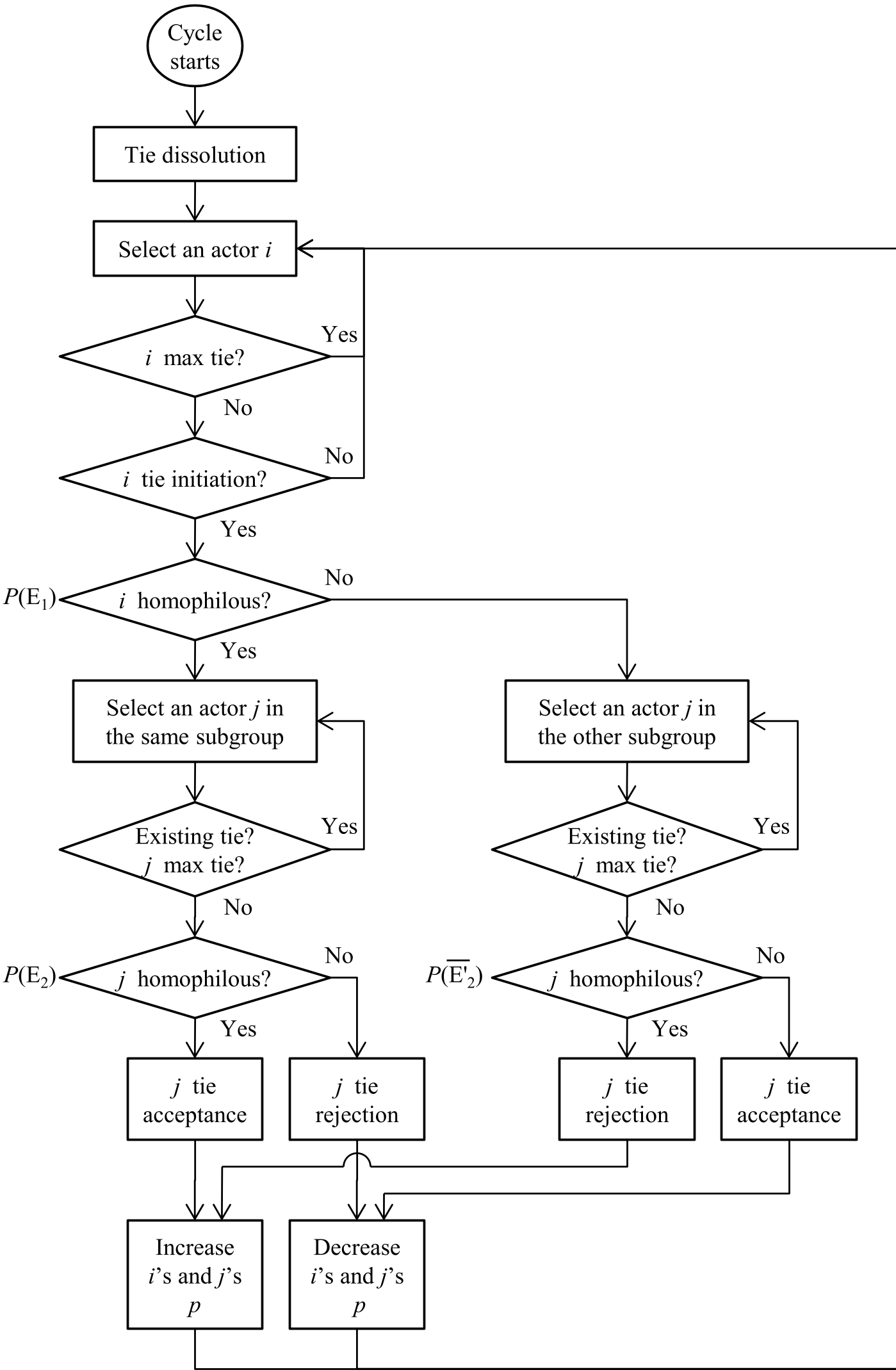 Fig 1: The flow of a single networking cycle where experience dictates rule-updating.
Experiments & Results: The Disproportionality of Learning
The authors simulated three systems representing different institutional environments (Low, Medium, and High initial identity attention).
Key Findings:
- Accelerated Segregation: Systems that started with low attention to identity (System I) actually saw the most dramatic growth in segregation. Because these actors had "more to learn," every homophilous success boosted their identity attention significantly.
- The Persistence of Homophily: Even when actors were programmed to seek "structural holes" (bridging ties), the identity-based learning eventually overwhelmed the desire for diversity, unless the attention to structural holes was exceptionally high and constant.
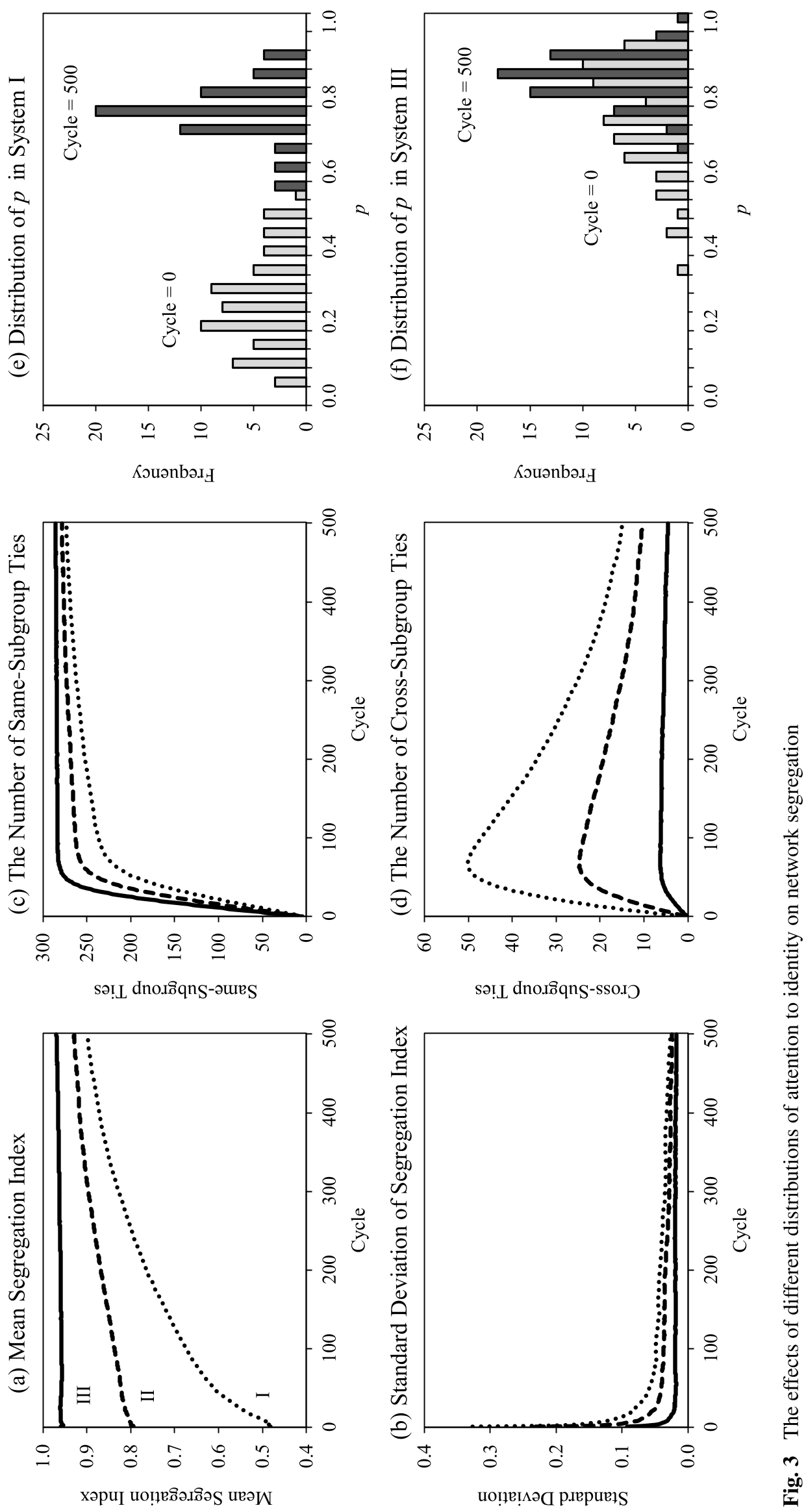 Fig 2: Comparison of segregation growth across different initial attention distributions. Note the convergence of all systems toward high segregation.
The Effect of System Size and Heterogeneity
- Small Groups (): Segregation is naturally limited because actors "run out" of similar people to connect with, forcing them to form cross-subgroup ties to reach their tie capacity.
- Minority Constraints: In highly skewed groups (e.g., 10:90 ratio), the minority group is forced to integrate because they cannot fulfill their social needs within their small circle—unless they choose to remain under-connected.
Critical Analysis & Conclusion
This work provides a sobering insight for organizational leaders: Inactivity is a choice for segregation. Because the learning multiplier favors homophily (it's "easier" to successfully connect with similar others), networks will naturally drift toward silos.
Strategic Takeaways:
- Context Matters: A "color-blind" or "gender-neutral" policy at the start is not enough. The rate of learning from early interactions will determine the final structure.
- Intervention: Managers must proactively redirect attention toward non-identity features (e.g., shared task goals) to counteract the natural feedback loop of identity-based segregation.
Limitations: The model assumes a single identity dimension. In the real world, "Intersectionality" (overlapping identities like being a 'female engineer' or 'senior minority') complicates the learning process. Future research should explore how competing identities might actually disrupt the segregation multiplier.