
Honoring the Architects of Engineering Education: Insights from the 2017 IEEE EAB Awards
16815_2017 IEEE Educational Activities Board Awards.
The article documents the 2017 IEEE Educational Activities Board (EAB) Awards, recognizing distinguished individuals and organizations for their contributions to engineering education, accreditation, and technical innovation. Key honorees include Sid Suryanarayanan, Asad M. Madni, and the IEEE Communications Society for their roles in curriculum design, sensor technology, and professional development.
TL;DR
The 2017 IEEE Educational Activities Board (EAB) Awards celebrated a diverse group of visionaries who have redefined the boundaries of engineering education and technical excellence. From pioneering MEMS sensor technology for automotive safety to spearheading global STEM initiatives in Jordan and the US, these awards highlight the essential role of pedagogy and accreditation in sustaining the engineering profession.
Background & Motivation: Beyond the Research Pressure
In the modern academic landscape, young professors often face intense pressure to prioritize "publish or perish" over "teaching and mentoring." The IEEE EAB Awards serve as a vital counterbalance, reaffirming that excellence in education is the bedrock of technical progress. The 2017 cohort demonstrates that technical innovation (e.g., Asad Madni’s work on the Hubble Space Telescope) and educational leadership (e.g., Sid Suryanarayanan’s curriculum design) are two sides of the same coin.
Technical Excellence: The Case of Intelligent Micro-Sensors
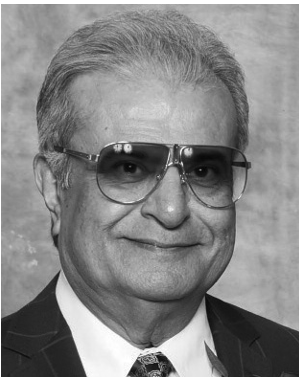
One of the most profound technical highlights is the recognition of Asad M. Madni with the Vladimir Karapetoff Award. His work exemplifies the journey from theoretical innovation to global industrial impact.
The Impact of MEMS GyroChip Technology
Dr. Madni led the development of the MEMS GyroChip, which transitioned from sophisticated aerospace applications to a fundamental safety component in passenger vehicles.
- The Problem: Early stability control systems were bulky and unreliable.
- The Insight: By applying intelligent micro-sensor designs, Madni created a solution for electronic stability control and rollover protection now ubiquitous in the automotive industry.
- Broad Achievement: His career spans from providing the Hubble Space Telescope with unprecedented star-selection stability to pioneering RF systems that enhanced US tri-service combat readiness.
Methodology of Education: Scaling Professional Development
The IEEE Communications Society (ComSoc) was recognized for its strategic approach to professional development. As engineering fields evolve toward 5G, SDN, and IoT, ComSoc has implemented a "Lifelong Learning" framework:
- Certification: The Wireless Communication Engineering Technologies (WCET) program provides standardized verification for practitioners.
- Global Outreach: The i-YES initiative specifically targets young engineers and scientists at flagship conferences.
- Accreditation Leadership: Leading the campaign for new ABET criteria for telecommunications engineering, ensuring that academic standards keep pace with the rapid deployment of 5G and fiber optics.
Field Impact: STEM Outreach and Accreditation
Engineering is increasingly global and social. The awards highlighted significant "boots-on-the-ground" efforts:
- Informal Education: Gil Sik Lee’s IntelliChoice program provides math tutoring to underserved communities, including refugee camps and Native American reservations.
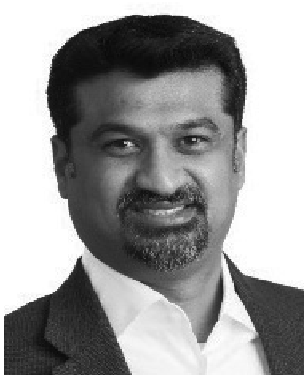
- Global STEM Leadership: Ezaldeen Jamel Abd Alhalem Najjar’s work in Jordan as a TISP (Teacher In-Service Program) champion reached hundreds of students and teachers, effectively localizing IEEE's global educational mission.
- Accreditation Rigor: Martin A. Reed and Sarah A. Rajala’s efforts in ABET accreditation ensure that engineering degrees maintain a consistent quality standard, even through international visits to regions like Peru.
Critical Insight: The "Human Infrastructure" of Innovation
The 2017 EAB Awards remind us that behind every SOTA (State-of-the-Art) model or hardware breakthrough is a lineage of educators and mentors.
- Takeaway: We must value the process of engineering—mentorship, textbook authorship (e.g., Sanjit K. Mitra’s pioneering signal processing books), and curriculum standardization—as much as the product.
- Future Outlook: As we move deeper into the "Internet-of-Everything" era, the challenge will be to adapt these educational frameworks to keep up with AI and autonomous systems, ensuring that future engineers possess both technical depth and a strong ethical foundation.
Conclusion
The recipients of the 2017 IEEE EAB Awards represent the pinnacle of service to the profession. By celebrating those who teach, accredit, and volunteer, IEEE reinforces the global community's commitment to excellence, ensuring that the next generation of engineers is well-equipped to face increasingly complex global challenges.