
Decoding Virality: Using Visual Sentiment and Context to Predict Image Popularity
Image Popularity Prediction in Social Media Using Sentiment and Context Features
2015-10-13
Summary
Problem
Method
Results
Takeaways
Abstract
This paper introduces a novel framework for image popularity prediction on social media by integrating visual sentiment analysis with semantic context features. By leveraging DeepSentiBank and Freebase-driven entity extraction, the authors achieve a significant performance boost in predicting image view counts, particularly in scenarios where user history is limited.
## TL;DR
Why do some images go viral while others vanish into the digital void? This paper moves beyond simple object detection and social follower counts to explore **Visual Sentiment**. By combining Deep Learning for emotion detection (ANPs) with structured semantic knowledge from Freebase, the authors demonstrate that *what* an image makes you feel is just as important as *who* posted it.
## Problem & Motivation: The Limitation of "Context-Blind" AI
For years, predicting image popularity was a game of counting followers or identifying objects (e.g., "is there a dog in this photo?"). However, these methods miss the "Human Element." A photo of a dog isn't just a dog; it might be a *lonely* dog or a *heroic* dog.
Prior work by Khosla et al. established that social context is the strongest predictor, but this leaves a gap: what happens if we don't know the user's history? The authors argue that **affective computing**—detecting the sentiment conveyed—and **semantic enrichment** of tags are the missing links to understanding the "Why" behind a click.
## Methodology: The Affective and Semantic Engine
The researchers developed an architecture that extracts two distinct types of high-level features:
### 1. Visual Sentiment (The "Feel")
Using **DeepSentiBank**, the model classifies images into a subset of 2,096 **Adjective-Noun Pairs (ANPs)**. This is far more descriptive than just identifying objects.
* **Standard AI:** Sees "Eyes."
* **This Model:** Sees "Beautiful eyes" vs. "Creepy eyes."
### 2. Semantic Context (The "Meaning")
Instead of just looking at raw tags, the authors link tags to **Freebase**, a massive knowledge base. This allows the model to understand that a tag like "Eiffel" relates to the *Domain* of Travel and the *Type* of Tourist Attraction, providing structured semantic depth that raw text lacks.
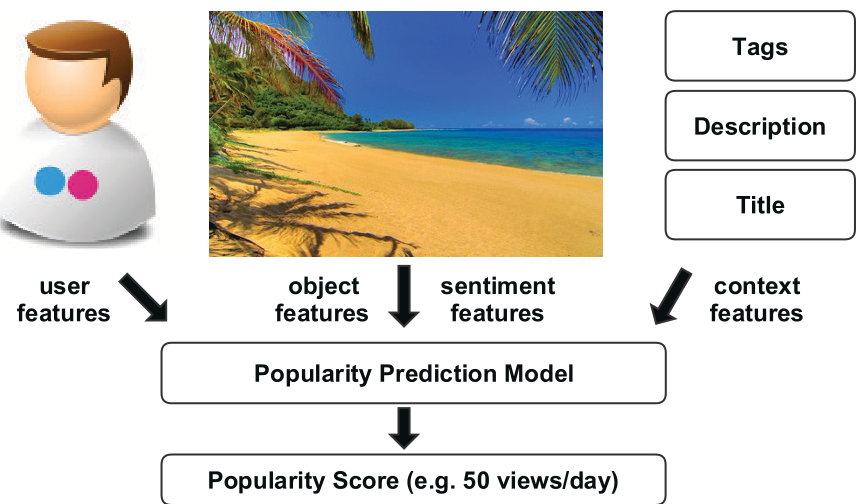
*Figure 1: The multi-modal pipeline combining Sentiment, Objects, and Context.*
## Experiments: Proving the Sentiment Edge
The researchers tested their approach on two scenarios: **One-Per-User (OPU)** (general search) and **User-Specific (US)** (helping a user pick their best photo).
### Key Findings:
* **Visual Sentiment works:** SentANP features outperformed raw object outputs (`ObjOut`), proving that "how" an object is depicted matters more than just its presence.
* **Context is King:** In user-specific scenarios, the new semantic features boosted the Spearman correlation significantly (from 0.33 to 0.54), proving that mapping tags to a knowledge base makes the model much smarter.
* **The Full Package:** When combining Visual, Context, and User features, the model reached a top correlation of **0.76**, outperforming the existing state-of-the-art baselines.

*Table 3: Comparative results showing the boost provided by the proposed features.*
## Qualitative Insight: What Actually Sells?
The paper provides a fascinating look at the weights of specific sentiments.
* **High Popularity Traits:** "Sexy legs," "Beautiful eyes," and "Heavy rain." These evoke strong emotional responses like *amazement* or *ecstasy*.
* **Low Popularity Traits:** "Silly clown," "Creepy eyes," or "Religious practice." These often evoke *annoyance* or are too niche for general popularity.
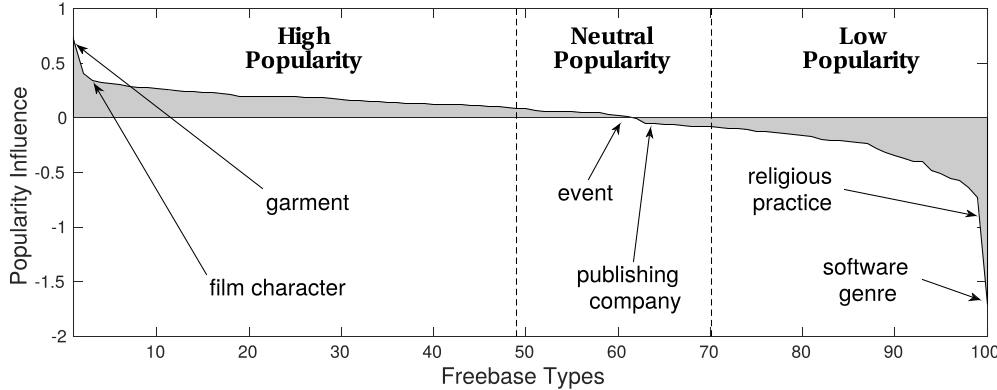
*Figure 2: Analysis of which Adjective-Noun Pairs drive or sink popularity.*
## Critical Analysis & Conclusion
This work is a milestone because it treats social media users as **emotional beings** rather than just data points. By incorporating SentiBank, the authors effectively quantified "vibe."
**Limitations:** The dataset is based on Flickr (2015), which was highly tag-dependent. In the era of TikTok and Instagram, where algorithms drive discovery more than manual tags, the "Social Context" might need to be redefined to include motion and audio sentiments.
**Future Outlook:** This technology is a goldmine for advertisers. Imagine a tool that doesn't just tell you "people like cars," but tells you "this specific visual sentiment of a *classic car in the sunset* will generate 40% more engagement."