
Beyond the Classroom: How Birthday Parties Drive Intergenerational Integration
Immigrant children and their parents: Is there an intergenerational interdependence of integration into social networks?
This study investigates the intergenerational interdependence of social network integration among immigrant children and their parents. Using a non-recursive Exponential Random Graph Model (ERGM) with instrumental variables, the author reveals how multiplex networks—comprising friendships, birthday party attendance, and parental contacts—mutually reinforce ethnic boundary blurring.
TL;DR
Is a child's social life just child's play, or is it a hidden engine for integration? This study by Michael Windzio reveals that birthday parties are high-stakes social arenas where ethnic boundaries are negotiated. By using sophisticated instrumental variable (IV) modeling, the research proves that while parental networks influence children, the reversed effect is more potent: children's social rituals are the primary catalysts for connecting immigrant parents to the wider community.
The "Multiplexity" of Integration
Integration is rarely a single-track road. In social network terminology, we speak of multiplexity—the idea that relationships exist across different dimensions. For a 10-year-old in Bremen, Germany, social life isn't just "being friends"; it involves:
- Friendship Ties: Daily interactions in school.
- Ritual Participation: Attending birthday parties (reinforcing membership).
- Parental Contact: Interactions between the adults who facilitate these meetings.
The author argues that these dimensions are locked in a "non-recursive" loop. Parents must trust each other to let children attend parties, but the act of attending provides the very opportunity for that trust to be built.
Methodology: Solving the Causality Catch-22
A common problem in social science is the "chicken and egg" dilemma. Does a child have more friends because the parents are integrated, or are the parents integrated because the child is popular?
To solve this, Windzio uses an Instrumental Variable (IV) approach within an Exponential Random Graph Model (ERGM) framework. He leverages "purely structural" network characteristics—like triadic closure (the tendency for a friend of a friend to become a friend)—to predict tie propensities without being biased by unobserved individual traits.
 Note: The model uses triadic closure in parental networks as an instrument to isolate the causal effect on children's birthday party networks.
Key Insights: The Power of Children
The study’s most striking finding is the direction of influence.
- Parental Influence: When parents are segregated, children are significantly less likely to be invited to, or allowed to attend, birthday parties. This is especially true for Turkish and Russian minorities in Germany.
- The Reversed Effect: The impact of children’s birthday attendance on parental contact was found to be twice as strong as the other way around.
When children cross ethnic lines to attend a party, they force an "obliged reciprocity." Parents drop off gifts, exchange phone numbers, and verify house addresses. These micro-interactions are where "ethnic boundaries are shifted or blurred."
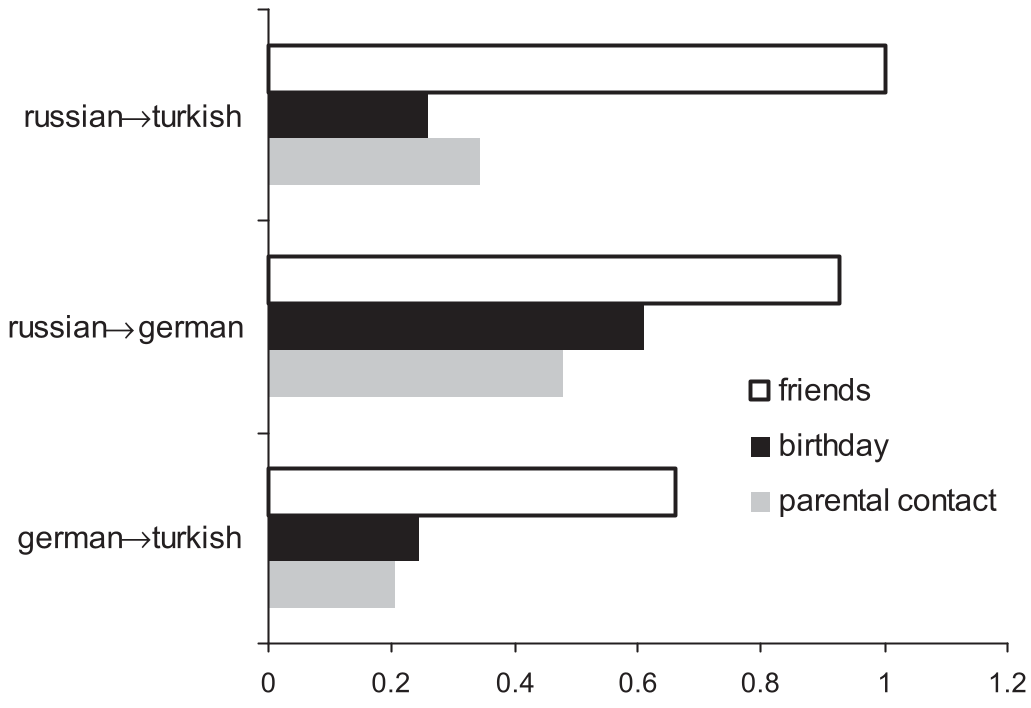 Fig 2: Descriptive data illustrates that while friendship segregation exists, it is in the "ritual" of birthday parties and the "adult" parental contact where ethnic boundaries remain the most rigid.
Why Homophily Matters
The research confirms the Homophily Theorem: "birds of a feather flock together." This exists across several markers:
- Socio-cultural: Similarity in the number of books at home (cultural capital) and type of housing.
- Psychological: Similarity in empathy and self-control.
- Spatial: Proximity remains a dominant driver—living close makes contact easier.
Critical Perspective: Policy and Future Work
The paper suggests that integration policy should focus on family-oriented inclusion. Since children are the "bridge-builders," programs that involve parents in school activities—not just as passive observers but as active participants—can leverage this intergenerational link.
Limitations: The study is cross-sectional (a "snapshot" in time). While the IV approach provides a rigorous proxy for causality, longitudinal data (following families over years) would be the "gold standard" to confirm these dynamics as children age into the more independent years of adolescence.
Conclusion
Social integration is not just about language or jobs; it’s about who shows up to the party. By focusing on the "micro-level" communicative events of childhood, Windzio proves that the second generation is not just assimilating—they are leading the way for their parents.