
Social Atoms in Motion: How Mobility Shapes the Fabric of Connection
17903_Impact of human mobility on social networks.
This paper explores the interplay between human mobility and social network structures using a massive, longitudinal mobile phone dataset (10 million users). It identifies a characteristic spatial distance of 10-20 km that separates local and global network phases and proposes a binary classification of social ties—Local vs. Distant—based on trajectory co-location.
TL;DR
By analyzing records of 10 million mobile users, Wang and Song reveal that our social networks are not just influenced by where we live, but how we move. They discover a "magic" distance of 10-20 km that determines whether a network stays local or goes global, and they prove that our friends come in two distinct flavors: those we physically encounter (Local) and those we don't (Distant), each obeying different mathematical laws.
The Missing Dimension: Physicality in a Digital Graph
For decades, network scientists treated social graphs as abstract entities—nodes and edges floating in a vacuum. Even when geography was introduced, it was often static (e.g., home addresses). However, the "wireless-social-mobile" era demands a more dynamic view. The problem? Most datasets are either purely social or purely spatial. This paper bridges that gap by observing how individual trajectories overlap and effectively "glue" the social network together.
Methodology: Co-location and Percolation
The authors define the Co-location Rate (C): the probability two people appear at the same cell tower during the same hour. This is a proxy for face-to-face interaction.
To see how distance impacts the "global" feel of a network, they used Percolation Theory. They began with a network where no links were allowed, then slowly increased a "cutoff distance" d. They watched for when the network suddenly shifted from tiny, isolated islands to one Giant Connected Component (GCC).
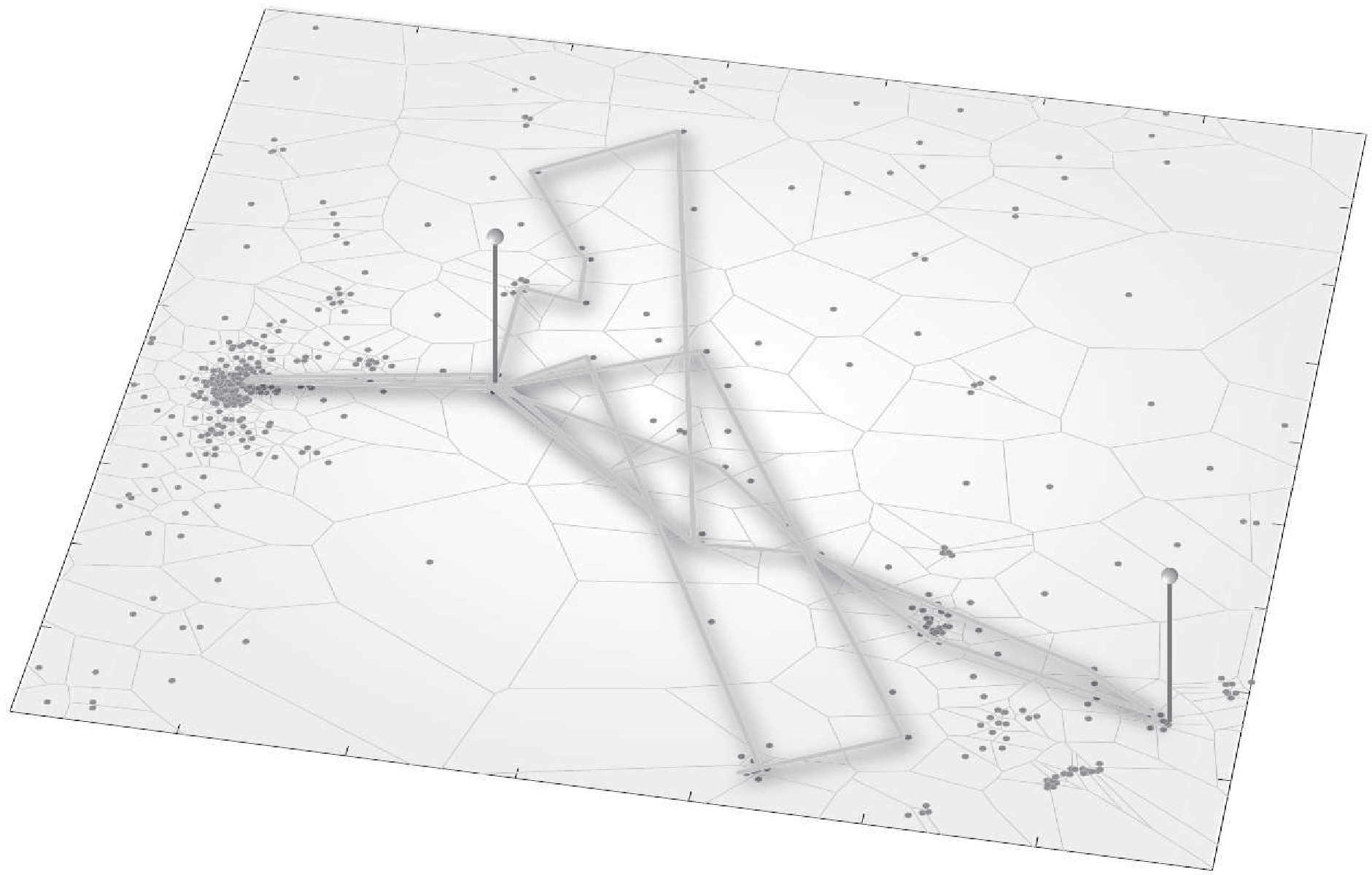 Fig 1: A user's three-month trajectory. Tower logs provide a high-resolution proxy for human movement over time.
Key Insight 1: The 10-20 km Boundary
Conventional wisdom suggests that the probability of having a friend decays smoothly as distance increases (a power law). But this paper finds a "discontinuity" in the structure.
At around 10 to 20 km, the network experiences a phase transition. Below this distance, social ties are highly clustered and modular (your friends know each other). Beyond this distance, the "social glue" thins out, and the network behaves differently. This suggests that 20km is the "neighborhood" limit for physical-social reinforcement.
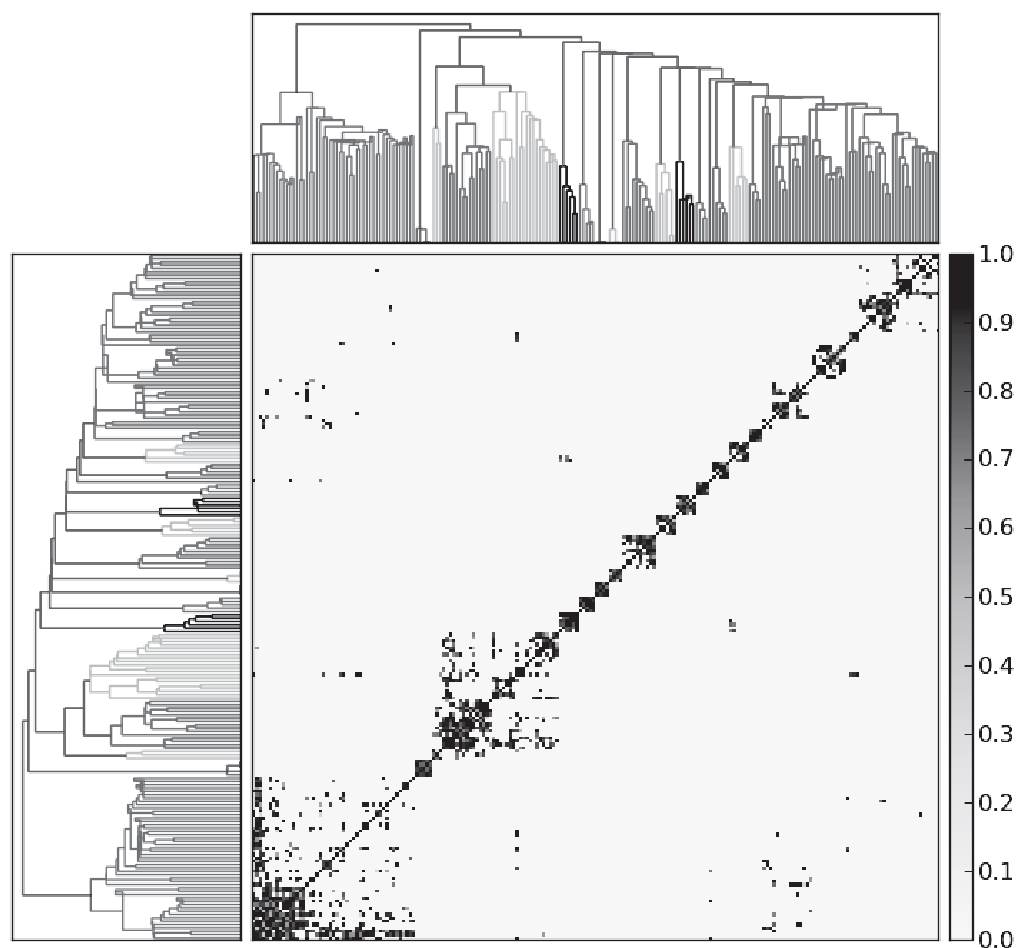 Fig 8: Topological overlap (social clustering) drops sharply as distance increases, crossing the "random expectation" line at exactly the 20km mark.
Key Insight 2: The Two Species of Social Ties
Perhaps the most striking finding is the binary nature of ties. The authors found that as long as two people's paths cross at all (C > 0), they belong to a specific mathematical group (Local Ties). If they never meet (C = 0), they belong to another (Distant Ties).
- Local Ties (C > 0): Follow a steeper power law (γL ≈ 7). These are intensely clustered and influenced by the "triadic closure" of meeting in person.
- Distant Ties (C = 0): Follow a shallower power law (γD ≈ 3.5). These ties are more "random" and serve as the long-range bridges that make the world a "small world."
Mixing these two into a single "average" model—as most previous research has done—leads to a massive overestimation of how information (or viruses) spread.
Experimental Results: The Mobility-Social Matrix
By reordering a mobility matrix based on social closeness (using hierarchical clustering), the authors produced a visual proof of their theory. The diagonal "blocks" show that people who are socially close move in the same physical circles.
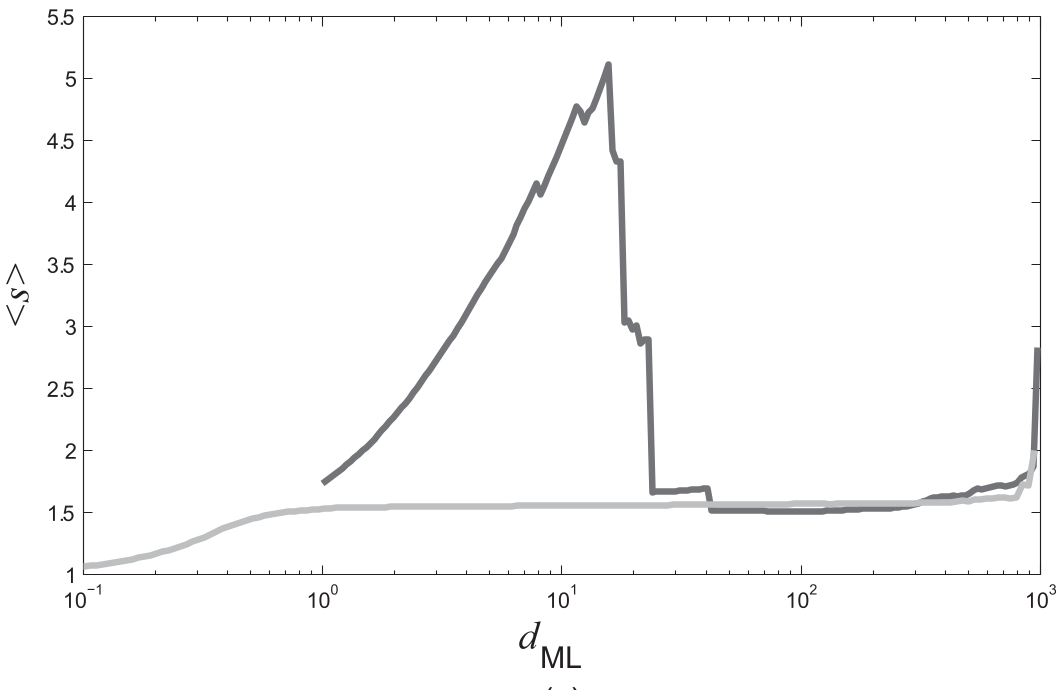 Fig 9: The Social-Mobility correlation. Dense blocks of co-location align perfectly with social clusters.
Implications: Routing, Security, and Beyond
This research isn't just about sociology; it's about Engineering.
- Cybersecurity: Mobile malware (worms) propagates through social contacts. Understanding that "Distant Ties" are mathematically different allows for better containment strategies.
- Wireless Optimization: Network carriers can predict data demand spikes by modeling how social clusters move through physical cell towers.
- Marketing: "Word of mouth" isn't a single phenomenon; it travels differently through the high-density local "triangles" than through long-range distant ties.
Conclusion
Wang and Song show us that the social network is a spatial-temporal manifold. The 10-20 km characteristic distance acts as a fundamental constant of human interaction. By proving that mobility overlap segments our society into two distinct types of connections, they provide a new "standard model" for anyone building location-aware technologies or studying human behavior in the age of the smartphone.