
Social Menu: Decoding the Invisible Nudges of Digital Networks in the Physical World
The Impacts of Just-in-Time Social Networks on People's Choices in the Real World
This paper presents the "Social Menu," a mobile digital platform deployed in a real-world restaurant experiment to measure how Just-In-Time (JIT) online social network information influences physical economic decisions. The study identifies that virtual social cues—specifically peer identification, group norms, and popularity—significantly alter consumer choice dimensions such as taste, decision time, and price sensitivity.
TL;DR
How much does your phone influence what you order for dinner? MIT Researchers deployed a "Social Menu" in a real-world restaurant to find out. The study proves that while the person sitting across from you has the strongest pull, digital signals from your Facebook friends and the general public can fundamentally shift your choices in terms of price, experimentation, and how long you spend staring at the menu.
Problem & Motivation: The Gap Between Survey and Reality
In the digital age, we suffer from "hyper-coordination." We make decisions on the fly—what to buy, where to eat, who to meet—based on a constant stream of mobile data. Traditional social psychology has long studied "Social Proof," but usually through surveys or artificial lab setups.
The authors argue that real-world decisions are spontaneous and cognitively limited. Up to 70% of purchase decisions are made in-store. The researchers sought to measure the strength and scale of virtual vs. physical influence at the exact moment—Just-In-Time—the decision is made.
Methodology: The Social Menu Architecture
The researchers transformed the menu into a scientific instrument. Utilizing iPhones as digital menus, they randomly assigned diners to four groups, each receiving different "social cues":
- Control: A plain digital menu.
- Individual Friends: Saw specific names of friends who liked/ordered a dish.
- Anonymous Popularity: Saw how many total strangers chose a dish.
- Anonymous Friends: Saw how many friends chose it, but without names.
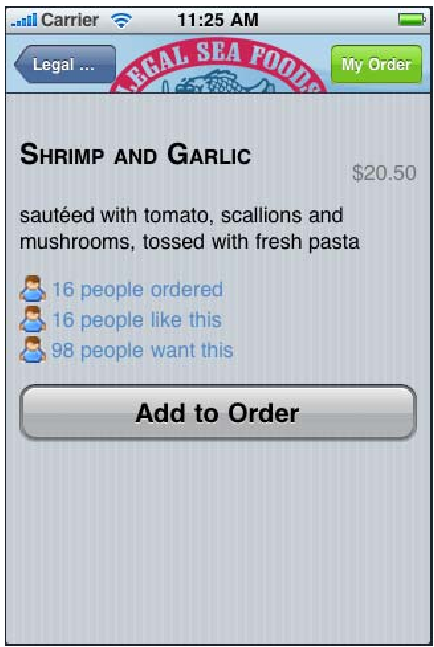 Fig 1: The Social Menu interface where diners added items to their order while viewing social cues.
By linking the menu to Facebook's social graph, the system could identify first-degree and second-degree connections in real-time.
Deep Dive: How Social Cues Change Behavior
1. The Diversion Effect
Interestingly, 56% of diners abandoned their "pre-selected favorites" once they got to the restaurant. This "diverted taste" suggests that context—and the social cues provided—are more powerful than long-term personal preferences.
2. Time as an Engagement Metric
Do social cues make us faster? Not necessarily. The study found that Individual Friend information actually increased decision time. When we see a friend's name attached to a dish, we stop to evaluate it more deeply, leading to higher engagement but slower decisions. Conversely, "Popularity" cues acted as shortcuts, helping uncertain diners choose quickly.
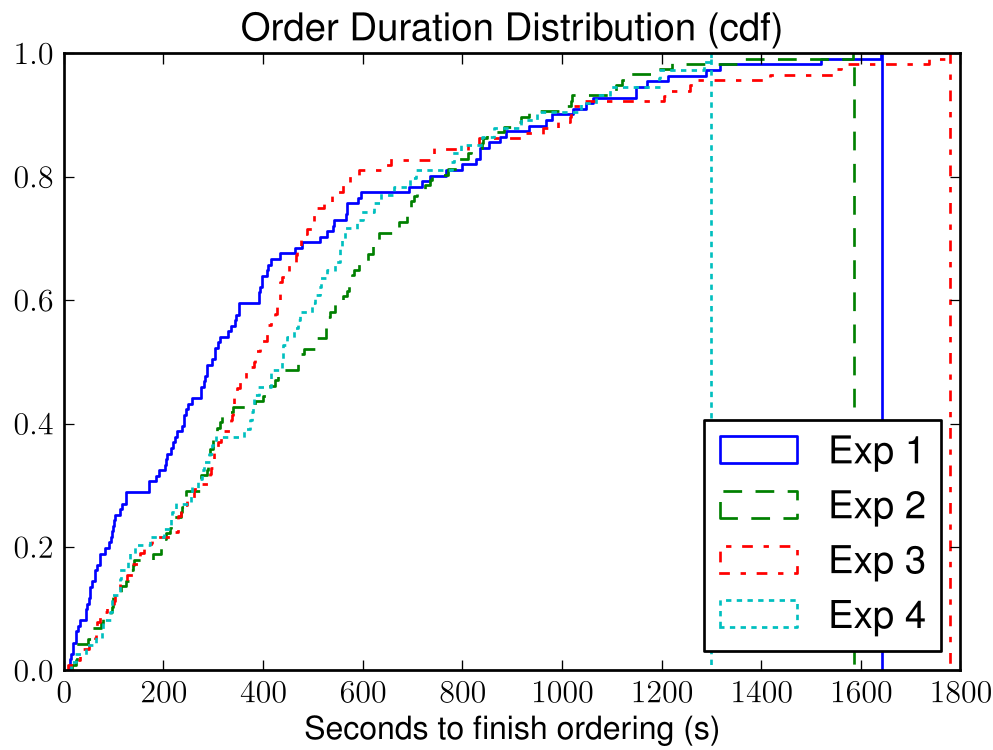 Fig 2: Social cues generally increased the exploration time, showing higher engagement with labels.
3. The Price Nudge
The most subtle finding was the "Price Factor." When people saw that a group of friends chose cheaper items, they were significantly more likely to choose a cheaper item themselves (normative influence). However, seeing an individual friend choose a cheap item didn't have the same effect—likely because people don't want to be specifically compared to one "cheap" friend’s behavior.
Mathematical Insight: Physical vs. Virtual
Using Discrete Choice Analysis, the authors quantified the utility (). They found:
- Physical Influence () is still the king. The people at your table have the highest statistical impact on your choice.
- Individual Taste () is secondary to the physical social environment.
- Virtual Influence is two orders of magnitude "weaker" per person, but because the Scale is 10x larger (you have more digital friends than table-mates), the total aggregate impact of the network can rival or exceed the physical table.
Critical Analysis & Conclusion
This paper provides a framework for Persuasive Interfaces. It suggests that if you want a user to:
- Explore and Engage: Show them specific friends' names.
- Decide Quickly: Show them popularity counts ("Best Seller").
- Save Money (or spend less): Show them anonymous group behavior.
Limitations: The study had a selection bias (mostly MIT-affiliated people in their 20s-30s) and a relatively small sample size for item-level modeling.
The Takeaway: As we move toward a world of "Augmented Reality" shopping and dining, our choices are no longer just ours. They are a negotiation between our gut feeling, the person sitting next to us, and the invisible data trailing from our digital social graph.