
Bridges Over Troubled Waters: Implementing Ethics in Healthcare AI
Implementing Ethics in Healthcare AI-Based Applications: A Scoping Review
This paper presents a systematic scoping review of the implementation and evaluation of ethics frameworks in AI-based Healthcare Applications (AIHA). Analyzing 33 key studies from a pool of over 8,000, the authors categorize strategies into proactive, contextual, and technological approaches while highlighting a significant gap between theoretical ethics guidelines and actual clinical deployment.
TL;DR
The rapid infusion of Artificial Intelligence into healthcare—ranging from diagnostic bots to surgical robots—has outpaced our ability to regulate it ethically. This scoping review by Goirand et al. (2021) dives into the "how" of AI ethics, revealing a fragmented landscape where high-level principles rarely translate into clinical practice. The authors identify a critical need for Value-Sensitive Design (VSD) and interdisciplinary collaboration to move beyond "ethics washing."
The Gap: Why "Bioethics" Isn't Enough for AI
In the medical world, the "Big Four" principles (Autonomy, Beneficence, Non-maleficence, and Justice) are the gold standard. However, when you introduce Machine Learning (ML), new ghosts appear in the machine:
- Algorithmic Bias: Historical data reinforces historical inequalities.
- The Black Box: If a doctor can't explain why an AI suggested a treatment, they cannot fulfill their duty of informed consent.
- Corporate vs. Clinical Culture: High-tech firms prioritize performance/speed, whereas healthcare prioritizes "First, do no harm."
The paper highlights the Google DeepMind/NHS controversy as a watershed moment where a lack of transparency breached patient trust, proving that technical efficiency cannot substitute for ethical integrity.
Methodology: Mapping the Ethical Minefield
The researchers analyzed 33 papers to understand how teams move from abstract values to concrete code. They found that implementation happens—or fails—at five distinct levels:
- Ethics Principles Level: Principles often conflict. For example, ensuring Safety (intrusive monitoring) can violate a patient’s Privacy.
- Design Level: Translating "Fairness" into actual mathematical constraints or UI features.
- Technology Level: Managing how an AI that "keeps learning" might drift away from its initial ethical boundaries.
- Organizational Level: Navigating the friction between developers, clinicians, and legal boards.
- Regulatory Level: Dealing with the fact that AI outputs are often non-reproducible, making them a poor fit for traditional medical regulations.
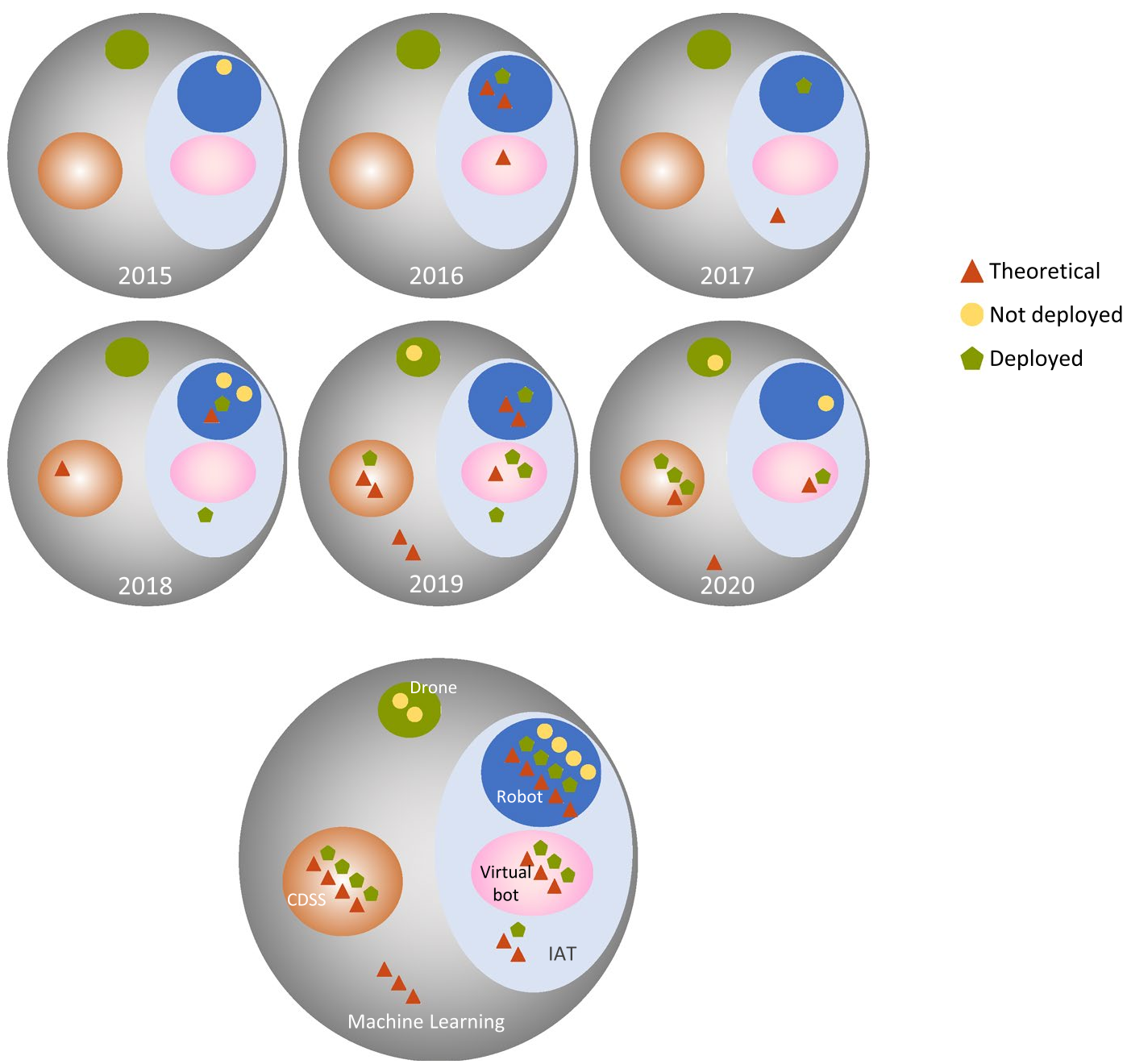 Above: The distribution of ethics principles across the surveyed literature, showing a heavy reliance on traditional bioetics (blue).
Core Findings: Strategies for Trustworthy AI
The review identifies several proactive strategies that distinguish successful AIHA (AI-based Healthcare Applications) from failures:
1. Value-Sensitive Design (VSD)
VSD is an approach that treats "values" as technical requirements. Rather than adding ethics as an afterthought, engineers embed values like Dignity or Privacy into the system architecture from day one.
2. Contextual Implementation
Ethics are not universal; they are situational. A robot assisting a nurse with toxic waste requires a different ethical profile than a chatbot for mental health support. The review emphasizes that context is king.
3. Checklists and Verification Matrix
Projects like the "Verification Methodology for Ethical Compliance" use iterative matrices to track every ethical requirement throughout the development cycle.
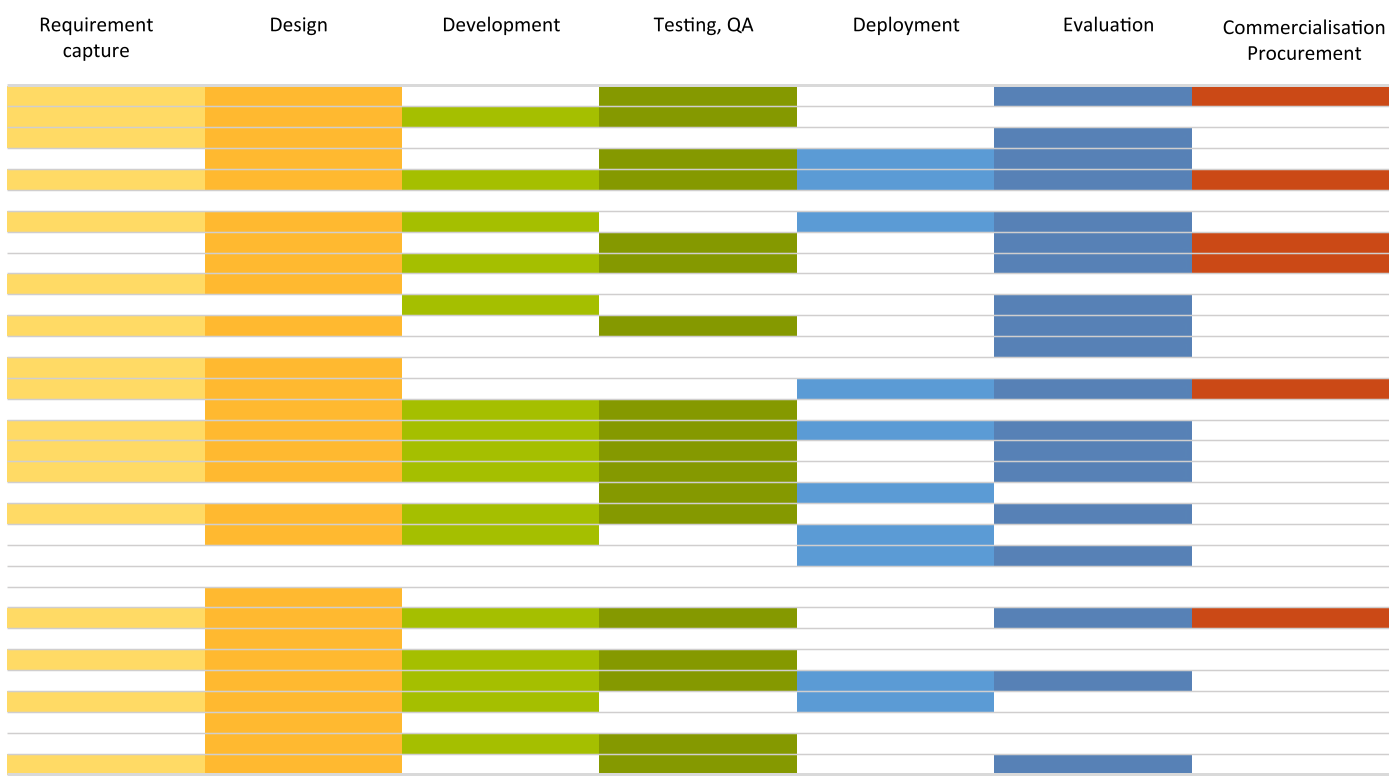 Above: Implementation strategies are most active during the Design phase, but severely lacking in the Commercialization and Procurement stages.
The Hard Truth: Success is Hard to Measure
Perhaps the most striking finding is the dearth of evaluation. Only 27% of the studies included specific ways to evaluate whether their ethical implementation actually worked.
- Does "Fairness" mean equal accuracy for all ethnicities?
- Does "Trust" mean the user likes the UI, or that the system is objectively safe?
The field currently lacks a common language and standardized metrics for "Ethical Success," leaving many implementations in a state of "unverified optimism."
Clinical Insights & Future Outlook
The paper concludes that we are currently in an "abductive" learning phase. We must treat AI systems as evolving agents that require continuous monitoring rather than a one-time approval.
Key Takeaways for Developers & Clinicians:
- Interdisciplinary Teams are Mandatory: Engineering and Medicine must speak the same language. Engineers need to understand clinical consequences, and doctors need to understand ML limitations.
- Proactive, Not Remedial: You cannot "patch" ethics into a finished product.
- Stakeholder Inclusion: Patients and caregivers are not just end-users; they are the primary sources of the "values" that should drive the design.
Conclusion: Ethics in healthcare AI is a "wicked problem"—circular, complex, and evolving. While the industry has plenty of guidelines, it is desperately short on evidence-based results. The path forward requires a shift from theory to rigorous, measurable implementation.