
Detecting the "Invisible" Bully: Implicit Aggressive Driving Detection in Social VANETs
Implicit aggressive driving detection in social VANET
The paper introduces a novel implicit detection mechanism for aggressive driving within Social Vehicular Ad-hoc Networks (VANETs). It utilizes Received Signal Strength Indicator (RSSI) variations and topological shifts in vehicular clusters to identify risky maneuvers like rapid lane changes and tailgating without requiring access to the target vehicle's internal sensors.
TL;DR
Researchers at the University of Ljubljana have proposed a decentralized way to catch aggressive drivers using nothing but the signal strength (RSSI) of their Wi-Fi/DSRC signals. By treating groups of cars as "social clusters," the system detects disruptive lane changes and tailgating without needing any "snitching" data from the aggressive car itself.
Context: Why Current Safety Systems Fail
Modern cars are packed with sensors—lane assist, blind-spot monitoring, and emergency braking. However, there is a fundamental flaw: these systems are driver-centric. An aggressive driver can override or disable these features. If a driver decides to weave through traffic at high speeds, the safety tech inside their car helps them, but it doesn't warn you.
The authors argue that safety should be a collaborative, network-wide effort. Instead of relying on a car to report its own bad behavior, why not let the surrounding "victims" (neighboring vehicles) detect it implicitly?
The Core Insight: Radio Topology as a Proxy for Behavior
In medium to high-density traffic, vehicles naturally form "platoons" or clusters. In the world of VANETs (Vehicular Ad-hoc Networks), these clusters are relatively stable in terms of radio connectivity.
How the Detection Works
The proposed mechanism doesn't look at GPS coordinates or video feeds. It looks at the Received Signal Strength Indicator (RSSI).
- Cluster Formation: Cars driving the same way at similar speeds form a stable wireless neighborhood.
- The Disturbance: An aggressive driver cutting between two cars disrupts the signal path.
- The Trigger:
- Neighboring nodes detect a rapid increase in RSSI toward a "new" neighbor.
- The routing protocol sees that the "shortest path" between two old neighbors now suddenly goes through this new, fast-moving node.
 Figure 1: Illustration of how a vehicle intruding into a cluster disrupts established links.
Methodology: The RSSI Multi-Hop Logic
The algorithm operates in discrete steps at the transport and network layers:
- Step 1: Periodically measure RSSI to all one-hop neighbors.
- Step 2: Build a local neighborhood table.
- Step 3: If a sudden RSSI spike occurs and the topology changes (a new node intercepts the logical path), the system flags the vehicle's network address.
- Step 4: Distributed Validation. Multiple cars in the cluster share this "flag." If several vehicles confirm the erratic behavior, the certainty of the aggressive driving label increases.
Challenges in Validation
The authors used a combination of SUMO (Simulation of Urban Mobility) and NS-2 (Network Simulator 2). They hit a classic academic roadblock: real-world radio propagation is messy.
- Propagation Models: NS-2's "Two-Ray Ground" or "Shadowing" models don't perfectly capture the way signals bounce off buildings or other metal cars (multipath fading).
- Aggression Modeling: Standard mobility models assume "polite" drivers. The authors had to manually inject aggressive scripts (smaller safety distances, rapid lane changes) into SUMO to test their theory.
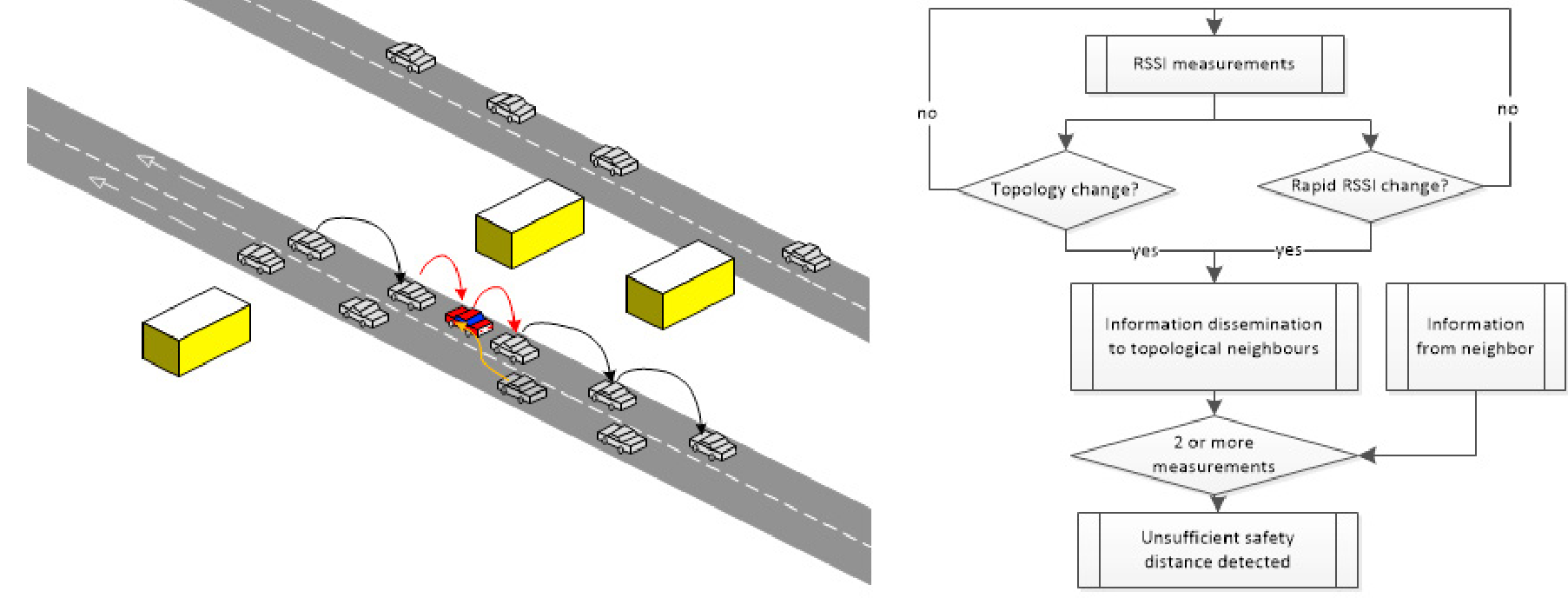 Figure 2: The simulation pipeline from mobility modeling to network analysis.
Privacy & The Future
One of the most compelling arguments in this paper is Privacy by Design. Because the detection happens locally within a "temporal vehicular cluster":
- No data is sent to a central government cloud (preventing mass surveillance).
- Only the network interface address is shared, which is ephemeral.
The Catch? Spoofing. In an ad-hoc network without a central authority, a malicious actor could theoretically send "fake" aggressive driving alerts about a rival.
Conclusion
This work moves us toward a "Social VANET," where vehicles act as a collective immune system for the road. While the RSSI-based method is prone to environment noise (like signal reflections in cities), it provides a low-cost, hardware-free way to improve situational awareness in autonomous and semi-autonomous environments.
Key Takeaway: The next time someone cuts you off, your car's Wi-Fi might already be "gossiping" about them to every other car on the block.