
Knowledge Discovery: The Key to Truly Adaptive E-Learning
Improving adaptation in web-based educational hypermedia by means of knowledge discovery
The paper proposes an architectural framework to enhance Web-Based Educational Hypermedia (WBEH) systems by integrating Knowledge Discovery (KD) techniques. It focuses on automatically discovering student behavioral patterns—specifically association rules, sequential patterns, and traversal patterns—to provide personalized curriculum recommendations and navigation guidance.
TL;DR
Adaptive hypermedia often fails because human authors cannot write enough rules to cover every student's learning style. This paper presents a framework that uses Data Mining to "learn" how students progress through courses. By analyzing logs from systems like AHA! and ALEA, the authors generate recommendation paths that improve navigation accuracy, achieving a 57.63% hit rate in predicting what a student should study next.
Background: The "Authoring Bottleneck"
In the early 2000s, Web-Based Educational Hypermedia (WBEH) was the frontier of "new education." However, these systems were only as smart as their authors. If an instructor didn't explicitly program an adaptation rule for a specific student profile, the system remained static. The authors argue that the solution lies in the data already being collected: user logs. By treating learning sequences like "market baskets" or "clickstreams," we can discover the Implicit Inductive Bias of successful students.
Methodology: From Logs to Logic
The proposed architecture acts as a modular "wrapper" around existing educational systems.
1. The Three Pillars of Data
To build a recommendation engine, the system looks at:
- User Activity Logs: Not just clicks, but "time-spent" (after filtering noise) and session boundaries.
- Domain Model: The hierarchy of the subject (e.g., Programming -> Loops -> For-loops).
- User Knowledge Level: Crucially, the system prefers mining the patterns of "successful" students to model the "Ideal Path."
2. Mining Techniques
The core innovation is the hybrid use of three mining algorithms:
- Association Rules: Finding concepts that are often studied together (ignoring order).
- Sequential Patterns: Finding the order of study (e.g., A is usually followed eventually by B).
- Traversal Patterns: Finding the specific contiguous path (e.g., A -> B -> C).
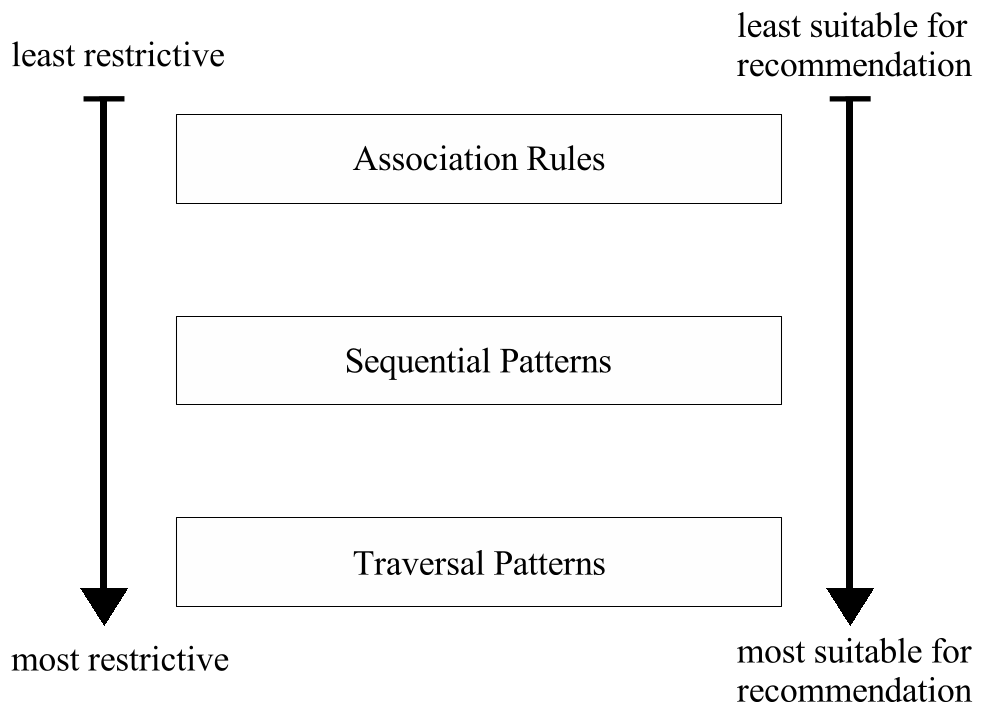 Figure 1: The modular architecture allows the recommender to plug into different systems (AHA!, ALEA) via a wrapper.
Experimental Validation
Using three years of data from the ALEA system (a functional programming course), the authors compared how well each mining technique predicted a student's next move.
| Pattern Kind | Hit Ratio | Average Ranking |
|---|---|---|
| Association Rules | 22.67% | 2.22 |
| Sequential Patterns | 50.64% | 7.09 |
| Traversal Patterns | 34.32% | 1.27 |
| Final (Combined) | 57.63% | 5.97 |
Critical Insight: Traversal vs. Sequential
The data reveals a fascinating trade-off. Traversal Patterns are extremely accurate (Ranking 1.27) but narrow (Hit Ratio 34%). Sequential Patterns have much broader coverage (Hit Ratio 50%) but are less precise (Ranking 7.09). By combining them, the system offers a safety net: if a precise "path" isn't found, it falls back to a broader "sequence."
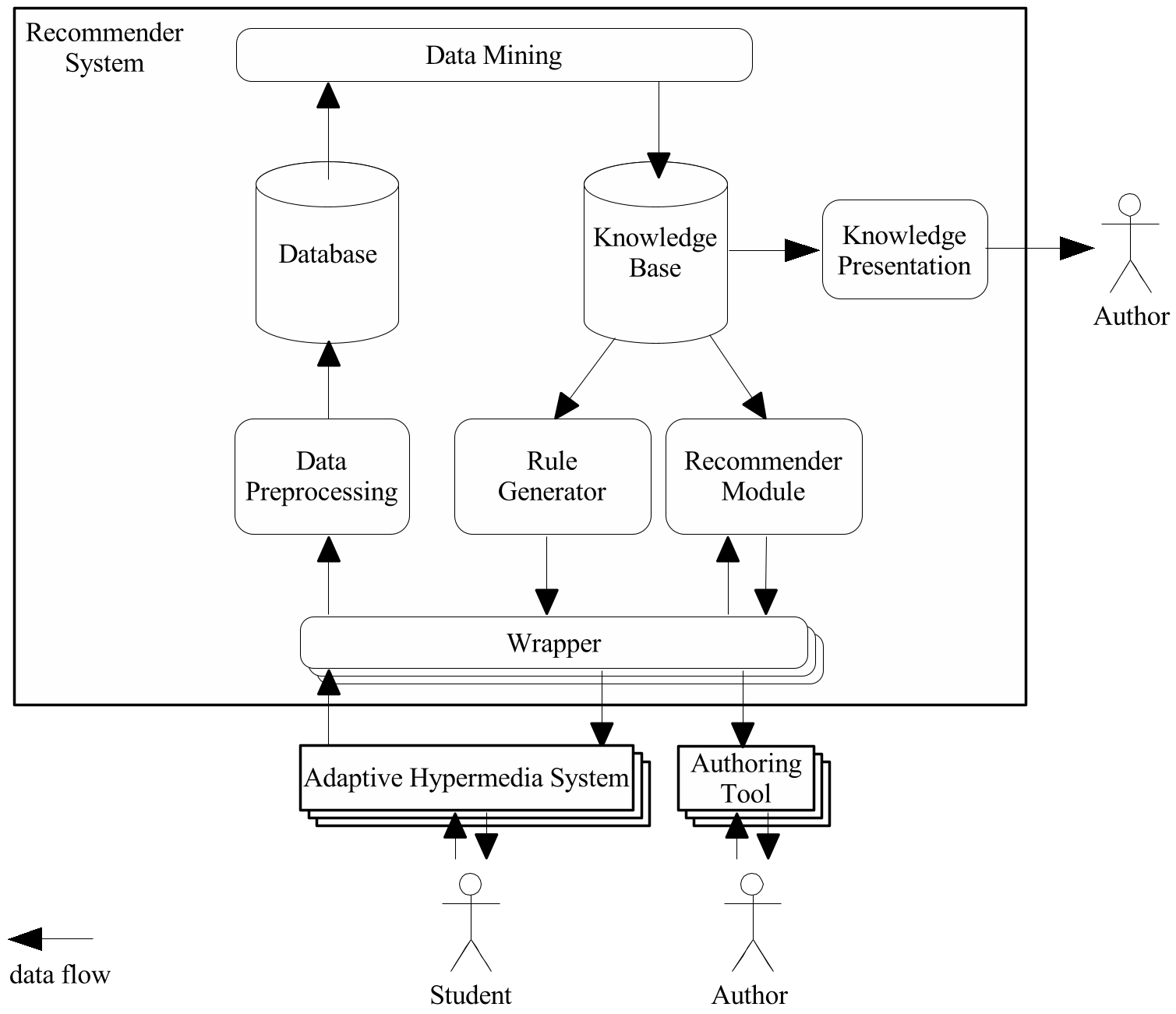 Figure 2: How the system recommends concepts to a student in real-time.
Critical Analysis & Future Outlook
While the system shows a clear improvement over manual rules, it has limitations. The authors acknowledge that a high "Hit Ratio" (predicting what a student did do) doesn't always mean a "Successful Recommendation" (telling the student what they should do to learn better).
The future of this work points toward Clustering. By grouping students into "Learning Style Profiles" before mining, the recommendations could be narrowed even further—ensuring that a "visual learner" isn't forced down a "text-heavy" traversal path.
Takeaway
This paper is a seminal bridge between Web Mining and Instructional Design. It proves that the "intelligence" in an Intelligent Tutoring System doesn't have to be hand-coded; it can be mined from the collective behavior of learners.