
Delta4Ts: Alleviating Structure Bias via Debugging History
Improving Fault-Localization Accuracy by Referencing Debugging History to Alleviate Structure Bias in Code Suspiciousness
The paper introduces Delta4Ts, a structure-aware Spectrum-Based Fault Localization (SBFL) technique that leverages debugging history to mitigate "Structure Bias." By normalizing and subtracting historical suspiciousness scores from current calculations, Delta4Ts significantly improves localization accuracy, achieving an average check-cost reduction of 34.8% on C programs and 30.6% on Java programs.
TL;DR
Spectrum-Based Fault Localization (SBFL) has long been the "holy grail" of automated debugging. However, it has a blind spot: Structure Bias. Certain code blocks—like catch-blocks or main loops—look "guilty" to algorithms just because of where they sit in the code, not because they are broken. Delta4Ts solves this by looking into the past. By referencing debugging history, it filters out these structural "false signals," improving fault-finding accuracy by over 30% across major benchmarks.
The "Guilty by Location" Problem
Why do some perfectly healthy code blocks consistently rank at the top of our suspiciousness lists?
The authors observe that SBFL formulae are essentially statistical correlations. If a block like an exception handler ( in the paper's example) is designed to execute primarily during failures, a traditional formula like Tarantula will mathematically flag it as highly suspicious. This isn't a bug in the formula; it's a reflection of the Program Structure.
- Inversion of logic: Initialization blocks executed by almost every test case (pass or fail) dilute the "suspiciousness" signal.
- The Trap: Developers waste hours inspecting these structural artifacts instead of the actual root cause.
Methodology: Debugging as Signal Processing
The core insight of Delta4Ts is treating a suspiciousness score () as a composite signal: Where:
- : The Desired Signal (Actual Faultiness).
- : The False Signal (Structure Bias).
The Delta4Ts Framework
To isolate , we need to calculate . Delta4Ts does this by creating a Reference Set (): a collection of previous program versions where the code block was confirmed to be non-faulty. By averaging the scores of across these versions, the authors obtain a baseline for its "natural" structural suspiciousness.
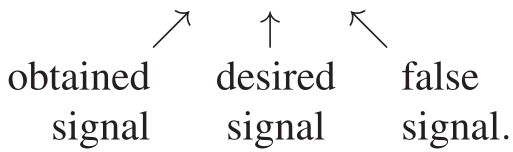
The algorithm then ranks entities by the difference between their current score and this historical baseline, effectively "de-noising" the output.
Experimental Battleground
The researchers didn't just test one formula; they tested nine (including Ochiai, Jaccard, and D*) across 12 C programs and 6 large-scale Java projects from the Defect4J repository.
Key Findings:
- Massive Efficiency Gains: Delta4Ts saved developers from checking roughly 34.8% of irrelevant code in C and 30.6% in Java.
- Scalability: The larger the program, the better it performed. For complex Java systems, the "Top-5%" localization rate jumped from 43% to 59.1%.
- The "History" Factor: As the number of available historical versions grew from 1 to 4, the localization accuracy (measured via the Sav metric) showed a clear upward trend.
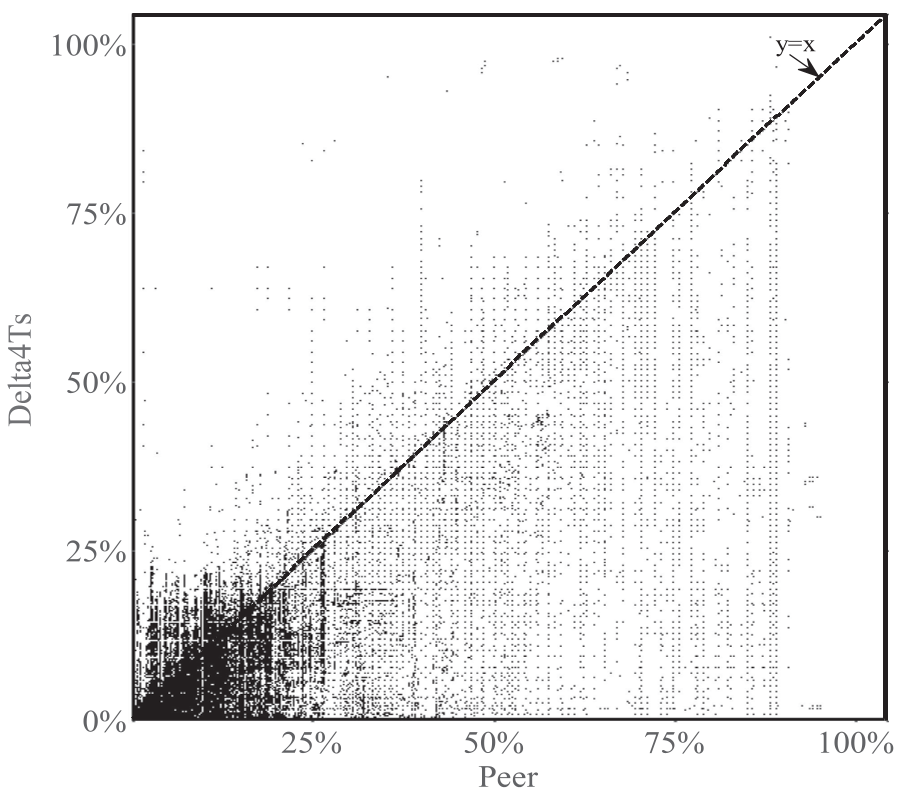 The figure illustrates the significant shift in checking effort (Exp) required when moving from Peer techniques to Delta4Ts.
Critical Analysis & Conclusion
Delta4Ts represents a shift from Statical Analysis to Evolutionary Analysis. By acknowledging that code exists in a temporal continuum, we can use the "idiosyncrasies" of a project's architecture against themselves to find bugs.
Limitations:
- It requires at least one previous faulty version to start being effective.
- It struggles with "major refactoring" where the program structure changes so drastically that history becomes irrelevant.
Future Outlook: The integration of Delta4Ts with Parallel Debugging (locating multiple faults simultaneously) and Automated Program Repair (APR) is the next frontier. If we can suppress "fake" candidates in history, we can likely significantly speed up the automated generation of code fixes.
Takeaway: Your code's history is more than just a git log; it’s a filter for finding the bugs of the future.